Ingredients
Method
Sear the Chicken Thighs
- Cut the chicken thighs into 2.5cm pieces — as uniform as possible so every piece reaches the correct internal temperature at the same rate. Pat completely dry on all surfaces with paper towels — the single most important preparation step for a proper sear. Any surface moisture vaporises the moment the chicken contacts the hot oil, dropping the pan temperature and producing pale, grey chicken rather than the deeply golden, Maillard-caramelised crust that the dish depends on for its flavour foundation. Season all surfaces generously with the 5g of salt and 2g of black pepper. Heat the 25ml of olive oil in a large, deep skillet or braiser over medium-high heat until shimmering. Add the chicken pieces in a single layer without crowding — work in two batches if needed to maintain space between pieces. Leave undisturbed for 4 minutes. The crust and the flavour it produces requires sustained, uninterrupted contact between the chicken surface and the hot pan — any movement before the crust has set prevents proper browning. After 4 minutes the underside should be deeply golden with a proper Maillard crust. Flip and cook for 3 minutes on the second side. At this stage the chicken may not be fully cooked through — it does not need to be, as it will finish cooking in the orzo simmering step. Transfer to a plate, leaving every drop of the rendered fat, chicken juices, and fond in the pan — this is the flavour base that the shallots and garlic will cook in and that the orzo will ultimately absorb.
Build the Aromatic Base
- Reduce the heat to medium and add the remaining 20ml of olive oil to the pan — the combination of the fresh olive oil and the rendered chicken fat from the sear creates the enriched cooking medium for the aromatics. Add the finely minced shallots and cook for 3 minutes, stirring occasionally, until softened and translucent. Shallots are specified over standard onion for a specific reason — their milder, slightly sweeter, slightly more complex flavour provides a background aromatic depth that supports the lemon without competing with it the way a standard white onion's sharper, more sulphurous character would. While cooking, scrape the bottom of the pan firmly to lift the fond from the chicken sear — this fond dissolves into the shallot-oil mixture and will subsequently distribute through the entire orzo as it cooks, adding a concentrated savory depth to every grain. Add the minced garlic and cook for 45 seconds, stirring continuously, until fragrant and just barely beginning to colour. Add the 300g of orzo and stir to coat every grain in the fat and aromatic mixture. Toast for 2 minutes, stirring frequently — the orzo should show light golden colouring on some grains and develop a faintly nutty, toasted aroma. Toasted orzo produces a more complex, more flavourful result than untoasted orzo added directly to liquid — the brief dry-heat contact develops the grain's own natural nutty compounds and creates a slight additional starch resistance that helps the orzo maintain its texture through the 12–14 minute covered simmer.
Add the Stock, Lemon, and Chicken
- Pour in the 720ml of chicken stock, 80ml of fresh lemon juice, and 15g of lemon zest. The triple liquid addition — stock for savoury depth, lemon juice for primary acid brightness, and lemon zest for aromatic citrus oil complexity — produces a cooking medium that will be absorbed completely by the orzo during simmering, flavouring every grain from the inside rather than simply coating it externally. The double lemon application mirrors the technique used in the Lemon Chicken Cutlet Orzo — juice provides the clean, sharp acidity; zest provides the volatile aromatic oils that make the lemon character complex and multidimensional rather than simply sour. Add the 3g of salt, 2g of black pepper, and red pepper flakes. Stir well to distribute everything evenly. Nestle the seared chicken pieces into the orzo mixture along with every accumulated juice from the resting plate — the resting juices contain rendered chicken fat and protein that add both flavour and richness to the final dish. Bring to a vigorous simmer, then reduce the heat to medium-low, cover the pan, and cook for 12–14 minutes, lifting the lid to stir every 4 minutes to prevent the orzo from sticking to the bottom. The stirring also redistributes the liquid as the orzo absorbs it unevenly — the pieces at the bottom absorb faster than those at the top, and regular stirring ensures uniform cooking throughout. The orzo is ready when it is tender throughout and has absorbed most of the liquid, leaving only a small amount of thick, starchy liquid remaining. If the orzo absorbs all the liquid before it is fully tender — which can happen depending on the brand and the pan's exact heat level — add warm chicken stock or water in 60ml increments, stirring after each addition.
Finish Off the Heat
- Remove the pan from the heat completely. Add the 30g of butter and 120ml of heavy cream immediately and stir to incorporate — the butter melts into the residual heat and combines with the cream and the starchy cooking liquid into a slightly enriched, slightly thickened finishing sauce that coats every grain. Add the halved cherry tomatoes and baby spinach simultaneously. Cover the pan and allow to stand for 2 minutes — the residual heat trapped under the lid wilts the spinach completely without overcooking it to a dark, waterlogged texture, and warms the cherry tomatoes through without softening them to a collapsed, jammy consistency. The off-heat finishing step is the technique that keeps the vegetables vivid in colour and texture — returning the pan to direct heat at this stage would continue cooking the vegetables past their peak.
Add the Feta, Dill, and Parsley
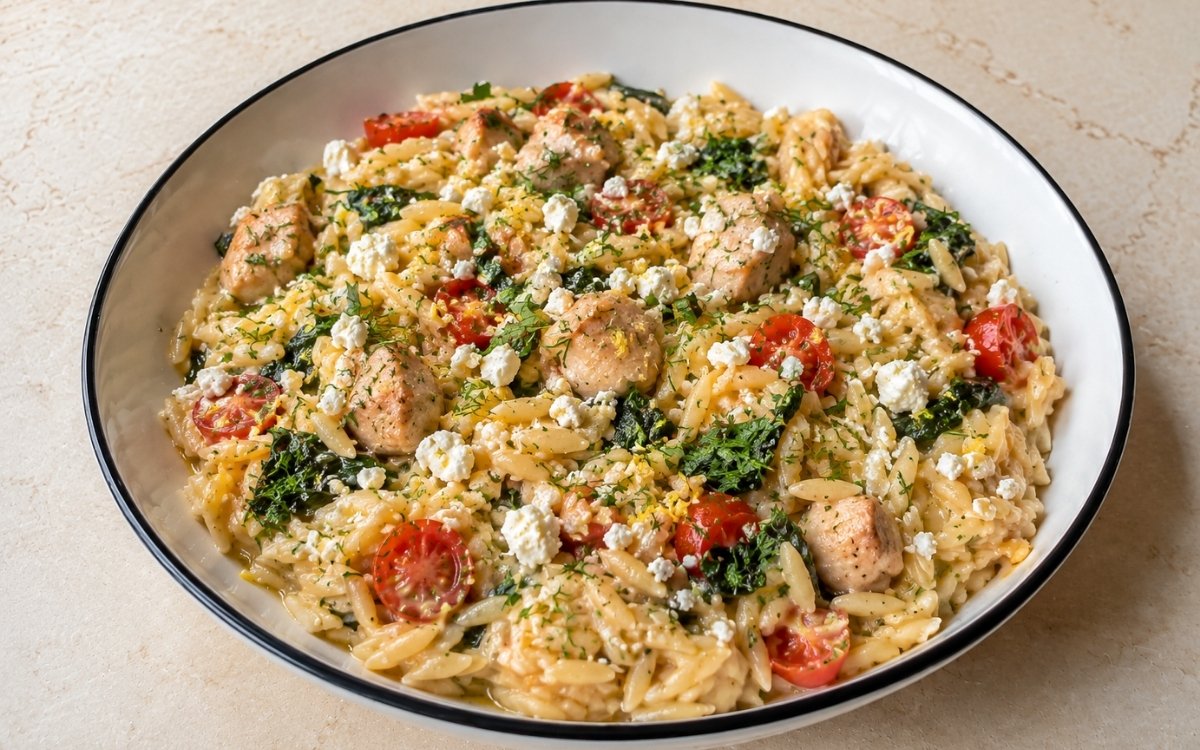
- Remove the lid and fold in the 100g of crumbled feta, three-quarters of the chopped dill, and three-quarters of the chopped parsley. Fold gently — heavy stirring breaks the feta into smaller pieces that disappear into the orzo rather than remaining as distinct, identifiable chunks that provide concentrated briny, creamy hits in individual bites. The feta's salty, slightly acidic, creamy character is the specific finishing element that ties the entire dish together: its saltiness amplifies the lemon's brightness, its creaminess echoes the butter and cream's richness, and its specifically briny character is the Mediterranean note that gives the dish its regional identity. Fresh dill is the herb that most specifically characterises this preparation as Mediterranean rather than generically citrusy — its slightly anise-like, very aromatic freshness has a natural, historically rooted affinity with lemon and feta that parsley amplifies but cannot replicate. Taste the finished dish carefully. The ideal flavour balance is bright from the lemon, savoury and slightly salty from the feta and stock, mildly rich from the cream and butter, gently spiced from the red pepper flakes, and herbaceous from the dill and parsley. Adjust with additional salt or a small additional squeeze of lemon juice if the balance tips toward flat or heavy.
Serve
- Divide among four warm shallow bowls. Scatter the reserved fresh dill and parsley across each bowl. Add an additional small crumble of feta over each portion if desired. Drizzle with a small amount of your best extra-virgin olive oil — the raw, uncooked oil's fruity, slightly peppery character adds a fresh top note that the cooked oil in the pan does not provide. Serve immediately.
Notes
Chicken thighs rather than breasts are not a preference but a requirement for this specific recipe. The thighs are cut into pieces and cooked twice — first seared at high heat, then simmered in the orzo for 12–14 minutes. Breast meat subjected to this cooking sequence dries out irreversibly during the second cooking stage, producing rubbery, dry pieces embedded in the otherwise creamy orzo. Thigh meat's higher intramuscular fat and collagen content keeps it moist and yielding through both cooking stages — the collagen partially converts to gelatin during the simmer, actually enriching the orzo's texture slightly. Breast substitution is not recommended.
The 15g of lemon zest from approximately 3 lemons is a substantial quantity and produces an assertively lemon-aromatic result throughout the orzo — not merely a hint of citrus but a prominently lemon-forward character that defines the dish's identity. For a more subtle lemon presence, reduce to the zest of 2 lemons and use 60ml of lemon juice rather than 80ml. For the most vivid lemon character, the specified quantities are correct.
Fresh dill is the herb that cannot be substituted with dried in this recipe. Dried dill has a completely different aromatic profile — dusty, muted, and lacking the clean, slightly anise-like freshness of the fresh herb. Fresh dill's volatile aromatic compounds are the specific flavour element that makes this dish taste Mediterranean rather than generically creamy and lemony. If fresh dill is unavailable, increase the fresh parsley to 40g and add 15g of fresh mint as a partial substitute — the result is different but still excellent.