Ingredients
Method
Brew the Espresso
- Brew 120ml espresso total, equal to 4 standard 30ml shots. If using sugar, add it directly to the hot espresso and stir until fully dissolved. The espresso needs to be fresh, hot, and aromatic before shaking. Stale espresso gives a flat Freddo, and sugar added after chilling will not dissolve cleanly. Dissolving sugar into the espresso while it's still genuinely hot takes advantage of sugar's much greater solubility at higher temperatures — the same amount of sugar added to the cold, shaken drink afterward would dissolve far more slowly and incompletely, leaving undissolved granules at the bottom of the glass.
Shake with Ice
- Pour the hot espresso into a cocktail shaker, drink mixer cup, or sealed jar. Add the shaking ice. Shake hard for 10–15 seconds, until the espresso is fully chilled, slightly diluted, and foamy on top. This is the core technique. The espresso should become colder, lighter in texture, and capped with a thick tan foam. If you barely shake it, you get iced espresso, not Freddo Espresso. The vigorous, sustained agitation of a hard shake does two things simultaneously that a gentle stir over ice never would — it chills the espresso rapidly through direct, constant contact with the ice, and it physically whips air into the liquid, which is specifically what produces the thick, stable foam cap that defines this drink.
Fill the Glasses
- Fill 2 tall glasses with fresh ice. Do not use the same ice from the shaker as the serving ice. It is already partly melted and will water the drink down faster. Ice used in the shaker has already absorbed a meaningful amount of heat from the hot espresso and begun melting during the vigorous shake — using that same ice for serving would mean starting the drink's presentation with ice that's already partway toward diluting it further, well before the drink has even been poured.
Pour and Serve
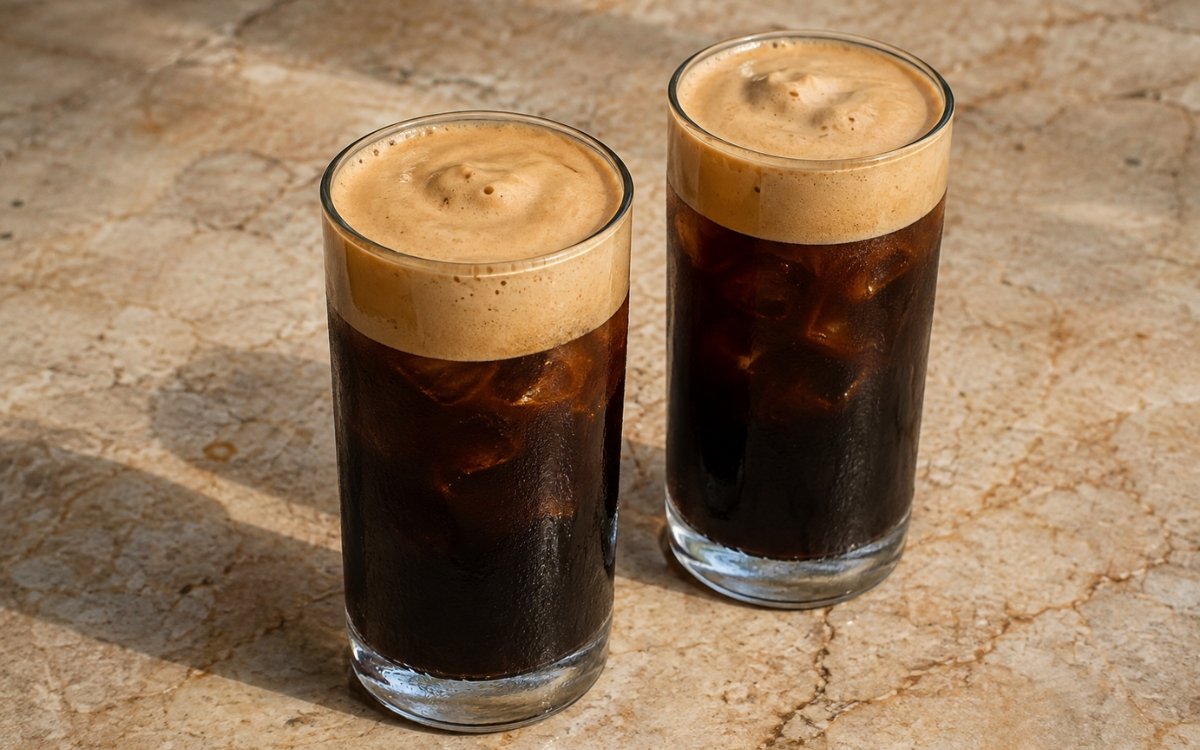
- Strain or pour the shaken espresso over the fresh ice, dividing it evenly between the 2 glasses. Spoon any remaining foam from the shaker onto the top of each drink. Serve immediately. The finished drink should be dark, cold, and glossy with a stable light-brown foam layer on top. It should taste like chilled espresso, not diluted coffee water. Serving over genuinely fresh, full-cold ice, poured on top of that fresh ice rather than the reverse, is what keeps the finished drink properly cold and structured through the time it takes to actually drink it.
Notes
The hard shake is worth understanding as the single technique this entire drink is built around, distinguishing a genuine Freddo Espresso from simply pouring hot espresso over ice. That vigorous, sustained agitation accomplishes two things at once that a gentler approach never would — it chills the espresso rapidly and thoroughly through direct, forceful contact with the ice, and it physically incorporates air into the liquid, which is what produces the thick, stable foam cap this drink is specifically known for. A weak or brief shake produces something closer to plain iced espresso, missing the drink's defining texture entirely.
Using separate ice for shaking versus serving is a detail worth respecting rather than treating as unnecessary extra effort. The shaking ice has already absorbed real heat from the hot espresso during the vigorous shake and has begun melting in the process — using that same partially melted ice for serving means starting the presentation with ice that's already working against the drink's temperature and concentration before it's even poured into the glass.
Dissolving sugar directly into the hot espresso, before any shaking or chilling happens, takes real advantage of a basic property of solubility — sugar dissolves considerably more readily in hot liquid than cold. Adding the same sugar after the drink has already been chilled and shaken would leave it dissolving far more slowly and incompletely, risking undissolved granules settling at the bottom of the finished glass rather than sweetening the drink evenly throughout.
The explicit distinction drawn against adding milk — since doing so moves the drink toward a Freddo Cappuccino rather than a Freddo Espresso — is worth taking as a genuine boundary rather than an arbitrary rule. This drink's entire identity depends on being purely espresso-forward, with its characteristic foam coming entirely from the shaking technique rather than any dairy or milk-based foam. Adding milk changes the drink into a different, related format rather than a minor variation on this one.