Ingredients
Method
Prepare the Corn
- Remove the husks and silk from the corn. Pat the cobs dry, then rub lightly with neutral oil and season with kosher salt. The corn must be dry before grilling. Wet corn steams before it chars, and this recipe needs visible caramelised blackened spots. A thoroughly dried cob lets the grill's direct heat go straight into browning the kernel surface, rather than first evaporating lingering moisture — that delay is exactly what produces pale, dull kernels instead of the deep charred spots this dish depends on.
Grill the Corn
- Preheat a grill, grill pan, or cast-iron skillet over medium-high to high heat until very hot. Grill the corn for 10–12 minutes, rotating every 2 minutes, until the kernels are tender and charred in dark patches. Brush with melted butter during the final 2 minutes of cooking so the kernels turn glossy and the butter picks up some smoky charred flavour. Do not fully burn the corn. You want scattered blackened spots and deep yellow kernels, not dry bitter cobs. Brushing the butter on only near the end, rather than at the start, keeps it from burning over the full 10–12 minute grill time while still giving it enough contact with the hot kernels to pick up real smoky char flavour.
Cut the Kernels
- Transfer the grilled corn to a board and let cool for 2–3 minutes, just until safe to handle. Stand each cob upright and cut the kernels off with a sharp knife. Keep the knife close to the cob so you get full plump kernels. Do not scrape aggressively into the cob or the mixture will become starchy and mushy. Cutting close rather than scraping is a deliberate texture choice — the cob's core carries a different, starchier consistency than the kernels themselves, and pulling that material into the mix along with the kernels changes the finished texture from creamy-with-distinct-kernels to something closer to a thick, gluey paste.
Make the Creamy Elote Mix
- In a large bowl, mix the mayonnaise, crema or sour cream, lime juice, grated garlic, salt, and black pepper until smooth. Add the warm grilled corn kernels and fold until fully coated. The heat from the corn should loosen the mayo, melt the butter residue into the mixture, and create a glossy wet coating. The mixture should look creamy and abundant, not dry. If it feels too thick, add a small spoonful of crema or a few drops of lime juice. Adding the kernels to the base while genuinely warm, rather than letting them cool first, is the whole reason this mixture ends up glossy rather than thick and separate — the residual heat is doing real work here, actively melting and loosening the fats in the mayonnaise and any clinging butter.
Prepare the Chilli Dust
- Mix the chilli powder, smoked paprika, and cayenne if using. Keep it ready with the cotija and cilantro before filling the cups. Having every garnish measured and within reach before the corn is even off the grill means the whole assembly sequence, from cutting kernels to topping the filled cups, moves without interruption while everything is still warm.
Assemble the Cups
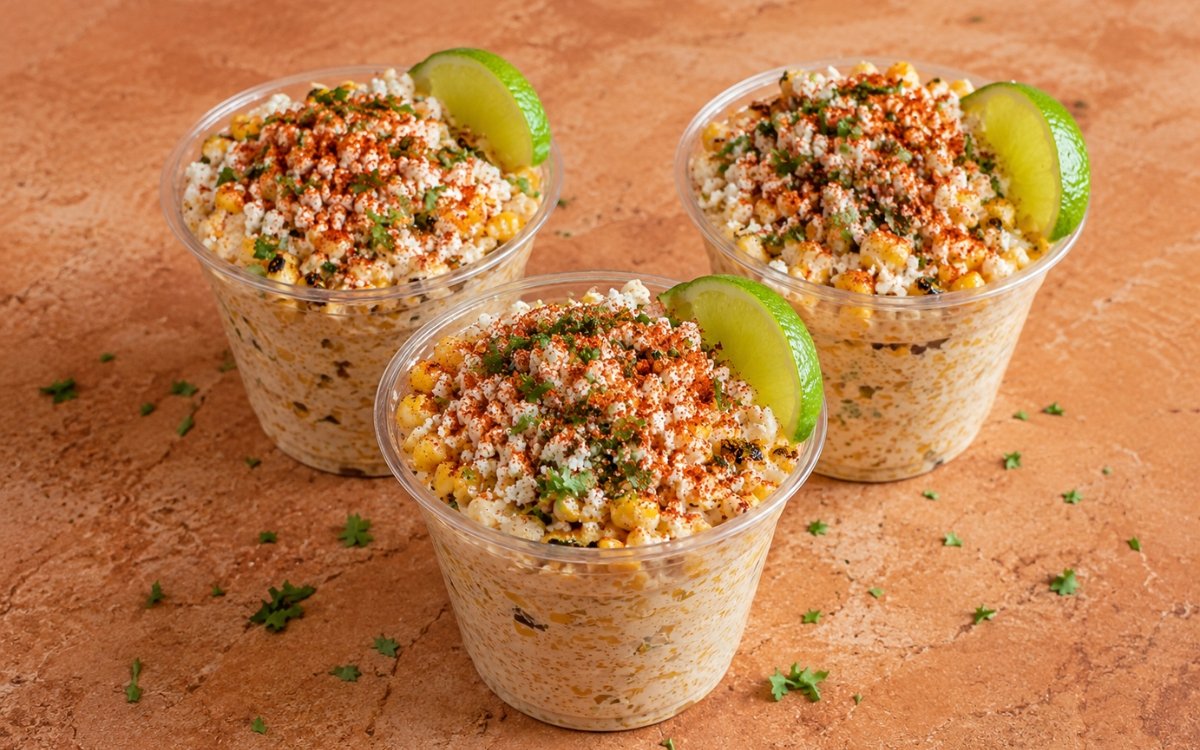
- Divide the creamy corn mixture between 4 cups, using the kernels from 1 cob per cup. Pack generously but do not press it flat. Top each cup heavily with crumbled cotija. Dust with the chilli mixture so the red-orange colour is clearly visible, especially on the top layer. Scatter fresh cilantro over each cup. Packing generously without pressing flat preserves some volume and texture in the cup rather than compacting the corn into a dense, uniform mass — the goal is an abundant, slightly loose pile that still holds its shape.
Serve
- Place one lime wedge on the rim or edge of each cup. Serve immediately while the corn is still warm and glossy. Positioning the lime wedge on the rim, visible and ready, signals that a final squeeze right before eating is part of how this dish is meant to be finished, brightening the rich, creamy corn underneath.
Notes
Mixing the corn into its creamy base while still warm is the single most important technique decision in this recipe, and it's worth understanding why it matters so much. Cooled corn mixed into a cold mayonnaise base produces a mixture that's technically combined but visually and texturally flat — the fats in the mayonnaise stay firm and separate rather than loosening into the glossy, clinging coating this dish is known for. Warm kernels actively melt and loosen that base on contact, which is a meaningfully different, better result than simply stirring everything together at room temperature.
Cutting the kernels close to the cob rather than scraping deeper into it is a small technique detail with an outsized effect on texture. The cob's core contains starchier, less distinctly textured material than the kernels themselves, and pulling that material into the mix — whether by accident through aggressive scraping or as a shortcut to extract more volume — shifts the finished dish from creamy-with-plump-kernels toward something gluier and less appealing.
The sequencing of garnishes — cotija first, then chilli dust, then cilantro — exists for both flavour distribution and visual reasons. Cotija added directly onto the still-warm, glossy corn adheres readily. The chilli dust added afterward, rather than mixed through the corn itself, is what keeps its vivid red-orange colour sitting visibly on top rather than diffusing and muting throughout the whole cup.
This is a dish with a genuinely short serving window, and that's intentional rather than a flaw. The warm corn continues releasing a small amount of moisture even after mixing, and the longer the assembled cups sit, the looser and less visually appealing the creamy coating becomes. Serving promptly after assembly, while everything is still glossy and freshly combined, is what keeps the dish looking as abundant and vivid as it's meant to.