Ingredients
Method
Make the Elderflower-Infused Simple Syrup
- Combine the 180ml of water and 150g of white sugar in a small saucepan over medium heat. Stir until completely dissolved and clear. Remove from the heat immediately. Add the 1½ tsp of dried culinary elderflower. Cover and steep for 6–8 minutes. Elderflower's primary aromatic compounds — primarily hotrienol, geranyl acetone, and various linalool-adjacent compounds responsible for the specifically honeyed, delicately white-floral character — are among the most volatile of any botanical used in this collection. In the concentrated warm simple syrup the extraction is rapid: at 6 minutes the aromatic compounds are at their most pleasantly concentrated relative to the compound profile's more astringent fractions. At 8 minutes the preparation is at the maximum of the pleasantly floral range. Beyond 8 minutes the dried flower material's more fibrous components begin releasing the compounds responsible for the dusty, hay-like, medicinal quality that is elderflower's specific over-extraction failure — a failure that is different from lavender's camphor-soapy or rose's tannin-bitter, but equally disqualifying for a preparation that depends on elderflower's specific character. A specific note on dried versus fresh elderflower: fresh elderflower clusters steeped at room temperature or very gently in warm water produce the most specifically vivid, most aromatic result and are used in the traditional elderflower cordial preparations of British and Scandinavian tradition. Dried elderflower in this warm simple syrup format is significantly more accessible and produces an excellent, well-extracted result within the 6–8 minute window. If fresh elderflower is available in season, use 2 tsp loosely packed fresh clusters at the same 6–8 minute window. Strain completely through a fine-mesh sieve — pressing gently, as with rose, rather than firmly. The dried elderflower's fibrous material releases the astringent dusty compounds under firm pressing. Light pressing extracts the aromatic liquid and leaves the unpleasant fraction behind. Allow to cool completely.
Prepare the Lemon Pulp
- Segment 2–3 lemons, removing all seeds and tough membranes with the clean citrus pulp retained. Remove all white pith. Add to the large pitcher and mash very gently — the same light-mashing approach used for the Meyer lemon lemonade rather than the firmer mashing of the lime or blood orange preparations. Elderflower's specifically delicate aromatic character requires the lemon to be present and vivid without any aggressive bitterness from lemon pith that would specifically overpower the floral softness.
Build the Elderflower Lemonade Base
- Add the 240ml of fresh lemon juice, 120ml of the cooled elderflower syrup, 750ml of ice-cold water, and the pinch of fine sea salt to the pitcher. Stir thoroughly. Taste with attention to elderflower's specific character: the correctly infused elderflower syrup should contribute a specifically honeyed, soft, white-floral warmth that is present behind the lemon rather than competing with it. The elderflower character in this lemonade is specifically more subtle than rose's warm depth or lavender's cool aromatic signature — it is specifically the most delicate of the three floral lemonades and the one where the floral note, correctly made, is most like something you sense rather than something you specifically taste. If it is not present at all, add syrup in 10ml increments. If it is present as a pleasant floral warmth behind the lemon — correct. The salt is specifically important in elderflower lemonade for the same amplifying reason as in the rose preparation: salt specifically enhances the perception of elderflower's volatile aromatic compounds at sub-threshold concentration, making the honeyed floral character more vivid and more specifically present without requiring additional syrup.
Chill and Serve
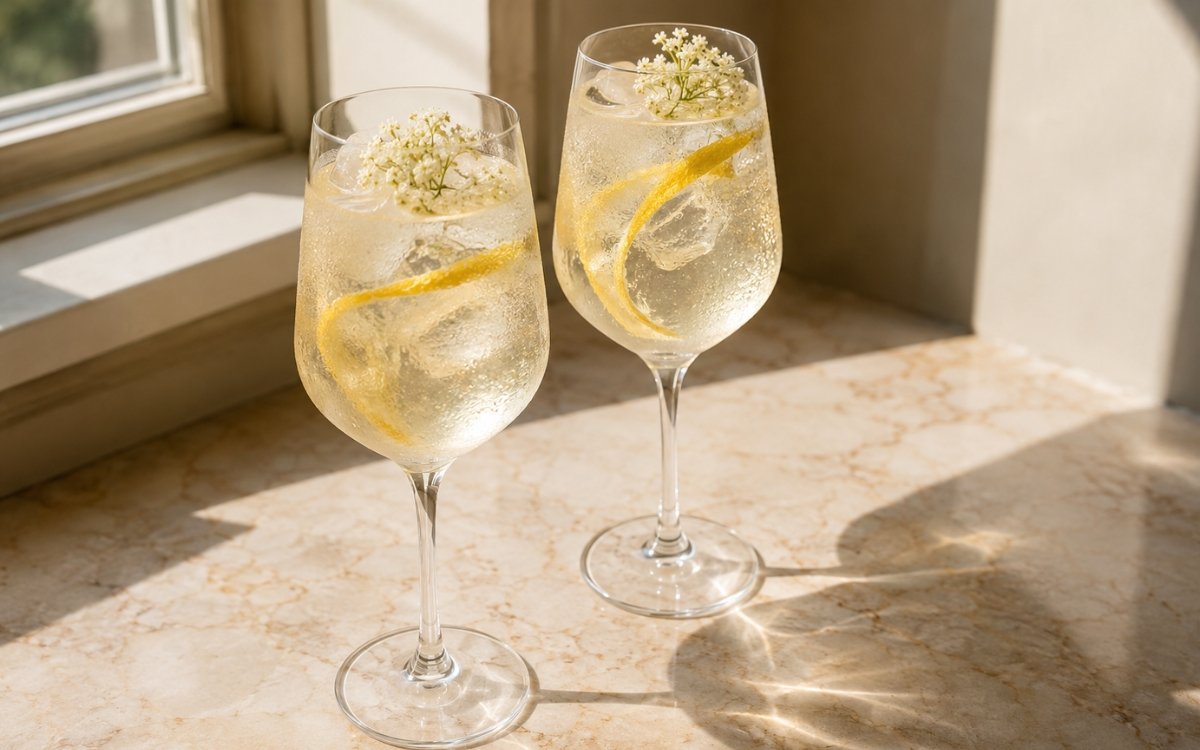
- Refrigerate for 1–2 hours. Elderflower's integration during the cold rest is specifically the most pronounced of any of the three floral lemonades — the very delicate volatile compounds distribute through the cold water over the resting period in a way that produces a meaningfully more cohesive, more harmonious finished drink than the immediately combined version. The immediately combined elderflower lemonade has a slightly two-register quality — lemon and a separate floral note; the chilled version has a specifically unified lemon-and-honeyed-floral profile. Fill glasses with ice. Pour the chilled elderflower lemonade over the ice. Garnish with a lemon slice and, if available in season, a small fresh elderflower cluster placed against the rim — the fresh cluster's own aromatic compounds providing a specifically beautiful first impression before the drink is tasted. Serve immediately.
Notes
Wild elderflower (Sambucus nigra) clusters in flower in May and June across Europe, North America, and temperate Asia — the peak of the elder tree's brief flowering window producing the most intensely aromatic, most specifically honeyed-white-floral result available. Traditional elderflower cordial preparations in the UK and Scandinavia use fresh clusters steeped for 24–48 hours in cold sugar syrup — a longer, colder process that captures the most volatile aromatic compounds at the lowest possible temperature. The warm simple syrup method used here sacrifices some of that cold-steep's specific delicacy for the convenience of a 6–8 minute extraction, but produces an excellent, well-calibrated result that is faithful to elderflower's character.
Elderflower cordial — the commercially produced sweetened elderflower concentrate found in most UK supermarkets and increasingly worldwide — can replace the homemade syrup in this preparation: use 60–80ml of high-quality elderflower cordial in place of 120ml of the homemade syrup, reduced quantity because the cordial is more concentrated. The homemade infusion produces a more specifically fresh, more aromatically complex result; the cordial provides convenience at the cost of some specific character.