Ingredients
Method
Prep and Drain the Cucumbers
- Wash and dry the 3 English cucumbers, then trim off the ends. Cut each one in half lengthwise and, if the seeds look especially wet, scrape out the centre lightly with a teaspoon. Cut the halves into long strips, then into a small, even dice of about 5mm. Place the diced cucumber in a sieve set over a bowl, toss with the 1 tsp fine salt and leave for 10–15 minutes; beads of liquid should gather on the surface and drip into the bowl below. Squeeze the cucumber gently by the handful, or press it in a clean kitchen towel, until it feels damp rather than wet, then discard the liquid. That draining step is what keeps the finished raita genuinely thick, since wet cucumber keeps leaking water into the yogurt long after it is folded in.
Toast and Grind the Cumin
- While the cucumber drains, place the 2 tsp cumin seeds in a small, dry frying pan over medium-low heat. Toast for 2–3 minutes, shaking the pan often, until the seeds turn a shade darker, smell warm and nutty and just begin to crackle. Take them off the heat before any wisps of smoke appear; if they turn dark brown or smell acrid, discard them and start again, because burnt cumin tastes bitter. Tip the seeds onto a plate to cool for 1–2 minutes, then grind them to a fine powder in a spice grinder or mortar and pestle, giving about 1½ tsp. If you are using ready-made roasted cumin powder, skip this stage. That fresh toasting is what gives the raita its deep, rounded cumin flavour instead of the flat, dusty taste of raw ground spice.
Make the Yogurt Base
- Spoon the 500g thick full-fat yogurt into a mixing bowl and whisk for about 1 minute, until completely smooth, glossy and free of lumps. Add the ½ tsp fine salt, the ½ tsp black pepper, 1 tsp of the roasted cumin powder, and the ¼ tsp chaat masala and chopped green chilli if using, then whisk again until evenly combined. If the yogurt is extremely thick, loosen it with the chilled water or milk 1–2 tbsp at a time, using only as much of the 60–100g as it needs to become creamy and spoonable. The base should fall from a spoon in soft, thick dollops and hold a ridge, never pour like a sauce. That restraint with liquid is what lets the yogurt hold the cucumber and herbs evenly rather than separating around them.
Fold In the Cucumber and Herbs
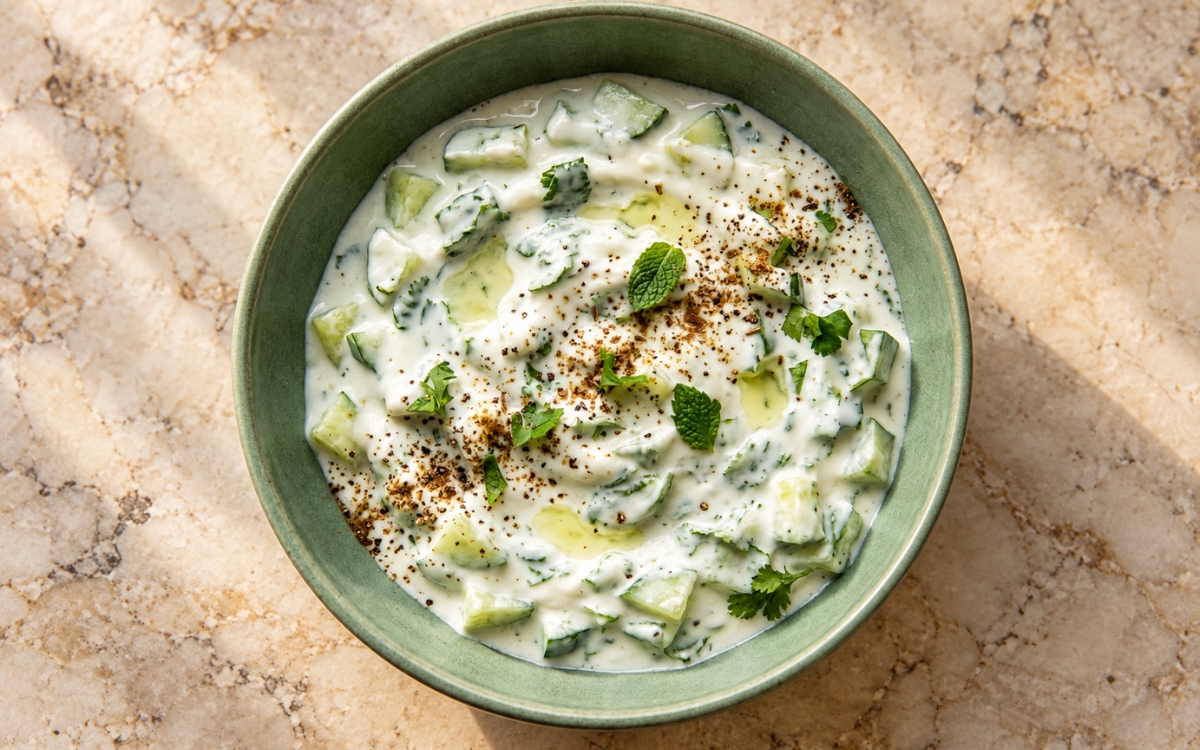
- Add the drained cucumber, the 2 tbsp chopped cilantro and the 1 tbsp chopped mint to the seasoned yogurt base. Fold gently with a spatula, turning the bowl as you go, just until the cucumber cubes and green flecks are evenly distributed; there is no need to beat or overmix. Taste and adjust with a pinch more salt, pepper or roasted cumin, remembering that the cucumber has already been salted. If it needs more freshness, add a little of the extra cilantro first, and keep any extra mint sparing, since it quickly dominates. The raita should look thick and evenly speckled, with the cucumber suspended in the yogurt rather than sitting in a pool of liquid. That seasoning-first order is what lets you judge the balance properly, because the base is already fully seasoned before the fresh herbs go in.
Chill and Finish
- Cover the bowl and refrigerate for 10–15 minutes, so the raita turns properly cold and the cucumber and seasoning settle into the yogurt. Stir once, then spoon it into a serving bowl and smooth the top into soft swirls with the back of the spoon. Dust lightly with the remaining roasted cumin powder and a little extra black pepper. Scatter over the extra chopped cilantro and the small mint leaves, then add a few tiny drops of olive or neutral oil only if you want a glossy finish for appearance. Serve the raita cold, straight from the fridge. That short, cold rest is what lets the cucumber, herbs and cumin genuinely meld into the yogurt, giving a raita that tastes rounded and refreshing rather than like separate ingredients.
Notes
Salting and squeezing the cucumber deserves genuine recognition as the technique most directly responsible for whether this raita stays thick or turns watery. The recipe's own instruction, "Do not skip draining," reflects simple osmosis — salt pulls water out of the cucumber cells in advance, so it ends up in the bowl beneath the sieve instead of seeping into the yogurt during the first few minutes at the table.
Thick full-fat yogurt deserves the same attention this technique receives throughout this collection's other yogurt sauces and dips, because it supplies the body the whole raita stands on. Its fat and dense protein structure hold the cucumber in suspension, whereas loose, low-fat yogurt thins as soon as salt and cucumber are added — which is why regular yogurt should be strained for 20–30 minutes before it goes in.
Cutting the cucumber into a small dice deserves genuine respect as the detail most directly responsible for a raita with a clean texture and controlled moisture. Grating ruptures far more cells and, in the recipe's own words, "releases much more water and creates a looser raita," while small, even cubes keep their crunch and give up only the moisture the salt draws out before mixing.
The thick, spoonable consistency of the base deserves attention as a genuine, checkable readiness cue rather than a loose approximation. If the whisked yogurt falls in soft dollops and holds a ridge, it is ready; if it pours, it has been over-thinned and will separate around the cucumber, which is why water or milk goes in only a spoonful at a time.