Ingredients
Method
Extract the Lemon Oils into the Sugar
- Finely zest the lemons, taking only the yellow outer peel and avoiding all white pith. Place the zest in a bowl with the sugar. Rub the zest into the sugar with your fingertips for 1–2 minutes until the sugar feels damp and fragrant. Let it sit for 10–15 minutes so the sugar pulls out the lemon oils. Rubbing rather than simply mixing the zest into the sugar is what actually ruptures the peel's tiny oil glands, mechanically releasing those aromatic oils directly into the sugar without needing any heat.
Make the Cucumber Juice
- Place the chopped cucumber in a blender with a tiny pinch of salt and blend until completely smooth. Pour the cucumber purée through a fine-mesh sieve or cheesecloth into a bowl and press gently to extract the juice. You want a smooth strained cucumber juice, not a thick pulp. You should get about 300–350ml juice. That small pinch of salt added before blending genuinely helps draw out and concentrate the cucumber's own natural juice, giving the strain that follows more liquid to actually work with rather than fighting against a drier purée.
Build the Flavor Base
- Add the lemon juice to the lemon sugar and whisk until the sugar begins dissolving. Pour in the strained cucumber juice and whisk again until evenly combined. The lemon juice's own acidity helps dissolve the sugar and carries the already-released lemon oils fully into the base, and combining that citrus foundation with the cucumber juice at this stage, before the water is added, lets the two core flavours integrate fully while the mixture is still concentrated.
Finish the Lemonade
- Transfer the mixture to a large pitcher. Add the cold water and stir very well until the sugar is fully dissolved. For an even cleaner finish, you can strain the full mixture once more through a fine-mesh sieve. This optional final strain catches any remaining fine solids the earlier straining passes might have let through, producing the smoothest, cleanest possible finished texture.
Chill
- Refrigerate for 30 minutes, or until thoroughly cold. That resting period lets the lemon and cucumber components fully meld together, producing a more unified flavour than serving the drink immediately after mixing.
Serve
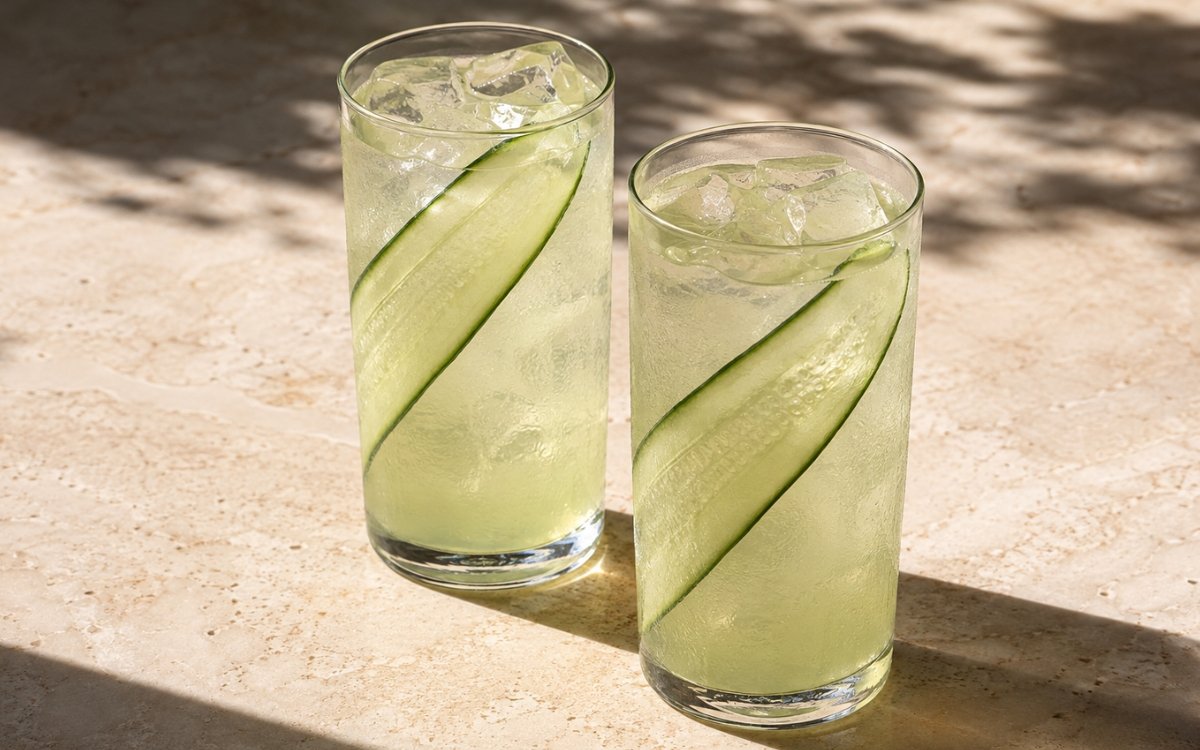
- Place a long cucumber ribbon against the inside wall of each glass. Fill with ice, pour in the lemonade, and serve immediately. Pressing the ribbon against the glass wall before adding ice, rather than dropping it in loosely afterward, is what keeps it visibly displayed against the glass rather than sinking or curling out of view once the drink is poured.
Notes
The strict avoidance of white pith throughout zesting deserves the same careful attention it receives across every citrus-forward drink in this collection. Lemon pith carries a real, distinct bitterness entirely separate from the fruit's natural tartness — even a small amount worked accidentally into the zest can introduce a flavour that works directly against this drink's whole light, clean, cooling character.
Choosing seedless, English-style cucumbers specifically, rather than a standard variety, deserves recognition as a genuine ingredient decision rather than a flexible preference. Cucumber seeds and the gel surrounding them carry a meaningfully more bitter, watery quality than the flesh alone — using a seedless variety avoids introducing that bitterness into the strained juice from the very start.
Straining the blended cucumber to a genuinely smooth juice, rather than leaving it as a thicker purée, is worth understanding as the technique responsible for this lemonade's specific texture. A drink built on cucumber pulp would read as considerably heavier and more vegetal than the light, clean result this recipe is built around — straining is what keeps the cucumber's fresh flavour present without the accompanying bulk of its fibrous solids.
The small pinch of salt added to the cucumber before blending deserves attention as a genuine technique detail rather than a flavour seasoning. That salt helps draw moisture out of the cucumber's cell structure through basic osmosis, meaning the subsequent straining step has more actual juice to extract rather than working against a drier, more resistant purée.