Ingredients
Method
Make the Lemon Sugar
- Wash and dry the lemons well. Finely zest them, taking only the yellow outer peel. Place the zest and sugar in a bowl. Rub together with your fingertips for 2 to 3 minutes until the sugar feels damp and highly fragrant. Let sit for 15 to 20 minutes so the citrus oils perfume the sugar. Rubbing rather than simply mixing the zest into the sugar is what actually ruptures the peel's tiny oil glands, mechanically releasing those aromatic oils directly into the sugar without needing any heat.
Make the Cucumber Base
- Trim the cucumber. If the skin is thin and tender, leave it on for fresher color and flavor. Roughly chop and blend with 200ml very cold water until fully broken down. Strain through a fine sieve or cheesecloth, pressing gently, until you have a smooth cucumber juice. Chill until needed. Leaving the skin on when it's genuinely thin and tender, rather than peeling by default, is what carries extra colour and flavour into the base — that same skin on a thicker-skinned variety would introduce more bitterness than benefit, which is exactly why the recipe specifies English or Persian cucumbers.
Make the Basil Infusion
- Lightly bruise the basil leaves with your hands to release their aroma. Place them in a bowl or jar with 250ml cold water. Very gently muddle just a few times, then refrigerate for 15 to 20 minutes. Strain and discard the basil. This deliberately gentle handling — a light bruise, only a few gentle muddles, cold water throughout — is what releases basil's aromatic oils without damaging the leaf's own cell structure enough to darken it or draw out any bitterness, a real risk with more aggressive muddling or any heat.
Make the Lemon Base
- Add the fresh lemon juice to the lemon sugar and stir until the sugar mostly dissolves. Strain through a fine sieve, pressing lightly on the zest, to create a fragrant lemon syrup. The lemon juice's own acidity helps dissolve the sugar while carrying the already-released lemon oils fully into the base, and pressing the spent zest lightly before discarding it captures its flavourful syrup without forcing through anything unwanted.
Build the Lemonade
- In a large pitcher, combine the lemon syrup, the cucumber juice, the basil infusion, 900ml cold water, and the pinch of salt, if using. Stir very well. Taste and adjust with a little more cold water as needed. The final lemonade should be bright, cucumber-forward, gently herbal, and make about 2 liters. This tasting checkpoint matters directly given how much both cucumber and basil intensity can vary — building in that adjustment stage accounts for that natural variability rather than assuming a fixed recipe always lands at the same balance.
Chill
- Refrigerate for 10 to 15 minutes, or until very cold. That brief resting period lets the lemon, cucumber, and basil components fully integrate together, producing a more unified flavour than serving the drink immediately after mixing.
Serve
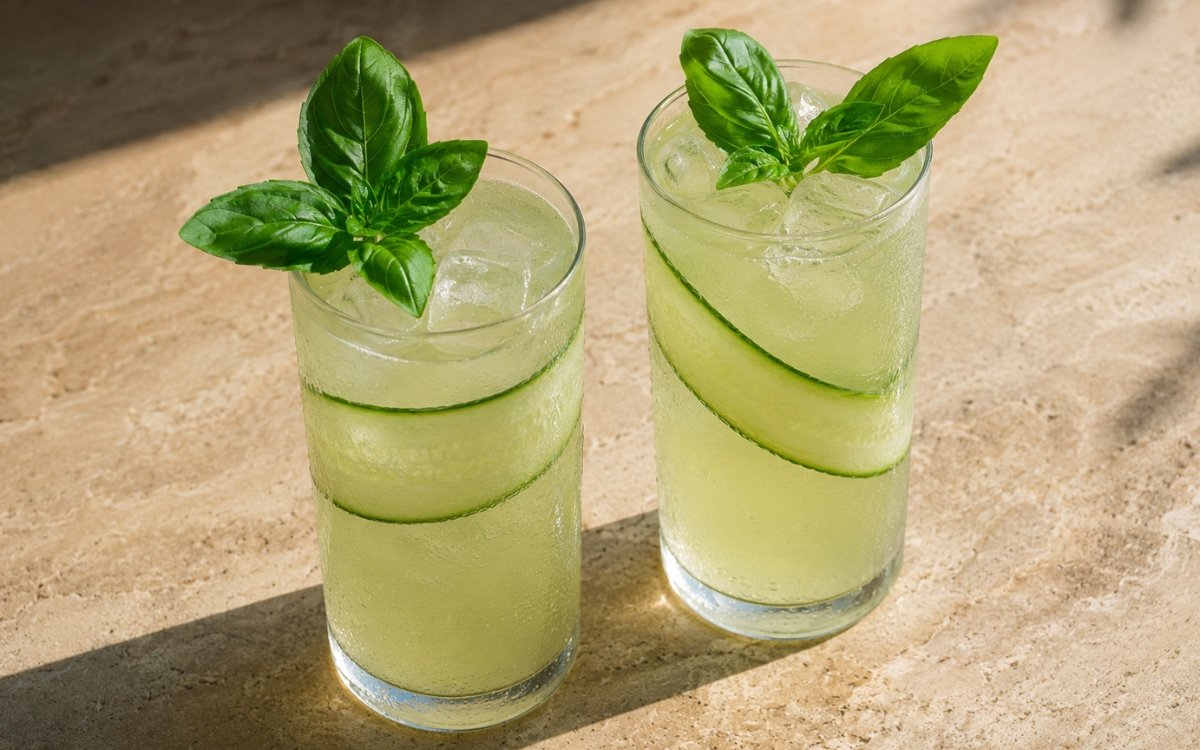
- Fill tall glasses with ice. Add a long cucumber ribbon inside each glass and garnish with a small basil sprig. Pour over the lemonade and serve immediately. Pressing the cucumber ribbon against the glass wall before adding ice, rather than dropping it in loosely, is what keeps it visibly displayed against the glass rather than sinking or curling out of view once the drink is poured.
Notes
Bruising the basil only lightly, then infusing it cold with just a few gentle muddles, deserves real respect as the technique responsible for this lemonade's genuinely fresh, green flavour. Basil's own cell structure damages easily under more aggressive handling — hard muddling or crushing releases not just aroma but also compounds that oxidise quickly, darkening the leaf and introducing a bitterness this recipe is specifically built to avoid.
Choosing English or Persian cucumbers specifically, rather than a standard variety, deserves recognition as a genuine ingredient decision tied directly to the choice to leave the skin on. These milder, thinner-skinned varieties carry considerably less bitterness in their skin than a standard cucumber would, which is exactly what makes leaving that skin on, for extra colour and flavour, a genuinely good idea here rather than a risk.
The cold, gentle infusion method used for both the cucumber base and the basil follows the same underlying logic that runs through every fresh-fruit and fresh-herb lemonade in this collection — delicate, volatile flavour compounds are considerably more vulnerable to heat and rough handling than robust ones, and protecting them at every stage is what keeps the finished drink tasting genuinely garden-fresh rather than muted or bitter.
The strict avoidance of white pith throughout zesting deserves the same careful attention it receives across every citrus-forward drink in this collection. Lemon pith carries a real, distinct bitterness entirely separate from the fruit's natural tartness — even a small amount worked accidentally into the zest can introduce a flavour that competes directly with this drink's already-delicate cucumber and basil balance.