Ingredients
Method
Marinate the Chicken
- Pat the 4 chicken leg quarters completely dry with paper towels, trim or score only excess loose skin or fat without cutting deeply into the meat, and season them all over with the 2 tsp kosher salt and ½ tsp black pepper. In a bowl or jug, whisk the 180ml sour orange juice, 2 tbsp lemon juice, 80ml olive oil, 8 grated garlic cloves, 1½ tsp oregano, 1 tsp cumin, ½ tsp pepper, 1½ tsp salt, and the optional 1 tsp honey until the mojo looks loose and fragrant. Pour 80–100ml into a clean container, cover, and refrigerate it before any raw chicken touches the bowl. Put the chicken in a shallow dish or zip bag, pour over the rest, turn to coat, and refrigerate for at least 4 hours, preferably overnight, turning once or twice but never going past 24 hours. That early reserve is what keeps the finishing sauce fresh and safe to serve.
Cook the Coconut Rice and Beans
- Take the chicken out of the fridge to temper, then rinse the 300g rice until the water runs mostly clear and drain it well. Heat the 1 tbsp oil or butter in a medium pot over medium heat, add the 2 sliced scallions, 2 minced garlic cloves, and the thyme, and cook for 30–60 seconds until fragrant but not browned. Stir in the rice for 1–2 minutes to coat and lightly toast it, then add the 240ml coconut milk, 330ml water or stock, bay leaf, ½ tsp salt, and drained beans. Bring to a gentle simmer, stir once, reduce to low, cover, and cook for 15–18 minutes until the liquid is absorbed, adding a small splash of hot water if the pot dries out before the rice is tender. Rest covered off the heat for 10 minutes, remove the bay leaf, and fluff gently. That covered rest is what leaves the rice fluffy, lightly ivory, and separate, with beans spread throughout rather than piled on top.
Roast the Chicken
- Remove the chicken from the refrigerator 20–30 minutes before roasting and heat the oven to 220°C conventional / 200°C fan. Lift the quarters from the marinade, discard the used marinade, and let the excess drip off so no thick wet puddles sit on the skin. Arrange the chicken skin-side up on a rack set over a tray, or on a lined tray, and roast for 40–50 minutes depending on size until deeply golden and cooked through. If the skin needs more colour, finish under the grill for 2–4 minutes, watching closely because the garlic and sugars scorch fast. The thickest part of the thigh should read 78–82°C for very tender dark meat, although 74°C is the minimum safe temperature. Rest the chicken for 10 minutes. That drained, dry surface is what lets the skin caramelise instead of steam.
Cook the Mojo Onions
- While the chicken rests, heat the 2 tbsp olive oil in a skillet over medium heat, add the 1 large halved and thinly sliced white onion, and cook for 5–7 minutes, stirring, until softened and lightly golden at the edges. Pour in the reserved 80–100ml mojo and simmer for 2–3 minutes until slightly reduced and glossy, then taste and add a pinch of salt if needed. The onions should be soft and silky, never crunchy, and the sauce should taste bright, garlicky, and citrusy without turning harshly acidic. Use only the mojo set aside before the raw chicken was added, never the used marinade. That reserved mojo is what gives the onions a vivid, fresh finish instead of a flat, boiled one.
Assemble the Bowls
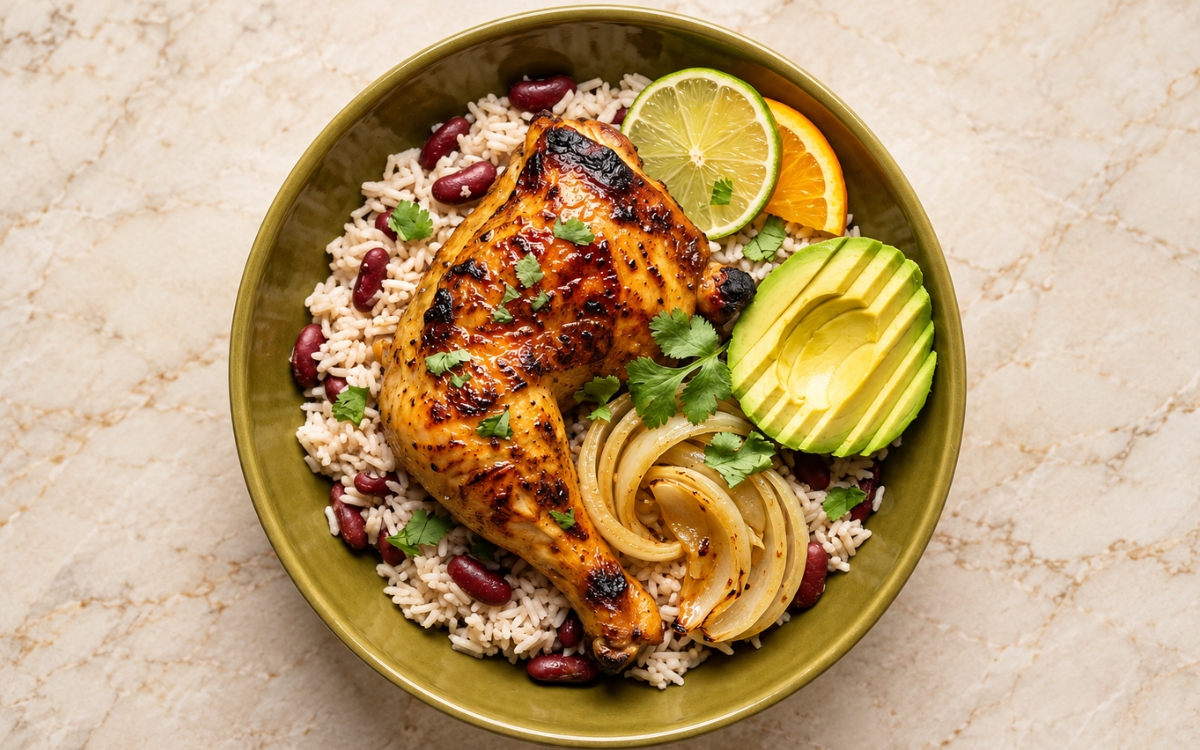
- Divide the coconut rice and beans among 4 bowls and set 1 whole roasted chicken leg quarter on top of each as the hero element. Spoon some mojo onions beside and partly under the chicken, then add a few lime and orange slices to each bowl. Fan half an avocado per bowl neatly along one edge, scatter lightly with cilantro leaves, and spoon a little pan juice or finishing mojo over the chicken and a small amount onto the rice. Finish with extra pepper or flaky salt if you like. Slice the avocado just before serving, and keep the rice visible around the chicken. That composed layout is what keeps the chicken proudly on top and every component clean and distinct.
Notes
Reserving the finishing mojo before the raw chicken goes in deserves genuine recognition as the step most directly responsible for a safe, vivid sauce. The recipe’s own explicit instruction to “Reserve the finishing mojo before the raw chicken is added” matters because any marinade touched by raw poultry must be boiled thoroughly, which dulls the fresh citrus and garlic that make the onions taste bright.
The marinating window deserves the same attention this technique receives throughout this collection’s other citrus-marinated dishes. A minimum of 4 hours lets salt and acid carry the garlic and oregano into the meat, while the recipe’s warning not to “marinate much longer than 24 hours” protects the texture, because strong citrus left on too long makes the surface turn mushy.
The roast deserves genuine respect as the detail most directly responsible for crisp skin and tender dark meat. The recipe’s reminder that “the chicken surface must not be too wet when it goes into the oven” explains why the quarters are drained first, and why stopping exactly at 74°C can leave them less succulent than the preferred 78–82°C.
The rice texture deserves attention as a genuine, checkable readiness cue rather than a loose approximation. The recipe’s target of “soft but separate grains, lightly creamy from coconut milk, never mushy” is easiest to hit when the rice is rinsed, toasted briefly in the scallion-garlic oil, and left covered off the heat for 10 minutes so the steam finishes the cooking.