Ingredients
Method
Cook and Cool the Rice
- Rinse the jasmine rice until the water runs mostly clear. Cook with 390–420ml water until tender but not soft or wet. You want the rice just cooked through and slightly drier than plain eating rice. Spread the cooked rice onto a tray or large plate and let it cool completely. The rice must be cool and relatively dry before mixing. Hot or wet rice makes a soft mixture that absorbs too much oil and will not form crisp clusters properly. That deliberate spreading, rather than leaving the rice piled in a pot, is what lets residual steam actually escape completely, giving it a real chance to cool and dry rather than staying trapped and warm at the centre.
Make the Rice Croquette Mixture
- In a large bowl, combine the cooled rice, red curry paste, egg, fish sauce, sugar, kaffir lime leaves, and shredded coconut. Mix thoroughly until the curry paste is evenly distributed and the rice is uniformly tinted. If the mixture feels loose or wet, mix in 10–15g rice flour. Divide and shape into 6–8 compact oval croquettes or balls, pressing firmly so they hold together. Place them on a tray and rest or chill for 30 minutes. The mixture should hold a shape when pressed. It should be compact, not loose, but still visibly made of rice grains rather than mashed into a paste. That optional rice flour addition is a real, deliberate corrective tool — used only as needed, it absorbs any excess moisture the base mixture might carry without ever needing to add it as a default.
Fry the Rice Croquettes
- Heat neutral oil to 175–180°C in a deep pot. Fry the croquettes in batches, without crowding, for 5–7 minutes, turning as needed, until deeply golden and crisp all over. Transfer to a rack or paper towels and let cool for 10 minutes. Once cool enough to handle, break the croquettes apart by hand into irregular bite-size crispy clusters. For a more pronounced crunchy texture, return the broken clusters to the oil for 45–90 seconds, then drain again. Fry the croquettes deeply golden, not just pale blond. Underfried rice softens quickly after tossing. Overdark rice tastes bitter. Letting them cool slightly before breaking, otherwise they collapse into crumbs instead of irregular clusters. That genuinely deep golden colour reflects real, substantial moisture having cooked out of the croquette all the way through — a paler result would still carry enough residual moisture to soften noticeably faster once combined with the dressing.
Make the Dressing
- In a small bowl, stir together the fish sauce, lime juice, sugar, sliced chili, and optional garlic until the sugar dissolves. Taste. The dressing should be sharp, salty, and bright, because it will season a large amount of fried rice and herbs. It should taste slightly too punchy on its own but balanced once tossed through the salad. That deliberate over-intensity accounts for real, predictable dilution — a dressing that tastes perfectly balanced by itself would read as flat once spread across this much fried rice and fresh herbs.
Assemble the Salad
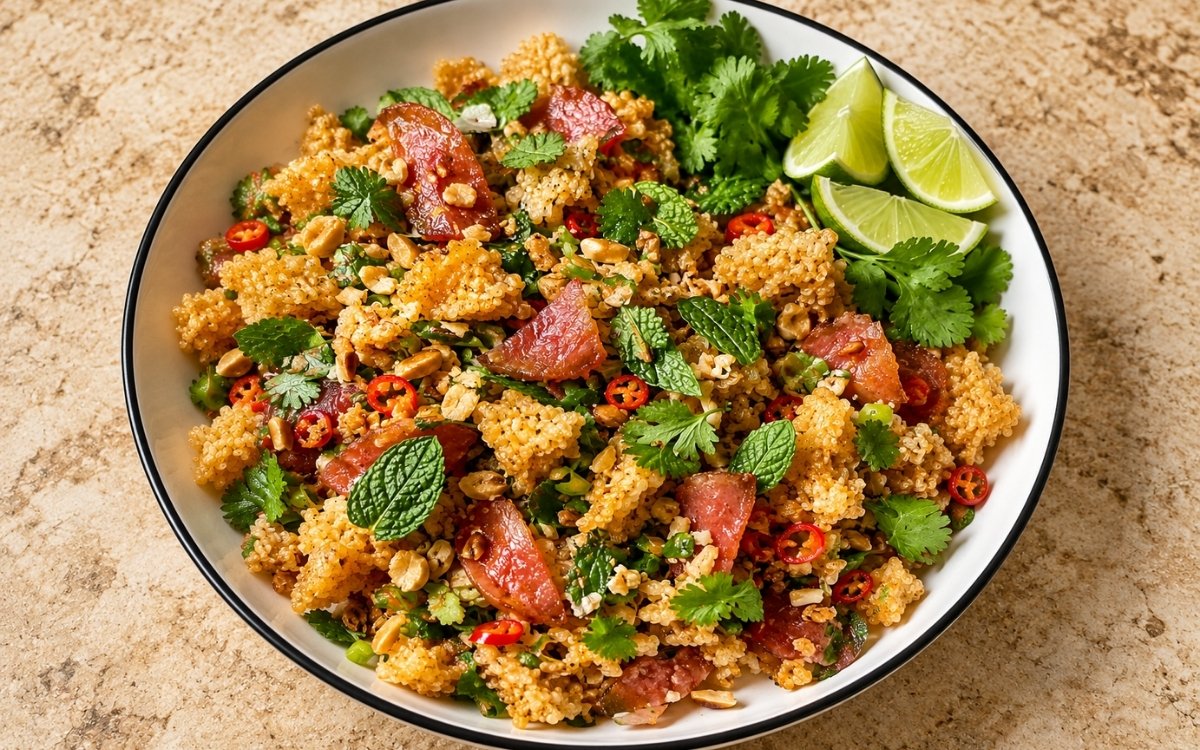
- In a large bowl, combine the crispy rice clusters, cured sausage, peanuts, scallions, cilantro, mint, extra chili, and optional shallot. Add most of the dressing and toss gently but thoroughly. Add more dressing only as needed so everything is glossy and seasoned, but the rice still stays crisp in places. Taste and adjust with more lime juice, fish sauce, or chili if needed. Do not dress too early. The rice should be tossed just before serving so the clusters stay crunchy on the outside while softening only slightly in the center. That specific, deliberately delayed dressing timing protects the rice's own real crunch — even the recipe's own carefully built dressing, given too much contact time, would soften the crisp clusters past their intended texture.
Serve
- Transfer to a wide bowl or platter. Scatter with extra cilantro, mint, and peanuts. Serve immediately with lime wedges and, if using, lettuce leaves for scooping. The ideal texture is a mix of crisp edges, slightly chewy rice centers, fresh herbs, crunchy peanuts, and bright sour-salty dressing. Serving without any real delay is what actually delivers this dish's whole intended texture — that specific balance between crisp outside and slightly chewy centre changes noticeably the longer the salad sits.
Notes
Cooling the cooked rice completely before it ever meets the curry paste and other ingredients deserves genuine recognition as the technique most directly responsible for whether these croquettes actually fry up crisp. The recipe's own explicit warning that hot or wet rice "absorbs too much oil and will not form crisp clusters properly" reflects a real, common failure point — that thorough cooling and drying is the real foundation the entire recipe is built on.
Frying the croquettes to a genuinely deep golden colour, rather than pulling them pale, deserves the same attention this technique receives throughout this collection's other fried rice or starch-based preparations. That real depth of colour reflects genuine, substantial moisture having cooked out all the way through — underfried rice retains enough of that residual moisture to soften considerably faster once it meets the dressing.
Dressing the salad only right before serving, rather than any earlier, deserves genuine respect as the detail responsible for this dish's whole defining textural contrast. Even this recipe's own carefully built dressing, given real contact time, would soften the crisp rice clusters past their intended crunch — that specific timing is what protects the balance between crisp exterior and slightly chewy centre right through to the first bite.
Building the dressing deliberately sharp and punchy, rather than mild, deserves attention as a real, functional technique choice given how much fried rice and how many fresh herbs it needs to season. The recipe's own explicit framing — "slightly too punchy on its own but balanced once tossed through the salad" — reflects genuine understanding of how much dilution this particular dressing needs to survive.