Ingredients
Method
Blanch the Garlic
- Place the peeled garlic cloves in a small saucepan and cover with water. Bring to a simmer and cook for 2 minutes. Drain, rinse briefly under cold water, then mince finely. Blanching softens the sharp raw garlic bite. The sauce still tastes strongly garlicky, but smoother and less harsh. That brief simmer denatures some of the compounds responsible for raw garlic's sharpest edge, mellowing the flavour without cooking it down to nothing — the sauce keeps its genuine garlic presence, just rounded rather than aggressive.
Season the Salmon
- Pat the salmon fillets very dry with paper towels. Season all sides with salt, black pepper, and sweet paprika. Let sit for 10 minutes while you prepare the sauce ingredients. Dry salmon is non-negotiable. If the surface is wet, it steams instead of forming a golden crust. Any residual surface moisture converts to steam the instant it meets the hot pan, and that steam is exactly what prevents the direct, sustained contact real browning depends on.
Sear the Salmon
- Heat a wide stainless steel skillet over medium-high heat. Add the olive oil and 15g butter. Place the salmon fillets presentation-side down. Sear for 3 to 4 minutes, without moving them, until deeply golden. Flip carefully and cook the second side for 1 to 2 minutes. Transfer the salmon to a plate. The fish should not be fully cooked here. It should be browned outside but still slightly underdone inside because it will finish in the sauce. Leaving the salmon genuinely undisturbed during that first several minutes is what gives it the sustained contact real crust development requires — moving it too early interrupts that contact before a proper sear has formed.
Start the Tuscan Sauce
- Lower the heat to medium. Add 20g butter and 15ml olive oil to the same skillet. Add the shallot and cook for 2 minutes, scraping up the browned salmon bits from the pan. Add the minced blanched garlic and cook for 45 to 60 seconds. Add the sliced sun-dried tomatoes, oregano, chili flakes if using, and black pepper. Cook for 1 minute so the tomato oil perfumes the pan. Scraping up the fond left behind from searing the salmon works real, concentrated flavour directly into the aromatics as they cook, rather than leaving that flavour stuck to the bottom of the pan.
Deglaze
- Pour in the white wine or stock. Simmer for 2 to 3 minutes, scraping the bottom of the skillet. The liquid should reduce slightly and pick up the salmon fond, garlic, and tomato flavor. This active reduction concentrates the liquid while continuing to lift any remaining browned bits, building a genuinely flavourful base before the cream is ever added.
Build the Creamy Parmesan Sauce
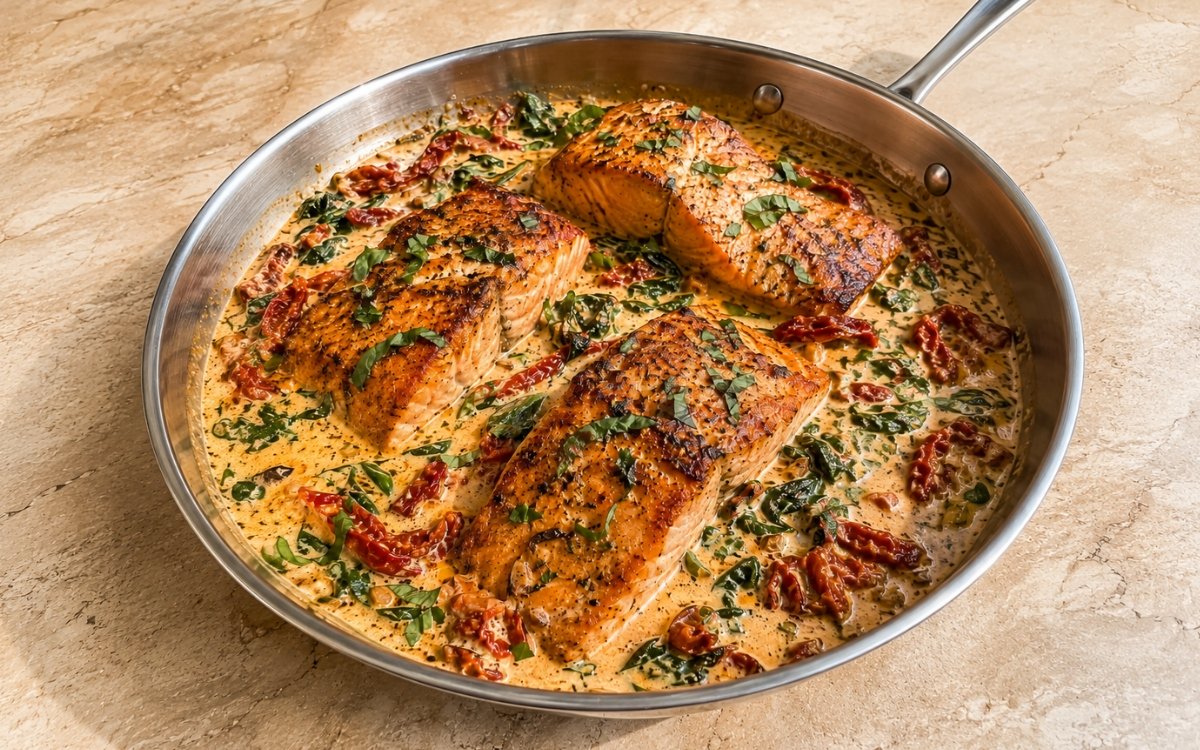
- Lower the heat to medium-low. Add the heavy cream and bring it to a gentle simmer. Add the Parmesan gradually, stirring until melted and smooth. Simmer for 3 to 5 minutes, until the sauce thickens enough to coat the back of a spoon. The sauce should be glossy, pale cream-orange, and thick enough to pool around the salmon. If it looks thin, simmer a little longer before returning the fish. Adding the Parmesan gradually, rather than all at once, gives each addition time to properly melt and incorporate before the next joins — dumping it in together risks the cheese clumping or the sauce turning grainy rather than smooth.
Add Spinach and Herbs
- Add the spinach and stir until just wilted. Stir in most of the parsley and basil, saving a little for the top. Taste and adjust with salt. Add a small squeeze of lemon juice only if the sauce feels too heavy. Adding the spinach only once the sauce has already thickened, rather than earlier, protects it from overcooking into a dull, mushy texture — it needs only enough time to wilt, not to fully break down.
Finish the Salmon Gently
- Return the salmon fillets to the skillet, crust-side up. Spoon some sauce around them, but do not bury the crust completely. Simmer gently for 2 to 4 minutes, depending on thickness, until the salmon is just cooked through. Low heat keeps the cream sauce stable and protects the salmon. Do not boil hard after the fish goes back in. Keeping the crust exposed above the sauce, rather than fully submerged, is what protects that hard-won golden texture from softening under the surrounding liquid.
Serve
- Finish with the remaining parsley and basil. Serve immediately with the creamy Tuscan sauce spooned around the salmon. This dish is best delivered the moment the salmon finishes gently in the sauce, while the crust is still distinct and the sauce is at its glossiest.
Notes
Blanching the garlic before mincing deserves genuine respect as the technique responsible for this sauce's specific, rounded garlic character. Raw garlic carries a genuinely sharp, sometimes harsh bite that a brief simmer meaningfully softens without eliminating the flavour altogether — the sauce still reads as strongly garlicky, just without the raw edge that unblanched garlic would introduce directly into a cream-based sauce.
Searing the salmon deliberately underdone, then finishing it only briefly once it returns to the sauce, reflects the same two-stage protein cooking principle used throughout this collection's other seared-and-finished dishes. That initial sear is meant to build real colour and crust quickly, leaving genuine headroom for the salmon to finish gently in the cream sauce — treating the sear as the fish's only cooking stage would leave no margin for that final, gentle finish.
Keeping the cream sauce at a genuine gentle simmer throughout, and specifically once the salmon returns to the pan, protects a real structural vulnerability of dairy-based sauces. A hard boil at this stage risks the cream separating or the Parmesan turning grainy — the low, patient heat specified throughout is what keeps that emulsion stable right through to serving.
Adding the Parmesan gradually while building the sauce, rather than all at once, deserves the same attention this technique receives throughout this collection's other cheese-thickened sauces. That incremental approach gives each addition genuine time to melt smoothly into the cream before the next joins, protecting the sauce from turning clumpy or grainy.