Ingredients
Method
Make the Cold Lemon Sugar
- Finely zest the lemons, taking only the yellow outer peel and leaving all white pith behind. Add the zest to the sugar in a bowl and rub it together with your fingertips for 2–3 minutes until the sugar feels damp and smells strongly of lemon. Let it sit for 20–30 minutes. This cold extraction pulls the lemon oils into the sugar without heat, keeping the flavor bright and fresh. Rubbing rather than simply mixing the zest into the sugar is what actually ruptures the peel's tiny oil glands, mechanically releasing those aromatic oils directly into the sugar without needing any heat.
Juice the Lemons
- Juice enough lemons to get 300ml fresh lemon juice. Strain out the seeds. Pour the lemon juice over the lemon sugar and stir until the sugar is mostly dissolved. Let it stand 2–3 minutes, then stir again. If you want the cleanest final drink, strain out the zest, pressing firmly to extract all the syrup. The lemon juice's own acidity helps dissolve the sugar while carrying the already-released lemon oils fully into the liquid base, and pressing the spent zest firmly before discarding it captures as much of that flavourful syrup as possible.
Make the Cranberry Base
- Add the cranberries to a blender with 300ml of the cold water. Blend just until the cranberries are fully broken down. Pour through a fine-mesh sieve into a bowl or pitcher, pressing firmly to extract as much liquid as possible. For a clearer lemonade, strain the cranberry liquid a second time through a very fine sieve or cheesecloth. This keeps the cranberry flavor fresh, tart, and vivid without cooking it into a jammy profile. Working with raw, blended cranberries rather than a cooked syrup is what preserves their bright, sharp tartness — cooking cranberries, the more familiar approach for sauces and syrups, softens and rounds that same tartness into something closer to jammy, which this recipe is specifically built to avoid.
Build the Lemonade
- In a large pitcher, combine the lemon syrup, the strained cranberry base, the remaining 1.2L cold water, and the pinch of salt, if using. Stir very well. Taste and adjust only if needed: for more tartness, add a little more lemon juice; for a softer edge, add 1–2 tablespoons sugar and stir until dissolved. Thorough stirring at this stage fully integrates the bright lemon syrup with the sharp cranberry base, producing one cohesive drink rather than two components that merely share a pitcher.
Chill
- Refrigerate for at least 30 minutes so the lemonade becomes fully cold and the flavor settles. That resting period lets the lemon and cranberry components fully meld together, producing a more unified flavour than serving the drink immediately after mixing.
Serve
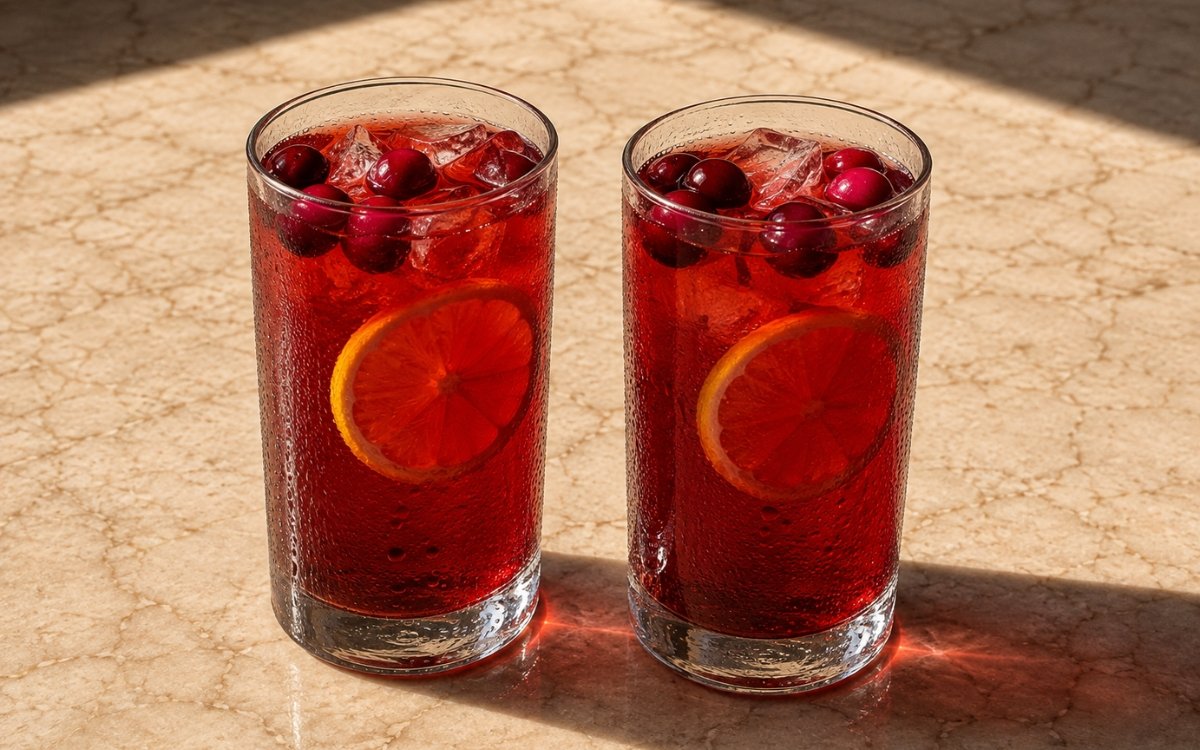
- Place a thin lemon wheel inside each glass. Fill with ice, pour in the cranberry lemonade, and top each glass with a few floating fresh cranberries. Serve immediately. Floating whole fresh cranberries on top, rather than mixing them in, keeps them visibly distinct against the deep red drink — a simple, effective visual touch that reinforces the drink's core cranberry identity right at serving.
Notes
The strict avoidance of white pith throughout zesting deserves the same careful attention it receives across every citrus-forward drink in this collection. Lemon pith carries a real, distinct bitterness entirely separate from the fruit's natural tartness — even a small amount worked accidentally into the zest can introduce a flavour that lingers through the whole finished pitcher, muddying the clean, sharp profile this drink specifically aims for.
Choosing to blend and strain the raw cranberries, rather than cooking them down into a syrup, deserves recognition as the technique responsible for this lemonade's entire flavour identity. Cranberries cooked with sugar, the far more common preparation for sauces and syrups, develop a rounder, sweeter, more familiar "holiday" character — this recipe deliberately avoids that transformation, keeping the fruit's naturally sharp, bright tartness fully intact instead.
Straining the cranberry base twice, through progressively finer mesh, is worth understanding as a real, deliberate step toward clarity rather than an optional extra pass. The first strain removes the bulk of the solid pulp and skins; the second, finer strain catches what the first coarser mesh let through, producing the genuinely clear, vivid red colour this recipe's own notes specifically call out as the goal.
The recipe's explicit framing — designed to stay sharp, tart, and fresh, not cooked or spiced — deserves to be treated as the whole drink's guiding principle rather than a passing note. Every technique choice here, from the raw cranberry blend to the cold lemon extraction, exists specifically to protect that bright, uncooked character against the more familiar, sweeter, spiced cranberry drinks this recipe is deliberately distinct from.