Ingredients
Method
Prepare the Dressing
- In a bowl or jar, combine the 60ml soy sauce, 30ml rice vinegar, 20ml toasted sesame oil, 15ml neutral oil, 15ml mirin, 10ml maple syrup (or sugar syrup, or 2 tsp sugar), the 10ml lime or lemon juice if using, the grated garlic and ginger, and the 1 tsp lightly crushed sesame seeds. Whisk or shake until fully combined and no sugar granules remain, then taste. If it is too salty, add 1–2 tsp water or a little more mirin; if too sharp, add a little more syrup or sugar; if flat, add a squeeze of lime or lemon. The dressing should be light and pourable, never thick. That deliberately stronger seasoning is what keeps the flavour present once cold noodles mute it.
Prep the Vegetables
- Cut the cucumber into fine matchsticks, trimming away some of the seeds first if the centre is very watery. Cut the carrot into fine matchsticks or very thin shreds, and slice the 4 scallions thinly on a bias. If the 120g of edamame are not already cooked, cook them following the package directions, then cool them completely and pat dry. Blot the cucumber with a clean towel as well, so nothing drips into the bowl. That thin, dry, crisp cut is what lets the vegetables weave through the noodles without watering down the dressing.
Cook and Chill the Soba
- Bring a large pot of unsalted water to a boil, add the 320g of soba, and stir early so the strands separate and do not clump. Cook according to the package timing, usually about 4–6 minutes, until just tender but still springy. Drain immediately and rinse under cold running water, rubbing the noodles gently with your hands to wash away the surface starch. Transfer them to an ice bath until fully chilled, then drain very well, shake off the excess water, and spread them briefly on a tray or leave them in the colander for a few minutes until they no longer drip. That thorough rinsing and draining is what keeps the strands separate and the dressing undiluted.
Dress the Noodles
- Place the chilled, well-drained soba in a large mixing bowl and add about three-quarters of the dressing. Toss gently with tongs or clean hands until every strand is evenly coated and glossy rather than wet. Add the cucumber, carrot, scallions, and edamame, then toss again just until the vegetables are distributed, and keep the remaining dressing aside to adjust right before serving. If the noodles look dry after a few minutes, add a little of the reserved dressing. That order of dressing the noodles first is what lets them absorb flavour evenly while the vegetables stay crisp.
Finish and Serve
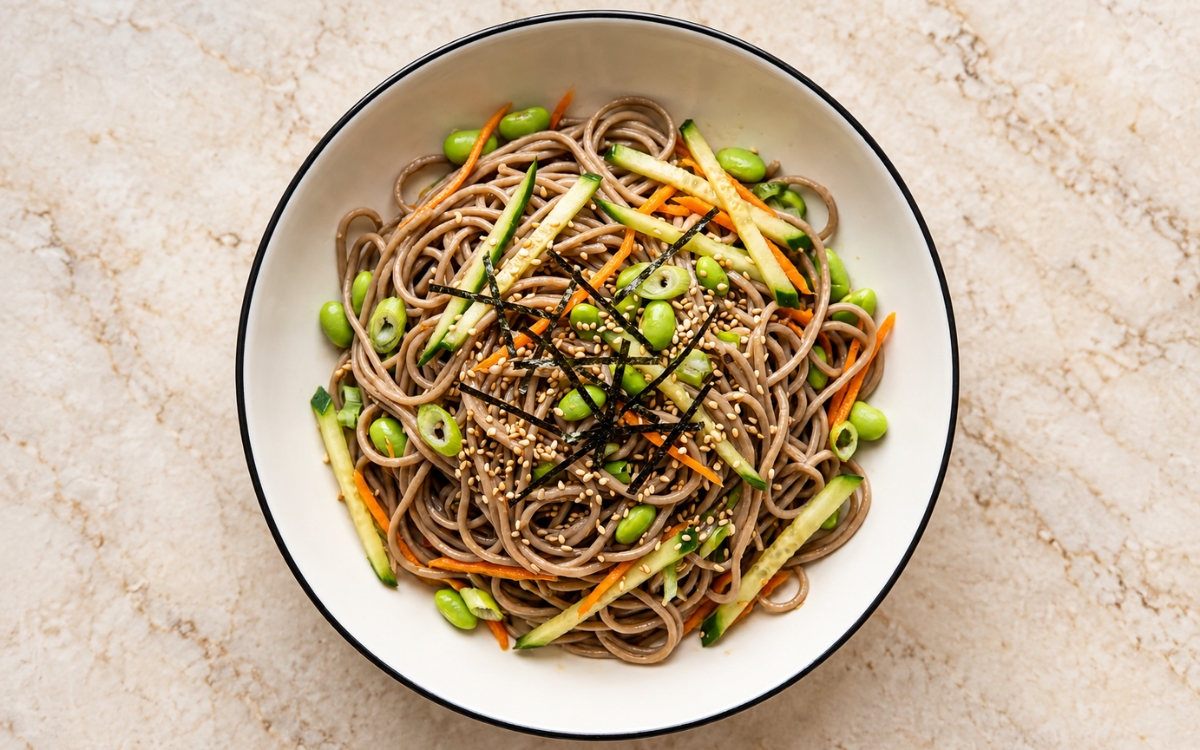
- Divide the noodle salad among 4 bowls, lifting it with tongs so the soba stays the main visible component in loose tangles with the vegetables woven through rather than piled to one side. Top each bowl with a share of the 2 tbsp toasted sesame seeds and the fine nori strips, and add a few extra sliced scallions if you like. Serve cold, with the last of the reserved dressing at the table. That light, clean garnish is what keeps the focus on the glossy, springy noodles.
Notes
Rinsing and gently rubbing the soba under cold running water deserves genuine recognition as the technique most directly responsible for whether this salad tastes clean or muddy. Surface starch left on the strands turns sticky as the noodles chill, gluing them into a clump and leaving the dressing cloudy and heavy, whereas properly washed noodles stay loose, separate, and bright.
Draining the chilled noodles until they no longer drip deserves the same attention this technique receives throughout this collection’s other cold noodle dishes. Water clinging to the strands thins the dressing as soon as it is added, which dulls the soy and sesame and leaves the salad pooling and bland, so a few minutes in the colander is well spent.
Seasoning the dressing slightly stronger than seems necessary deserves genuine respect as the detail most directly responsible for a salad that still tastes vivid straight from the fridge. Cold temperatures mute salt, sweetness, and aroma alike, so a dressing that tastes perfect in the bowl tastes faint on the chilled noodles, and holding back a quarter of it allows one last adjustment.
Cooking the soba only until just tender deserves attention as a genuine, checkable readiness cue rather than a loose approximation of the package time. Buckwheat noodles go from springy to soft and mushy very quickly, and overcooked strands break apart during rinsing and tossing, so tasting a strand a minute before the stated time is the safest check.