Ingredients
Method
Prep the Pan and Oven
- Heat the oven to 220°C / 425°F. Line a 12-cup muffin pan with paper liners or tulip liners. If using standard liners, lightly grease the exposed top of the pan so any overflow releases cleanly instead of gluing the muffins to the metal.
Combine the Dry Ingredients
- Whisk together the flour, sugar, baking powder, baking soda, salt, and lime zest. Rub the zest into the sugar with your fingertips before whisking everything together — this releases the citrus oils and spreads the flavor through the whole batch rather than leaving it concentrated in a few streaks. Distribute the zest evenly so no single muffin ends up carrying most of the lime flavor while others taste flat.
Mix the Wet Ingredients
- Whisk together the melted butter, eggs, sour cream or yogurt, milk or coconut milk, lime juice, vanilla, and coconut extract if using, until smooth. Keep the cold ingredients close to room temperature before combining them; dairy straight from the fridge can cause the melted butter to firm back up into small flecks, which leaves the batter lumpy instead of smooth.
Make the Batter
- Pour the wet mixture into the dry ingredients and fold gently just until most of the flour is incorporated. Add the shredded coconut and fold until it’s evenly distributed and no dry flour remains. The batter should be thick but still scoopable. Stop folding as soon as it comes together — extra strokes tighten the crumb and flatten the dome.
Fill the Pan
- Divide the batter evenly among the 12 muffin cups, filling each about ¾ full to nearly full for a good rise. A light coconut sprinkle on top is optional; keep it sparse so it toasts instead of scorching.
Bake
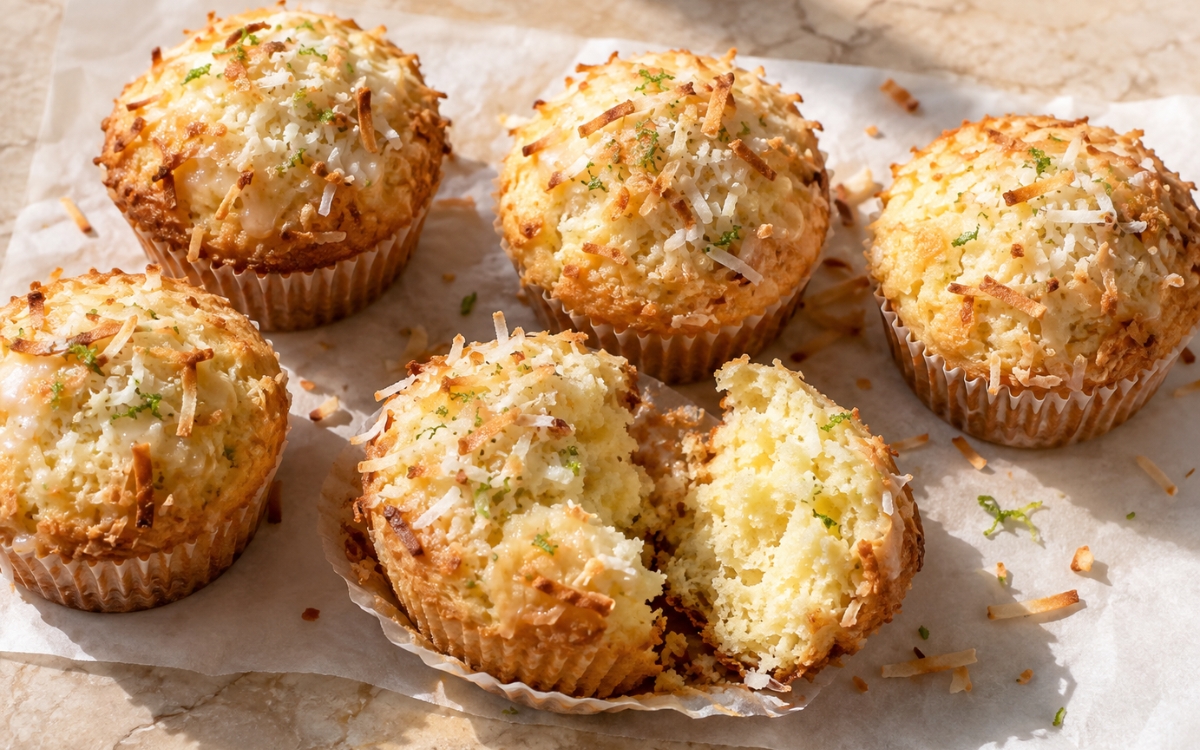
- Bake at 220°C / 425°F for 5 minutes, then, without opening the oven, lower the temperature to 190°C / 375°F and continue for 13–17 minutes. The tops should be domed and lightly golden, the centers should spring back when touched, and a tester should come out clean or with a few moist crumbs. Internal temperature runs around 95–98°C / 203–208°F. Pull the muffins as soon as the centers are just set — they’re meant to stay pale and soft inside, so a few extra minutes will dry them out fast.
Cool
- Cool in the pan for 5–8 minutes, then move to a wire rack. If you’re glazing, wait until the muffins are warm or fully cool — glaze poured over a hot muffin just slides off instead of setting.
Optional Glaze
- Whisk the powdered sugar with the lime juice and enough milk or coconut milk to make a thin, pourable drizzle. Drizzle lightly over the tops and finish with a small pinch of toasted coconut if you like. Keep the glaze thin and sparing — it’s an accent, not a coating, and too much will slide down the sides and pool at the base.
Notes
Sweetened shredded coconut gives the closest match to a bakery texture, with a moister crumb and more visible sweetness in each bite; unsweetened coconut works fine but leaves the muffins a touch drier and less sweet, so the glaze becomes more useful rather than optional. For a more pronounced coconut flavor, swap in canned light coconut milk for the dairy liquid and add the coconut extract rather than skipping it.
Lime intensity comes mostly from the zest, not the juice. Pushing to the zest of 3 limes is a reasonable way to raise the citrus flavor, but adding much more juice on top of that loosens the batter enough to flatten the rise, so the zest is the lever to pull, not the liquid.
The two-stage oven temperature builds the tall dome: the initial blast of high heat sets the outer edges of the batter fast, so the center is still forced upward as it continues to rise, rather than spreading outward the way a single lower temperature would let it.
Watch the batter’s consistency rather than following the measurements blindly. If it seems unusually stiff, a tablespoon or two of milk loosens it back to scoopable; if it turns loose or runny, folding in an extra tablespoon of flour brings it back. Either adjustment is normal and won’t affect the final texture.