Ingredients
Method
Prepare the Quick Pickled Red Onion
- Combine the vinegar, hot water, sugar, salt, and lime juice in a bowl or jar. Stir until the sugar and salt dissolve. Add the thinly sliced red onion and press it down so it is mostly submerged. Let sit for at least 30 minutes, though 1–2 hours is even better. The onion should turn vivid pink and soften slightly while staying sharp and crisp. Drain before using. The hot water dissolves the sugar and salt fully and speeds the pickling reaction considerably compared to a cold brine, which is what produces that vivid pink colour within just half an hour rather than requiring a much longer sit.
Make the Cochinita Pibil Marinade
- In a blender or with a hand blender, combine the achiote paste, orange juice, lime juice, vinegar, garlic, sliced onion, oregano, cumin, allspice if using, black pepper, and salt. Blend until as smooth as possible. The marinade should be thick, vividly orange-red, and completely uniform. If the achiote stays lumpy, it will coat the pork unevenly and leave dull patches. Achiote paste is naturally dense and can resist blending into a uniform liquid — pushing through to a genuinely smooth consistency here, rather than stopping at "mostly combined," is what ensures every piece of pork gets equal exposure to both the colour and flavour during the long marinate and braise.
Marinate the Pork
- Place the pork shoulder chunks in a bowl or shallow dish. Pour the marinade over and turn thoroughly until every piece is coated. Add the bay leaves. Cover and refrigerate for 4–12 hours. Do not marinate longer than overnight. The citrus and vinegar are there for flavour and light tenderising, not for turning the pork mushy. Within this window, the acid components (orange juice, lime juice, vinegar) work primarily on the meat's surface, contributing brightness and light tenderising — pushing well beyond overnight risks that same acid breaking the surface down into an unpleasantly soft, mealy texture before the pork ever reaches the oven.
Cook the Cochinita Pibil
- Transfer the marinated pork and all of the marinade to a Dutch oven or covered baking dish. Add 120ml water or stock only if the mixture looks very thick and dry at the bottom. Cover tightly and cook at 160°C / 325°F for 2 hours 45 minutes to 3 hours, until the pork is completely tender and pulls apart easily with a fork. The pork should braise gently, not roast dry. If the pot looks dry midway through cooking, add a small splash of water. Cooking tightly covered at this moderate temperature keeps the pork essentially braising in its own marinade and rendered fat rather than roasting in dry oven air — that distinction is what allows the shoulder's connective tissue to fully break down into tenderness rather than drying out before it gets there.
Shred and Reduce
- Transfer the pork to a tray or bowl and shred with 2 forks into medium strands. Remove the bay leaves. Skim excess fat from the cooking liquid only if there is a lot. Simmer the remaining liquid uncovered for 5–10 minutes until slightly thicker and glossy. Return the shredded pork to the pot and toss until everything is coated in the reduced achiote juices. The meat should look juicy and glossy, not soupy. If the liquid is too thin, the tacos will leak and soak the tortillas. This reduction step concentrates the braising liquid's flavour and thickens it just enough that it clings to the shredded pork rather than pooling loosely around it — a small amount of active cooking that makes a real difference in how the finished tacos hold together.
Prepare the Habanero Salsa
- Simmer the habaneros, carrot, onion, and garlic in a small saucepan with enough water to cover for about 8–10 minutes, until the carrot is tender and the habaneros soften. Drain, then blend with the orange juice, lime juice, vinegar, honey or sugar, salt, and 30ml water until smooth. Add more water only if needed. The salsa should be bright orange-yellow, smooth, and spoonable. Taste carefully and adjust salt or acidity. It should be hot, bright, and slightly sweet, not flat or purely aggressive. Briefly simmering the habaneros with the carrot mellows their raw sharpness somewhat while the carrot itself contributes natural sweetness and body to the finished purée — the combination of citrus, a touch of sweetener, and that carrot base is what keeps this salsa genuinely bright and balanced rather than simply, aggressively hot.
Prepare the Corn Tortillas
- Prepare the Homemade Corn Tortilla dough according to its separate recipe, using 160g masa harina, 2g salt, and 200g warm water. Mix until soft and fully hydrated, then rest covered for 20–30 minutes. Divide into 16 equal balls of about 22–23g each. Keep covered. Press each tortilla to about 11.4cm / 4.5 inches diameter and cook on a dry hot skillet or comal until lightly charred, flexible, and cooked through. Stack immediately under a towel so they steam and stay soft. Keeping every dough ball and finished tortilla continuously covered protects them through the whole prep window — even a few minutes of open air exposure begins stiffening the edges.
Warm the Pork and Tortillas
- Just before serving, rewarm the cochinita pibil gently if needed. Rewarm the tortillas briefly on a skillet or comal for 10–15 seconds per side so they are fully pliable. Do not let the tortillas dry out. Small corn tortillas crack fast once uncovered. This final warm-through, timed right before assembly, brings both the pork and tortillas to serving temperature without any further active cooking.
Assemble the Tacos
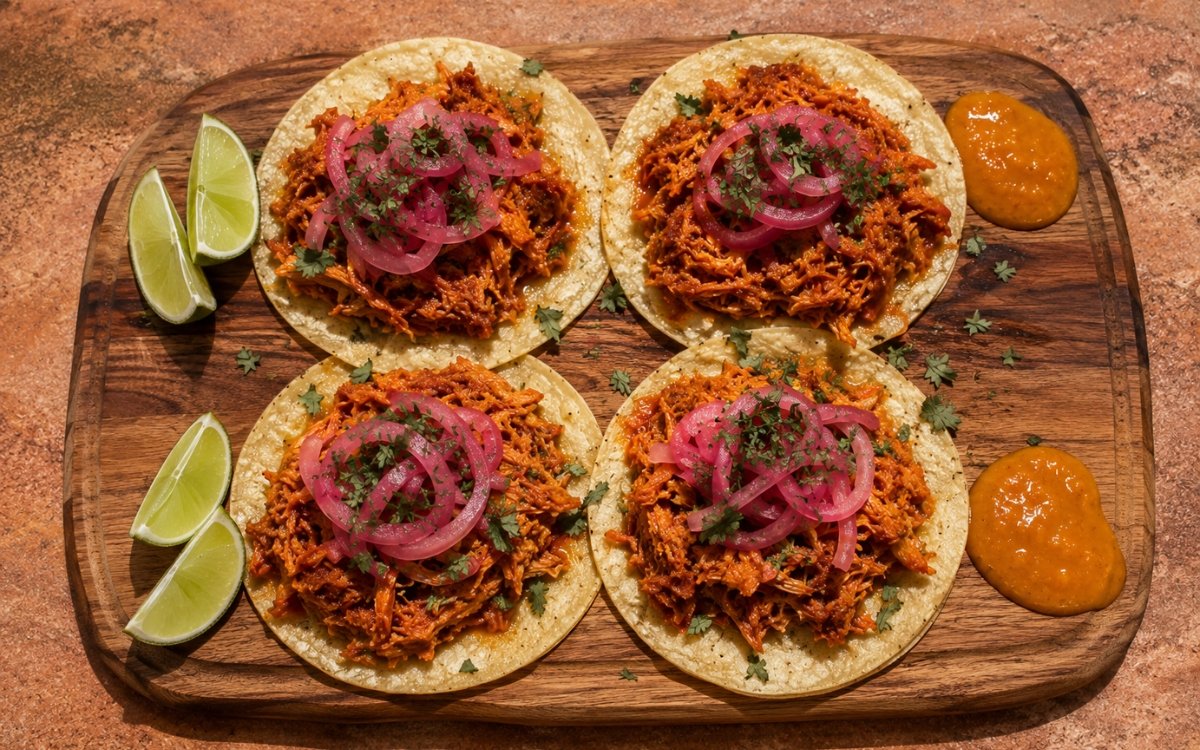
- Place 4 warm tortillas per serving on a board or plate. Add a generous mound of cochinita pibil to each tortilla. Top with vivid pink pickled red onion and fresh cilantro. Draining the pickled onion thoroughly before this step matters here just as much as in any other pork taco — excess pickling liquid left on the onion will soak into the warm tortilla and soften it before the taco is even eaten.
Serve
- Serve with habanero salsa on the side in small spoonfuls or lightly spooned over the tacos, plus lime wedges for squeezing. Serve immediately while the pork is hot and glossy and the tortillas are still warm and soft. Keeping the habanero salsa as a light side addition rather than a heavy pour preserves the dish's visual clarity — the achiote pork and pink onion are meant to remain the clear focal point, with the salsa there to sharpen individual bites rather than dominate the plate.
Notes
Blending the achiote marinade to a genuinely smooth, uniform consistency is worth the extra effort it sometimes takes. Achiote paste can be dense and somewhat resistant to blending, and it's tempting to stop once the marinade looks "mostly combined." But any remaining lumps of unblended paste translate directly into uneven coating on the pork — some pieces will pick up full colour and flavour, while others sit comparatively dull and underseasoned, which becomes obvious once the pork is shredded and mixed together.
The braising method here — tightly covered, at a moderate 160°C, in the pork's own marinade — is specifically what allows a full shoulder of pork to reach genuine fork-tenderness without drying out. An uncovered roast at the same temperature would lose considerably more moisture to evaporation over the same multi-hour cook, while the covered braise keeps that moisture circulating and available to the meat throughout.
The habanero salsa's balance of heat, sweetness, and acidity is worth tasting and adjusting carefully rather than treating the ingredient list as fixed. Habaneros vary meaningfully in heat intensity from pepper to pepper, and the recipe's built-in sweetness from honey or sugar and the carrot's natural sugar exists specifically to keep that heat from tipping into something purely aggressive — tasting as you go and adjusting salt or acidity at the end is what keeps the salsa genuinely bright rather than flat or one-dimensionally hot.
Reducing the braising liquid before returning it to the shredded pork is a small step that protects the entire assembly downstream. Skipping it and simply tossing the pork with its full, unreduced cooking liquid produces a filling wet enough to leak through the tortilla the moment it's assembled — the brief simmer concentrates that liquid into something that clings rather than pools, which is what keeps the finished tacos intact.