Ingredients
Method
Make the Cinnamon Dolce Syrup
- Add the brown sugar, granulated sugar, water, cinnamon sticks, and salt to a small saucepan. Warm over medium heat, stirring until the sugar fully dissolves. Bring to a gentle simmer and cook for 3–5 minutes, just until the syrup smells strongly of cinnamon and looks slightly glossy. Remove from the heat, stir in the vanilla, and let the cinnamon sticks steep for another 5 minutes. Remove the cinnamon sticks and let the syrup cool. The syrup should be pourable, smooth, and warmly cinnamon-scented. Do not reduce it into a thick caramel. Thick syrup sinks and makes the drink uneven. Extending the steep for a further 5 minutes after the syrup is off the heat, rather than removing the cinnamon sticks immediately, gives their aromatic oils more time to fully infuse the liquid without any risk of over-reducing the syrup during that extra time.
Brew the Espresso
- Brew 120ml espresso total, equal to 4 standard 30ml shots. Let the espresso stand for 30–60 seconds if extremely hot, but do not let it go stale. The espresso should be fresh and aromatic. Cinnamon and brown sugar can cover a lot, but they cannot fix burnt or flat espresso. Even a drink built around a warm, forgiving spice profile still depends on genuine espresso quality underneath it — the cinnamon and brown sugar are meant to complement a properly brewed shot, not compensate for a flawed one.
Build the Cinnamon Base
- Add 20ml cinnamon dolce syrup to each glass. Add a small splash of cold milk to each glass and stir to loosen the syrup. The syrup needs to be mixed into the milk base before the glass is fully built. If it stays at the bottom, the drink tastes weak at first and overly sweet at the end. Loosening the syrup while the glass is still simple and mostly empty is considerably more effective than attempting the same mixing once ice and the remaining milk have already filled the glass.
Add Ice and Milk
- Fill each glass generously with ice. Pour 140ml cold whole milk into each glass. The glasses should look pale and creamy, with a light warm tint from the syrup. This is still a latte, so the milk should be the dominant body of the drink. Building on top of the already-loosened cinnamon base keeps that base's flavour distributed through the glass from the start, rather than sitting as a separate, concentrated layer beneath everything else.
Pour in the Espresso
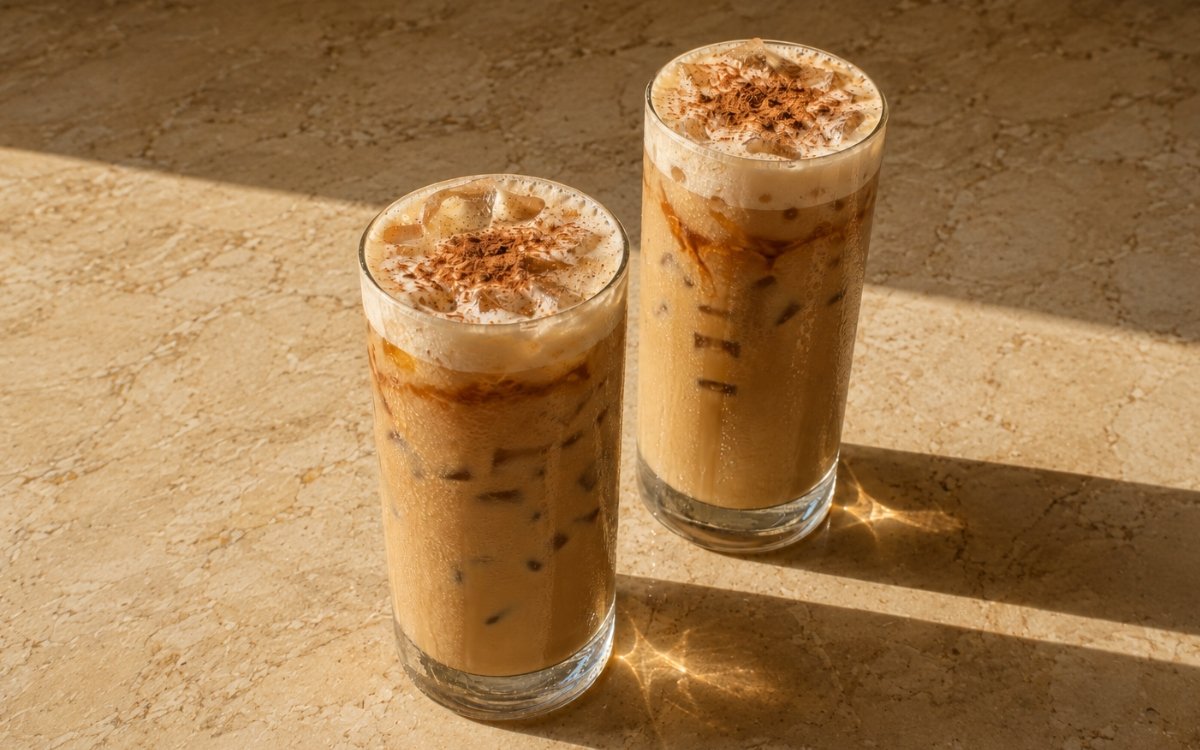
- Pour 60ml espresso into each glass over the milk and ice. Let the espresso swirl through the cinnamon milk, then stir briefly. The finished drink should settle into a pale caramel-beige colour with a warm cinnamon aroma. If it looks dark and coffee-heavy, there is not enough milk. If it tastes like cinnamon sugar milk, the espresso is too weak. This specific colour and taste checkpoint functions as a genuinely useful diagnostic — landing correctly between those two extremes confirms the milk, espresso, and syrup are all properly proportioned relative to one another.
Optional Classic Café Finish
- For the more classic café-style version, add a small spoonful of lightly whipped cream on top of each drink. Mix a pinch of ground cinnamon with a pinch of granulated sugar and dust lightly over the cream. Serve immediately. Using a cinnamon-sugar mixture for this final dusting, rather than plain ground cinnamon alone, gives the dry topping a touch of sweetness and a slightly finer, more evenly distributing texture across the whipped cream's surface.
Notes
Using whole cinnamon sticks steeped into the syrup, rather than stirring in ground cinnamon directly, is worth understanding as a genuine technique decision specific to this drink's clean finish. Ground cinnamon, while convenient, tends to leave a fine, slightly gritty sediment in a liquid this thin — noticeable once the syrup is poured into a cold drink and settles. Whole sticks release their aromatic oils into the syrup gradually during both the simmer and the extended steep, without ever introducing that textural issue.
The extended steeping period after the syrup is removed from heat deserves real attention despite its brevity. Cinnamon's aromatic compounds continue extracting into the liquid for a period even once active simmering stops, and that additional 5 minutes off-heat is specifically what allows the syrup to develop its full, warm cinnamon character without any risk of the syrup itself reducing further or thickening past the pourable consistency this drink needs.
The reminder that cinnamon and brown sugar can't fix a genuinely flawed espresso is worth taking seriously despite how forgiving this drink's overall flavour profile might seem. Warm spice and sweetness are complementary notes layered on top of a coffee foundation, not substitutes for one — a burnt or stale shot still comes through clearly beneath the syrup, undermining the whole drink regardless of how carefully the cinnamon dolce syrup itself was made.
The specific colour and flavour checkpoint given for the finished, stirred drink — pale caramel-beige, not dark and coffee-heavy, but also not tasting like plain cinnamon sugar milk — is worth using as a genuine diagnostic tool rather than a vague aspiration. Landing outside that range in either direction signals a real, correctable imbalance between the milk, espresso, and syrup proportions used.