Ingredients
Method
Prep the Potatoes
- Cut the potatoes into small even cubes and pat them dry very well with paper towels. Toss with the oil, salt, black pepper, garlic powder, and paprika. Dry potato cubes brown better. If they go into the pan wet, they steam first and take much longer to crisp. Cutting every piece to a genuinely consistent size is what lets them all reach the same doneness together, protecting against the compromise of some pieces staying undercooked while others overcook in the same time.
Cook the Breakfast Potatoes
- Heat a large skillet over medium to medium-high heat. Add the potatoes in a fairly even layer. Cook for 12 to 15 minutes, stirring only occasionally, until the potatoes are golden, crisp at the edges, and tender in the center. Transfer to a plate. The potatoes should be fully cooked before they go into the burrito. Once wrapped, they will not soften much more. That warning matters directly because the burrito's brief final toast isn't enough time or heat to finish cooking underdone potatoes — this is genuinely their only real chance to reach proper doneness.
Cook the Chorizo
- In the same skillet, add the chorizo. Add the small amount of oil only if the pan is dry. Cook over medium heat for 7 to 10 minutes, breaking it apart with a spoon, until the chorizo is cooked through, glossy, deeply red-orange, and lightly browned in spots. If there is a lot of excess fat, spoon some off, but leave enough to keep the chorizo juicy. Chorizo should not look pale or watery. It needs time to render, darken, and stain the pan red-orange. That fat is part of the flavor. Cooking in the same pan the potatoes were just cooked in means the chorizo picks up real, residual flavour from whatever fond and seasoning remained behind, rather than starting from a clean, neutral surface.
Warm the Refried Beans and Salsa
- Warm the refried beans gently until spreadable. Warm the salsa roja separately or keep it at room temperature. If the salsa is very loose, spoon it with less liquid. Wet salsa makes breakfast burritos collapse. Use enough for flavor, but not so much that it floods the tortilla. Deliberately using less of the salsa's own liquid, rather than the full amount, is a genuine, practical control against the single biggest threat to a heavily loaded burrito staying intact through rolling and toasting.
Make the Scrambled Eggs
- In a bowl, whisk the eggs, milk or cream, salt, and black pepper until smooth. Heat a nonstick skillet over medium-low heat and add the butter. Once melted, pour in the eggs. Cook gently, stirring with a spatula, until softly set and still slightly glossy, about 3 to 5 minutes. Remove from the heat immediately. Stop the eggs before they look dry. They will keep setting from residual heat and again when the burrito is toasted. Cooking over genuinely low heat with gentle stirring is what produces large, soft curds capable of surviving the additional gentle cooking still ahead without drying out.
Warm the Tortillas
- Warm the tortillas briefly in a dry skillet, microwave, or low oven until soft and flexible. Cold tortillas crack and fight you. Warm tortillas roll tightly and hold the filling better. That brief warming loosens the tortilla's own structure enough to fold cleanly around a genuinely generous, multi-component filling, without the resistance a cold, stiff tortilla would offer.
Assemble the Burritos
- Lay the warm tortillas on a work surface. Spread about 60g refried beans in the lower center of each tortilla. Add cheese over the beans so it melts into the warm filling. Divide the chorizo, crispy potatoes, scrambled eggs, salsa roja, avocado, crema, pickled jalapeños, and cilantro among the tortillas. Keep the filling compact and centered. The refried beans act like glue and help hold the burrito together. The cheese should sit near hot ingredients so it melts inside instead of staying separate. Spreading the beans first, directly against the tortilla, gives every other filling component something to adhere to — that structural role is genuinely functional, not just a matter of flavour layering.
Roll the Burritos
- Fold the sides inward, then roll tightly from the bottom into large sealed burritos. Place them seam-side down. Do not overfill. A breakfast burrito should look packed, but if the sides cannot fold in cleanly, it will burst when toasted. Placing the finished burrito seam-side down keeps that fold pressed shut under its own weight, giving it a head start on sealing before it ever reaches the hot pan.
Toast the Burritos
- Heat a clean dry skillet over medium heat. Place the burritos seam-side down first and toast for 1 to 2 minutes per side, until golden with toasted spots and warmed through. Toast just enough to set the tortilla and melt the cheese. Too much time will dry the tortilla and overcook the eggs. Starting seam-side down specifically gives that fold the most direct, sustained pan contact of the whole toasting process — exactly what's needed to actually seal it shut.
Serve
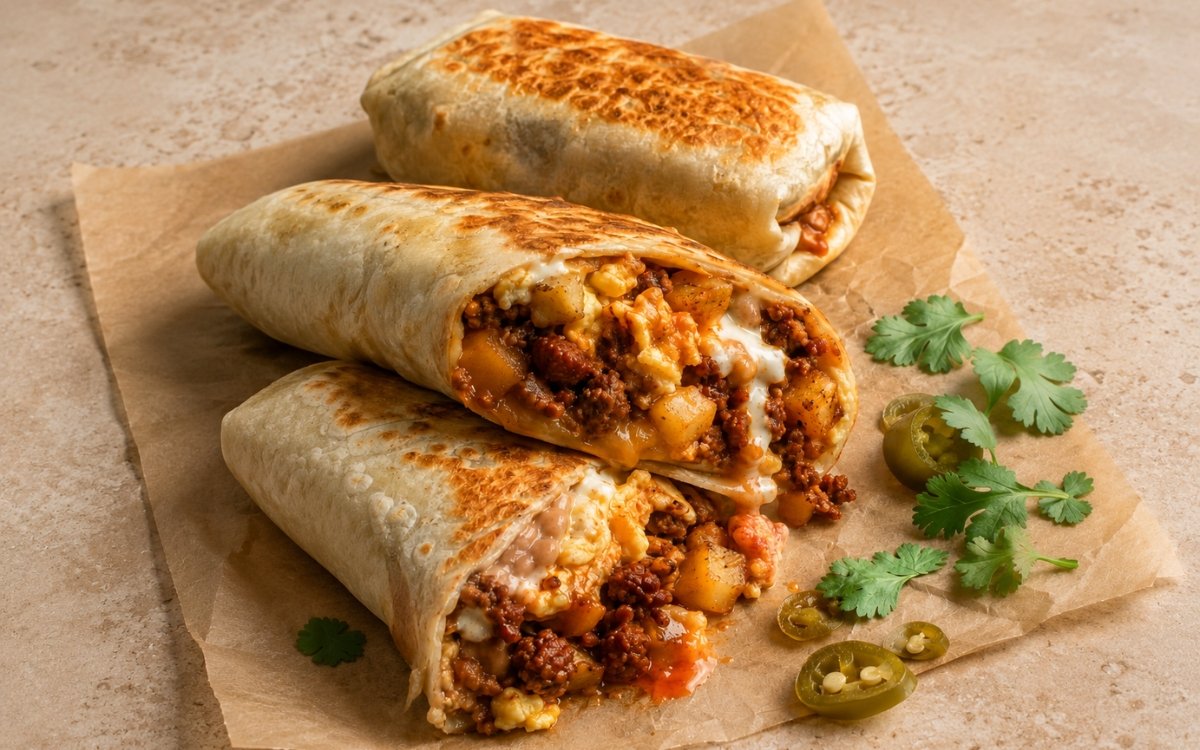
- Cut the burritos in half and serve warm. Add extra salsa roja, crema, pickled jalapeños, or cilantro on the side if desired. Serving right after toasting delivers the burrito while the tortilla is still warm and lightly crisp, the cheese properly melted, and the filling at its freshest.
Notes
Cooking the chorizo until it's genuinely glossy and deeply red-orange, resisting the urge to pull it early, deserves recognition as the technique most responsible for this filling's real depth of flavour. That specific colour change signals the fat has properly rendered out and the chorizo's own spices have fully bloomed into it — chorizo pulled too early, while still pale, misses much of that developed flavour and produces a noticeably flatter, less satisfying filling.
Controlling every wet ingredient throughout this recipe — using the salsa's liquid with restraint, warming rather than over-saucing the beans, keeping the crema measured — deserves attention as this burrito's real organizing challenge, given how many components it carries. This particular burrito is genuinely more loaded than a simpler version, which means the cumulative risk of excess liquid is correspondingly higher, and every individual control against wetness matters more here.
Cooking the chorizo in the same pan the potatoes were just cooked in, rather than a clean one, is a small but genuinely consequential technique choice. Real, residual flavour from the potatoes' own seasoning and fond carries directly into the chorizo as it cooks, layering flavour that starting from a neutral pan simply wouldn't provide.
The refried beans' structural role as the burrito's foundational layer deserves the same respect the recipe's own notes give it directly. Spread first against the tortilla, that layer gives every subsequent filling component something to adhere to, functioning as genuine physical structure rather than simply another flavour layered in.