Ingredients
Method
Prepare and Chill the Vegetables
- Remove the core from the 700–800g napa cabbage and shred the leaves thinly, about 3–5mm wide, keeping the strands bite-size but long enough to give the salad volume. Peel the 2 carrots into thin ribbons with a vegetable peeler, or cut them into fine julienne. Halve the cucumber lengthwise, scrape out the watery seed core if using a large English cucumber, then slice it thinly on the bias. Thinly slice the 4 scallions and roughly tear the 20g cilantro, keeping a small handful of each aside for the finish. If the cabbage is wet after washing, spin it or pat it thoroughly dry, then combine all the salad vegetables in a large bowl and refrigerate while you prepare the other components. That dry, cold start is what genuinely lets the dressing cling to the cabbage instead of sliding off and turning watery.
Fry the Wonton Strips
- Cut the 6 wonton wrappers into thin strips, about 5mm wide, and separate them so they do not stick together. Pour the 350–400ml neutral oil into a small saucepan or skillet to a depth of 1.5–2cm and heat it over medium heat to 175–180°C / 350–355°F, which takes about 4–5 minutes; a test strip should sizzle at once and float. Fry the strips in 2–3 small batches for 20–40 seconds each, stirring lightly, until pale golden and crisp. Lift them out with a slotted spoon onto paper towel and let them cool completely. If the oil starts to smoke or a strip browns within 10 seconds, take the pan off the heat for a minute before the next batch. That early pull matters because the strips keep darkening for a few seconds after they leave the oil, and only fully cooled strips stay crisp.
Make the Sesame Dressing
- In a medium bowl, whisk together the 4 tbsp Chinese sesame paste or tahini, the 1½ tbsp light soy sauce, 2 tbsp rice vinegar, 1 tbsp toasted sesame oil, 1 tbsp neutral oil, 1 tbsp honey or sugar, the grated garlic clove and the 1 tsp grated ginger. The paste may seize and stiffen at first; keep whisking and add the 2–4 tbsp warm water one spoonful at a time until the dressing loosens into a creamy, pourable consistency that coats the back of a spoon but still drizzles. Taste it: it should be nutty, savoury, lightly sweet and gently tangy. If it tastes too rich, add a little extra rice vinegar; if it tastes too sharp, add a touch more honey or sugar, and add fine salt only if it still tastes flat. That gradual addition of warm water is what turns a seized paste into a smooth dressing that clings to the cabbage rather than sitting in heavy clumps.
Toast and Crush the Toppings
- If the 35g sesame seeds are not already toasted, toast them in a dry frying pan over medium-low heat for 1–2 minutes, shaking the pan often, until pale golden and fragrant, then tip them straight onto a plate so the heat of the pan does not carry them further. Roughly crush the 60g roasted peanuts with the flat of a knife, or in a bag with a rolling pin, leaving a mix of small pieces and larger bits rather than a fine powder. If the peanuts start to turn powdery or oily, stop crushing at once. Keep the sesame seeds, peanuts and cooled wonton strips separate until the salad is assembled. That restraint matters because burnt sesame turns bitter quickly, and finely ground peanuts disappear into the dressing instead of giving the salad visible crunch.
Assemble and Serve
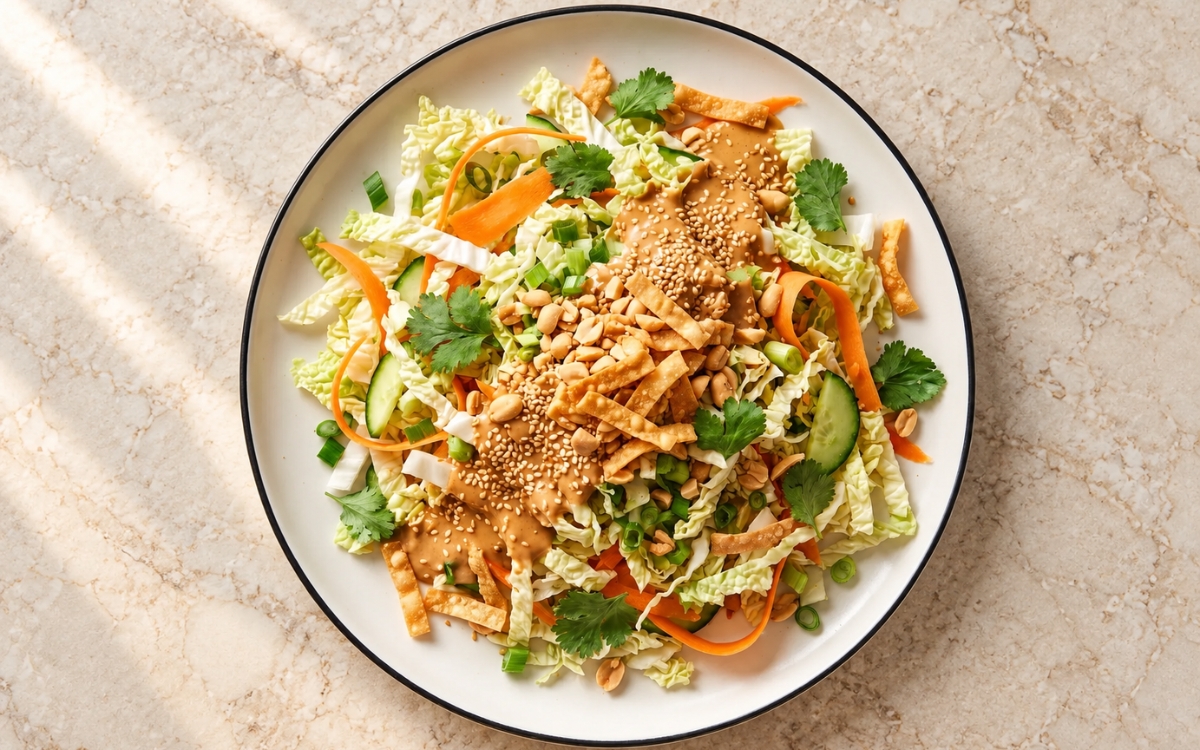
- Take the chilled vegetables from the fridge and sprinkle them with a pinch of fine salt, if using, for the lightest seasoning. Add about three-quarters of the sesame dressing and toss gently with your hands or two large spoons, lifting from the bottom, just until every strand looks lightly glossed rather than heavy; add a little more only if parts still look bare. Transfer the salad to a serving platter or wide, shallow bowl. Drizzle the remaining dressing over part of the top rather than the whole surface, then scatter over the toasted sesame seeds, crushed peanuts, fried wonton strips and the reserved scallions and cilantro. Divide into 4 portions and serve straight away. That last-minute dressing and topping is what keeps the napa cabbage crisp and the crunch genuinely intact, because dressed cabbage softens and the strips absorb moisture the longer the salad sits.
Notes
Dressing the salad lightly and only at the last minute deserves genuine recognition as the technique most directly responsible for whether the salad stays crisp or collapses. The recipe's own warning "Do not overdress" reflects how napa cabbage is tender and full of water — the salt and sugar in a heavy dressing draw that water out within minutes, leaving limp strands sitting in a thin, diluted pool at the bottom of the bowl.
Drying and chilling the vegetables deserves the same attention this technique receives throughout this collection's other crisp salad dishes, because water on the leaves undermines everything that follows. The recipe's own instruction that "The vegetables must be dry or the dressing will slide off and become watery" explains why — an oil-rich sesame dressing cannot cling to wet cabbage, while cold, dry strands also stay firm for longer once they are dressed.
Loosening the sesame paste gradually with warm water deserves genuine respect as the detail most directly responsible for the dressing's texture. Sesame paste tends to seize when liquid first hits it, tightening into a stiff mass, but steady whisking and small additions of warm water relax it into a creamy, pourable sauce — too thick and it sits on the cabbage in heavy clumps, too thin and it pools beneath the salad.
The colour of the wonton strips deserves attention as a genuine, checkable doneness cue rather than a loose approximation. Pulling them at pale golden after 20–40 seconds in 175–180°C oil allows for the carryover browning that continues on the paper towel, so strips that already look deep golden in the pan finish dark and taste bitter rather than clean, light and genuinely crisp.