Ingredients
Method
Cook the Rice Noodles and Reserve the Water
- Bring a large pot of water to a full rolling boil. Cook the 360g of rice noodles according to the package instructions until just tender but still slightly firm — al dente, with a clear resistance when bitten. Rice noodles continue cooking from residual heat after draining and will be returned to a hot wok with the sauce, so undercooking by 30–60 seconds relative to the package's suggested time produces the correct finished texture. Before draining, ladle or scoop out approximately 240ml (1 cup) of the noodle cooking water and reserve in a heatproof jug — this starchy water is the sauce-loosening tool that is used throughout the cooking process and is the superior alternative to plain water for adjusting noodle dishes. The dissolved starch from the noodles makes it slightly viscous, and it carries the sauce's flavour rather than diluting it. Drain the noodles through a colander and rinse briefly under cold running water to stop cooking and remove surface starch that would cause the noodles to clump together while they wait.
Sear the Shrimp Quickly
- Season the 600g of shrimp with ½ tsp of fine sea salt and ½ tsp of white pepper. White pepper is specified throughout Asian noodle preparations specifically for its earthy, slightly fermented warmth rather than black pepper's sharper character — its aromatic profile complements the fish sauce and soy combination without competing. Heat a large wok or wide skillet over the highest available heat until smoking. Add 1 tbsp of neutral oil and swirl to coat. Add the seasoned shrimp in a single layer — in two batches if needed to avoid overcrowding. Sear undisturbed for 60–90 seconds on the first side until the shrimp show golden-pink colour on their base. Flip each shrimp and cook for 60–90 seconds on the second side until nearly opaque throughout — but remove while the very centre of each shrimp still shows a slightly translucent zone. The shrimp return to the wok at the final combining step where they finish gently in the sauce's heat over 1 minute — shrimp fully cooked at this stage will be overcooked and rubbery by the time they are plated. Transfer to a plate and set aside with all accumulated juices.
Build the Aromatic Sauce Base
- Reduce the heat to medium. Add the remaining 2 tbsp of neutral oil to the wok — or clean the wok and add fresh oil if the shrimp sear produced significant browning on the pan surface. Add the 6 finely minced garlic cloves, 2 tbsp of minced ginger, and 3 minced red chilies simultaneously. Cook for 1–2 minutes, stirring constantly, until the aromatics are fragrant and have softened slightly but show no browning. This stage requires constant attention — garlic and ginger in a medium-heat wok go from raw to perfectly fragrant to beginning to brown in under 2 minutes. The goal is fully softened, fragrant aromatics that have released their volatile compounds into the surrounding oil without the bitterness of any browning.
Add the Sauce Components
- Add the 60ml of soy sauce, 2 tbsp of fish sauce, 2 tbsp of brown sugar, and half the lime juice — approximately the juice of 1 lime. Stir to combine and add 80ml of the reserved noodle water. Bring to a gentle simmer and cook for 1–2 minutes, stirring until the brown sugar has fully dissolved and the sauce looks glossy and slightly reduced. The sauce at this stage should taste assertively seasoned — strongly of fish sauce's umami, bright from the lime, warm from the chili and ginger. Taste and adjust: more fish sauce for saltiness, more lime for brightness. The sauce will be diluted slightly when the noodles are added and the flavours will mellow, so it should taste slightly more concentrated than the intended final result.
Add Noodles and Toss
- Add the drained rice noodles directly to the simmering sauce. Increase the heat to medium-high. Toss continuously — using tongs or two spatulas — turning the noodles through the sauce for 2–3 minutes until every strand is evenly coated and the sauce has absorbed into the noodles rather than pooling at the bottom of the wok. If the noodles begin to tighten or stick together during the tossing — a sign that the sauce is being absorbed faster than the noodles can be turned — add additional reserved noodle water in small increments, 20–30ml at a time, while continuing to toss. The finished noodles should be glossy, evenly coated, and just loose enough to separate easily when lifted with tongs.
Return the Shrimp and Finish
- Return the seared shrimp and all their accumulated resting juices to the wok. Toss with the noodles for approximately 1 minute until the shrimp are fully cooked through and have taken on the sauce's flavour. Turn the heat off completely. Add the remaining lime juice — the juice of the second lime — all of the lime zest from both limes, and the optional 1 tsp of toasted sesame oil. Toss once more off the heat. The off-heat addition of the second lime's juice and all the zest is the specific technique that produces this dish's defining brightness: lime juice's most volatile aromatic compounds — the terpenes and limonene that are responsible for the specifically vivid citrus fragrance — evaporate within 30–60 seconds at cooking temperature. Added off heat, they remain completely intact and land on the finished noodles as the sharp, fresh, specifically vibrant lime character that makes the dish taste bright and alive rather than cooked-down and flat.
- Taste and make final adjustments: more lime juice for brightness if the citrus is insufficient; more fish sauce for saltiness and umami depth; more chili for heat; a small splash of noodle water if the noodles have tightened too much between the final toss and plating.
Plate and Serve Immediately
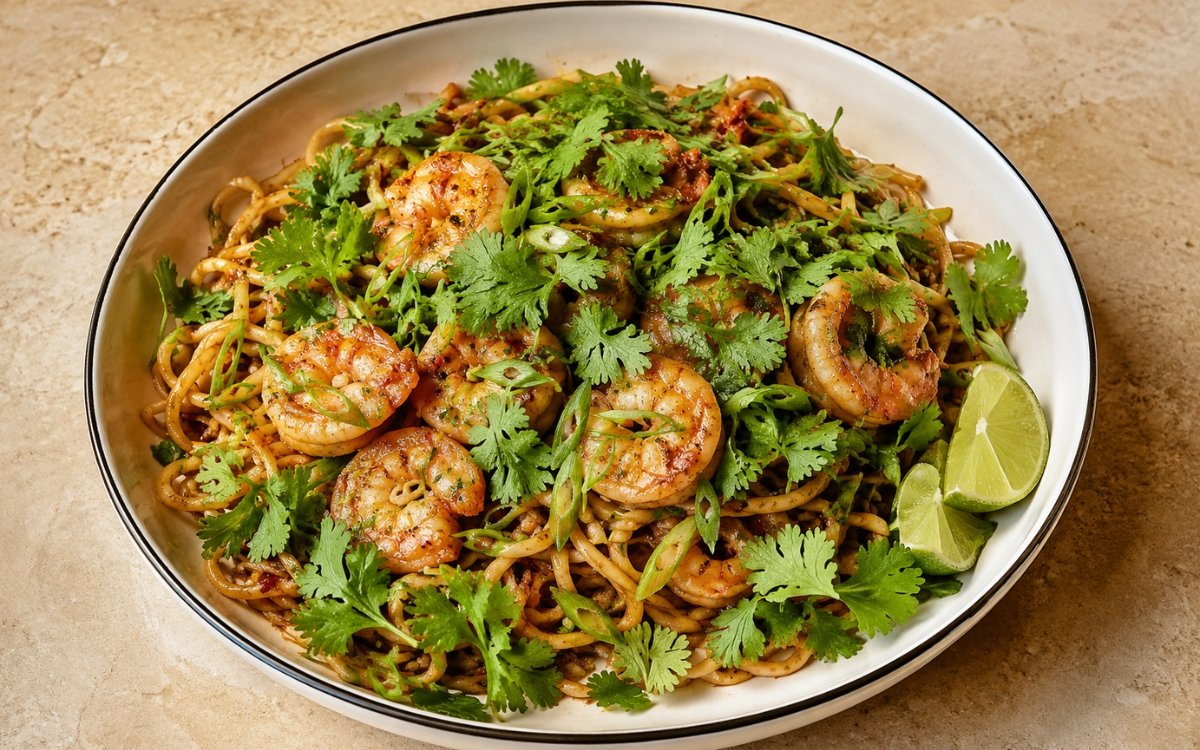
- Divide the noodles among four wide shallow bowls. Finish each bowl generously with approximately ½ cup of fresh cilantro leaves — scattered across the entire surface rather than concentrated in one spot, so every forkful encounters the fresh, slightly citrusy herbal brightness. The cilantro quantity at this level is not a garnish but a primary component — its aromatic freshness is the specific counterpoint to the rich soy-fish sauce depth and the shrimp's sweetness that makes the dish taste balanced rather than heavy. Scatter thinly sliced scallions over each bowl. Place lime wedges alongside for additional squeezing at the table. Serve immediately while the noodles are at their most fluid, the shrimp is at its most tender, and the cilantro is at its most fragrant.
Notes
The two-stage lime addition is the single technique decision that most distinguishes this noodle dish from a flat, cooked-lime version. The volatile aromatic compounds in fresh lime juice — primarily d-limonene and various terpene esters — are what produce the vivid, sharp, specifically alive citrus character of freshly squeezed lime. These compounds have boiling points below normal cooking temperatures and evaporate within seconds of being added to a hot pan. A dish where all the lime is added during cooking tastes of lime acid without lime fragrance — flat, sour without aromatic brightness. A dish where half the lime is added during cooking for integrated acid balance and half off the heat for preserved aromatic vivacity tastes specifically more alive, more citrusy, and more vibrant than either approach alone.
The noodle water reservation and use as the adjusting liquid throughout is the same principle applied in pasta cooking — the starchy, slightly salted water carries the sauce's flavour rather than diluting it, and its dissolved starch adds to the coating quality that helps the sauce cling to every noodle strand.