Ingredients
Method
Poach and Shred the Chicken
- Put the 700g chicken breasts in a saucepan with the ½ white onion, 2 garlic cloves, 1 bay leaf, and 1½ tsp kosher salt, then add enough water to cover by about 2–3cm. Bring just to a gentle simmer over medium heat, reduce to low, and cook gently for 12–16 minutes, until the thickest part reaches 74°C. Lift the chicken out, let it cool slightly, and reserve at least 240ml of the cooking liquid. Shred the chicken into fine but still juicy strands. That gentle poach is what keeps the breast tender and leaves a savoury liquid for the sauce, whereas a hard boil tightens the fibres and dries the strands out.
Make the Tinga Sauce
- Roast the 500g halved Roma tomatoes in a dry skillet, on a comal, or under a broiler until softened and lightly charred in spots. Blend them with 2 garlic cloves, the chipotles, adobo sauce, oregano, and 120ml of the reserved chicken liquid until smooth. Heat 1 tbsp oil in a sauté pan over medium heat, add the thinly sliced white onion, and cook for 6–8 minutes until softened and lightly golden at the edges. Pour in the blended sauce, add the bay leaf, and simmer for 8–10 minutes, stirring occasionally, until slightly thickened and the raw tomato taste is gone. Season with 1 tsp salt and a little black pepper. That charring and simmering is what turns raw tomato into a deep, smoky base for the chicken.
Coat the Chicken
- Add the shredded chicken to the sauce and toss well so every strand is coated. Simmer for 3–5 minutes more until the sauce clings to the chicken and the mixture is moist and glossy, not watery. If it looks too thick, loosen it with a splash of the remaining reserved cooking liquid, and if it looks too loose, simmer a minute or two longer. Keep the tinga warm over very low heat while you finish the beans and shells. That final reduction is what lets the tinga sit on the tostada without leaking through the base.
Make the Refried Black Beans
- Heat 2 tbsp oil or lard in a small pan over medium heat, add the finely diced onion, and cook for 3–4 minutes until softened. Stir in the minced garlic and cook for 30 seconds. Add the drained black beans and about 120ml of the bean liquid or water, then simmer for 2–3 minutes. Mash until mostly smooth but still rustic, adding a little more liquid only if the beans are too stiff to mash. Cook, stirring often, until thick and spreadable, then season with ½ tsp salt. That thickness is what lets the beans hold their shape on the tostada instead of running into the shell.
Fry the Tostadas
- Heat about 1–1.5cm of neutral oil in a wide skillet to 175–180°C. Fry the 12 corn tortillas one at a time or in small batches, turning once, for about 45–60 seconds per side, until crisp, rigid, and evenly golden. Drain on paper towels and sprinkle very lightly with fine salt while still hot. Let the shells cool completely before topping, leaving them in a single layer so steam can escape. That full cooling is what keeps the shells crisp under the beans and chicken.
Prepare the Toppings
- Finely shred the 150g lettuce and crumble the 100g queso fresco. Slice the small red onion very thinly, and if you want a milder bite, soak the slices in cold water for 10 minutes, then drain them well. Stir the 120ml crema, adding a few drops of water or milk only if it needs to be loose enough to drizzle. Slice the 2 avocados just before assembly. That last-minute avocado slicing is what keeps the slices green and creamy rather than browned.
Assemble the Tostadas
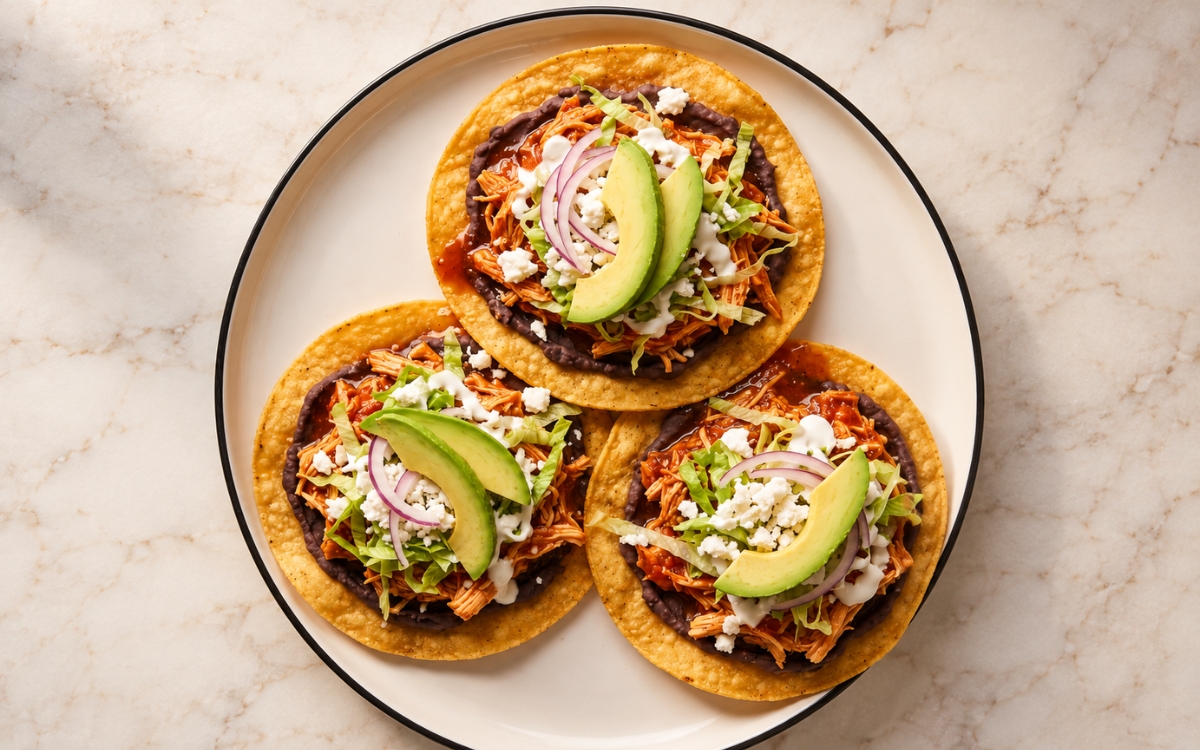
- Assemble only right before serving, working with the shells, warm beans, and warm tinga close at hand. Spread each tostada with a thin, even layer of refried black beans, then top with a generous portion of chicken tinga. Add a light mound of shredded lettuce, then finish with queso fresco, a few red onion slices, a drizzle of crema, and avocado slices. Leave some of the tostada edge visible and uncovered so the crisp shell still shows. That restraint with the beans and last-minute assembly is what stops the base from softening.
Serve
- Serve 3 tostadas per person on warm plates, with the edges of the golden shells showing around the toppings. Bring them to the table immediately, while the shells are still crisp and the chicken is warm, and eat them straight away. Any extra crema can go on the side for drizzling. That immediate serving is what keeps the contrast between the crunchy base, glossy chicken, and cool toppings at its sharpest.
Notes
Reducing the tinga until it clings to the chicken deserves genuine recognition as the technique most directly responsible for whether the tostadas stay crisp or turn soggy. The sauce keeps thickening as the chicken absorbs it, so a mixture that looks glossy and just moist in the pan is already the right consistency, while a loose one leaks straight through the shell.
Frying the tortillas at 175–180°C deserves the same attention this technique receives throughout this collection’s other fried and crisp-based dishes, where oil temperature decides the final texture. Oil that is too cool soaks into the corn and leaves greasy, bendy shells, whereas oil at the right heat sets them rigid and golden in under two minutes.
The thin bean layer deserves genuine respect as the detail most directly responsible for a tostada that holds together without turning heavy from the first bite. Beans cooked down until thick and spreadable seal the surface of the shell and anchor the chicken in place, whereas loose or thickly piled beans add moisture and weight that soften the base.
Cooking the chicken to 74°C in a gentle simmer deserves attention as a genuine, checkable readiness cue rather than a loose approximation. Because the shreds simmer again in the sauce, pulling the breasts at that temperature leaves them juicy enough to finish in the tinga, whereas a hard boil leaves dry, stringy strands that no sauce can rescue.