Ingredients
Method
Cook the Chicken Gently
- Season the chicken pieces with the 14g salt and a few grinds of black pepper. Place the chicken in a large pot with the halved onion, peeled garlic cloves, bay leaves, and 1 litre water or light stock. Bring up to a gentle simmer over medium heat. As foam rises, skim it away so the liquid stays clean. Lower the heat so the liquid barely simmers, then cook uncovered or partially covered for 25–30 minutes, until the chicken is cooked through and tender but not falling apart. Transfer the chicken to a tray. Strain and reserve the cooking liquid — this is important both for adjusting the mole and for the rice if you want deeper flavor. The chicken should be just tender and still juicy. A hard boil will tighten the meat and make it less pleasant once finished in the mole. Skimming the foam as it rises removes coagulated proteins that would otherwise cloud the liquid — since that same reserved liquid goes on to adjust both the mole and, optionally, the rice, keeping it genuinely clean at this stage protects the quality of everything built from it afterward.
Toast the Sesame Seeds
- Place the sesame seeds in a dry skillet over medium-low heat. Toast, stirring often, until lightly golden and fragrant, about 2–3 minutes. Transfer immediately to a bowl so they do not continue cooking in the hot pan. The seeds should smell nutty and be lightly golden, not dark brown. Burnt sesame will make the finish bitter. Moving the seeds off the hot pan the instant they're toasted protects them from the pan's own retained heat, which would otherwise continue darkening them even with the burner off.
Warm and Fry the Mole
- Place a wide heavy pot or deep sauté pan over medium heat and add the lard, oil, or chicken fat. Once warm, add the prepared Mole Poblano Sauce. Stir continuously as it heats. Mole should always be treated with attention at this stage — it is thick and can catch on the bottom if left still. Cook the mole for 8–10 minutes over medium-low to medium heat, stirring frequently, until it darkens slightly, becomes glossier, and smells deeper and rounder. Add 250ml of the reserved chicken broth first, then more as needed, until the sauce is thick but spoonable. Taste. Add salt if needed. If the mole tastes a little sharp or too bitter at the edges, add up to 1 teaspoon sugar and stir well. The mole should coat a spoon heavily and fall back in slow folds. It must not be pasty or dry. If it feels too tight, add a bit more hot broth. This continuous stirring is a genuine safeguard, not simply diligence — a sauce this thick and dense left still for even a short stretch is genuinely prone to scorching against the bottom of the pot, which would introduce bitterness into a mole that's already been carefully built to avoid exactly that.
Finish the Chicken in the Mole
- Add the cooked chicken pieces to the mole and turn them gently to coat thoroughly. Lower the heat and simmer very gently for 12–15 minutes, spooning sauce over the chicken occasionally, until the chicken is fully hot, the mole has clung to every piece, and the flavors have come together. If the sauce thickens too much while the chicken warms through, loosen it with small splashes of reserved broth. It should stay thick and luxurious, but still fluid enough to pool slightly around the chicken. The finished mole should be glossy and rich, coating the chicken generously without becoming gluey. The chicken should remain juicy, not overcooked and stringy. Spooning the sauce over the chicken periodically, rather than simply letting it sit submerged, ensures every piece gets even, direct contact with the mole even as it simmers — this is especially useful for pieces sitting slightly above the sauce's surface.
Make the Mexican Rice
- Rinse the rice under cool water until the water runs mostly clear, then drain very well. Heat the oil in a medium saucepan over medium heat. Add the rice and cook, stirring frequently, for 5–7 minutes, until the grains turn opaque and lightly golden in places. Add the chopped onion and cook for 2 minutes more, then add the garlic and cook for 30 seconds until fragrant. Add the blended or grated tomato and tomato paste if using. Stir and cook for 2–3 minutes, until the tomato darkens slightly and the raw edge cooks off. Pour in the 600ml stock or water and add the salt. Add peas and carrot if using. Stir once, bring to a gentle boil, then reduce the heat to low, cover tightly, and cook for 15 minutes. Turn off the heat and let the rice stand, covered, for 10 minutes before fluffing with a fork. The rice should be fluffy and separate, not wet. Letting it rest after cooking is what finishes the steam and keeps the grains intact. Rinsing the rice before cooking removes much of its surface starch, which is directly what keeps the finished grains distinct and separate rather than clumping together into a stickier texture.
Warm the Tortillas
- Warm the tortillas on a dry skillet, comal, or directly over a low flame until soft and pliable, with a few light toasted spots. Keep them wrapped in a clean kitchen towel so they stay warm and flexible. Wrapping the warmed tortillas in a towel traps their own residual steam, which is what keeps them soft and pliable rather than drying out and stiffening while waiting to be served.
Plate and Serve
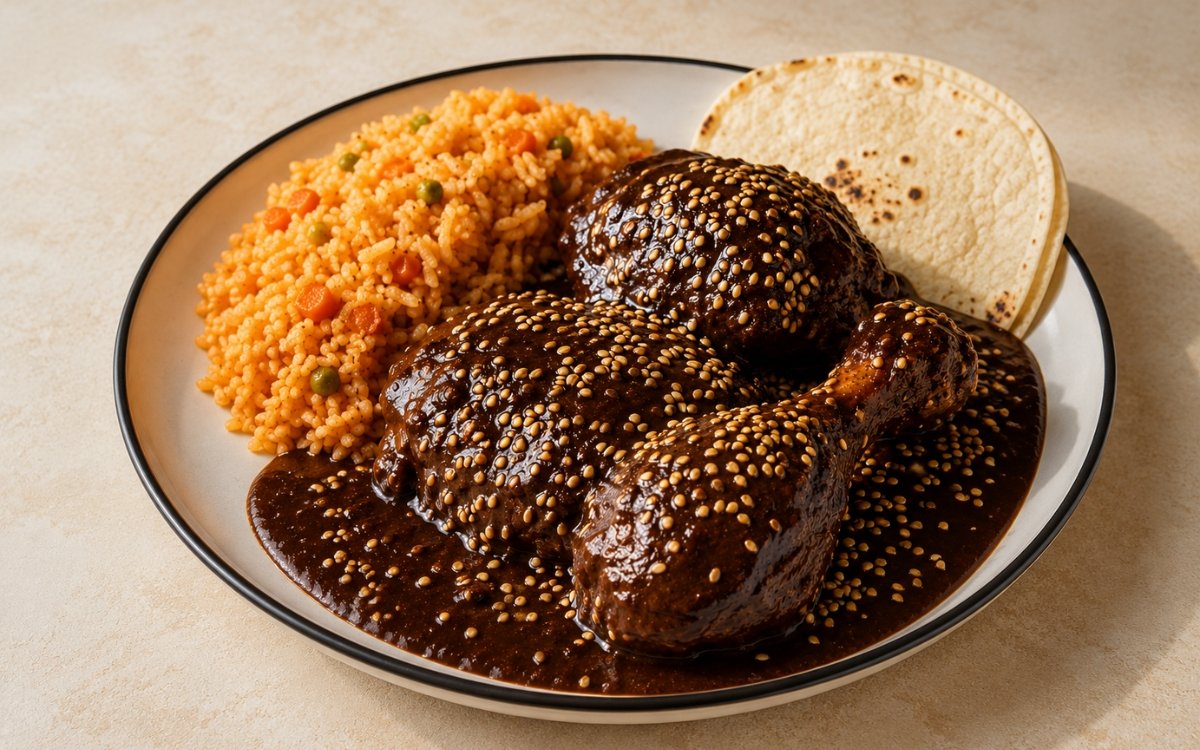
- Spoon a mound of Mexican rice onto each plate. Arrange the mole-coated chicken beside or partially over the rice. Spoon extra mole over the chicken generously. Scatter the toasted sesame seeds heavily over the top. Serve immediately with warm tortillas on the side or tucked onto the plate edge.
Notes
Keeping the chicken's initial poach genuinely gentle, never a hard boil, is worth understanding as a decision that protects two distinct outcomes at once. A vigorous boil directly toughens the meat, but it also emulsifies fat and clouds the surrounding liquid — and since that same reserved liquid later adjusts both the mole's consistency and, potentially, the rice, protecting its clarity matters just as directly as protecting the chicken's own texture.
The continuous, attentive stirring required once the mole is back over heat deserves genuine respect rather than being treated as routine diligence. A sauce this thick genuinely has very little tolerance for being left still, even briefly — scorching against the pot's bottom happens quickly with a mole this dense, and that bitterness, once introduced, undoes much of the careful, controlled work that went into building the original sauce.
The specific timing of returning the chicken to the mole — already fully cooked, added only for a brief final simmer — reflects a real understanding of what each cooking stage is meant to accomplish separately. The initial gentle poach handles cooking the chicken through properly; this later stage exists purely to let the chicken absorb flavour from the mole and come back up to temperature, without risking the overcooking a longer simmer directly in the sauce would introduce.
The recipe's own explicit warning against forcing cold, thickened mole over high heat deserves to be taken seriously. Mole that's been refrigerated and firmed up needs to be warmed slowly and thinned gradually with broth — rushing that process with high heat risks the same scorching and splitting this recipe's careful, attentive stirring is otherwise designed to prevent.