Ingredients
Method
Cook the Cilantro-Lime Rice
- Start the rice first so it is ready when everything else comes off the heat. Rinse the jasmine rice under cold running water in a fine mesh strainer until the water runs completely clear — this removes the surface starch that would otherwise produce sticky, clumped rice rather than the separate, fluffy grains that make the best bowl base. In a medium saucepan, combine the rinsed rice with 360ml cold water and 3g salt. Bring to a boil over high heat, then reduce immediately to the lowest possible heat, cover tightly, and simmer for 15 minutes without lifting the lid. Remove from heat and rest covered for 5 minutes — this equalisation step is part of the cooking process and should not be skipped. After resting, fluff the rice gently with a fork using a lifting and separating motion rather than stirring, which would compress the grains. Fold in the chopped fresh cilantro and the lime juice, distributing both evenly throughout. The lime juice goes in off-heat — acid added to hot cooking rice tightens the grains slightly and dulls the fresh citrus aroma, whereas added after cooking it stays bright and clean. Keep covered and warm until assembly.
Marinate the Chicken
- While the rice cooks, prepare the chicken. In a large bowl, whisk together the lime juice, olive oil, ground cumin, chili powder, minced garlic, smoked paprika, and salt until fully combined. The marinade accomplishes two things simultaneously — it seasons the chicken throughout with the spice blend, and the lime juice's acidity begins a very gentle surface tenderisation of the protein. Cut the chicken breasts into strips approximately 1cm thick — uniform thickness is important for even cooking, as thinner pieces will overcook before thicker ones reach the required internal temperature. Add all the strips to the marinade and toss to coat every surface thoroughly. Allow to marinate for 10 minutes at room temperature while the skillet heats. Ten minutes is sufficient for thin strips — the large surface area relative to the volume of each piece means the flavors penetrate quickly. Do not marinate longer than 20–25 minutes at room temperature as the lime acid can begin to affect the surface texture.
Sear the Chicken
- Heat 15ml vegetable oil in a large cast iron skillet over the highest heat your stove can produce. Allow the pan to heat for a full 2–3 minutes until the oil is shimmering and beginning to smoke at the edges. This high heat is the non-negotiable condition for achieving the deep, charred exterior that gives fajita chicken its characteristic smoky, caramelised flavor — the same flavor that makes restaurant fajitas worth ordering. Remove the chicken strips from the marinade, shaking off excess, and lay in a single layer in the hot pan. Do not move them immediately — allow them to sit undisturbed for 3–4 minutes, developing a dark, deeply colored crust before flipping. Cook the second side for 3–4 minutes until the internal temperature reaches 74°C (165°F) throughout. If the chicken strips are too numerous to fit without overlapping, cook in two batches — overlapping pieces steam rather than sear, producing pale, flavorless chicken regardless of the marinade quality. Transfer to a plate, tent loosely with foil, and rest for 3–5 minutes before slicing.
Char the Peppers and Onions
- Without washing the skillet — the residual chicken fat and caramelised bits adhering to the cast iron add flavor — add the remaining 15ml of vegetable oil and return to high heat. Add the sliced bell peppers and onions together and spread them across the entire pan surface. The key technique here is restraint: do not stir immediately. Leave the vegetables in contact with the hot pan without moving for 2–3 minutes, allowing direct contact with the cast iron to develop the visible char marks and caramelised edges that define fajita vegetables at their best. Once the first side has charred, toss and continue cooking for a further 4–5 minutes, stirring occasionally, until the peppers are tender-crisp — soft enough to have lost their raw crunch but still holding their shape and retaining a pleasant bite. Season with salt and black pepper. The target texture is deeply charred at the edges with a slight yielding softness throughout — not crunchy-raw, not fully collapsed. The color should be vibrant with visible blackened char marks that look and smell of caramelised sugars.
Warm the Black Beans
- Place the black beans along with their canning liquid in a small saucepan over medium heat. The canning liquid is worth keeping — it contains starch from the beans that thickens slightly as the beans warm, creating a saucy, cohesive consistency rather than dry, separate beans. Add the ground cumin and salt, stir to combine, and heat for 3–4 minutes until warmed through and slightly thickened. The cumin is the only seasoning needed here — its earthy warmth is the natural pairing for black beans and echoes the cumin in the chicken marinade, creating flavor continuity across the bowl's components. Keep warm on low heat until assembly.
Assemble the Bowls
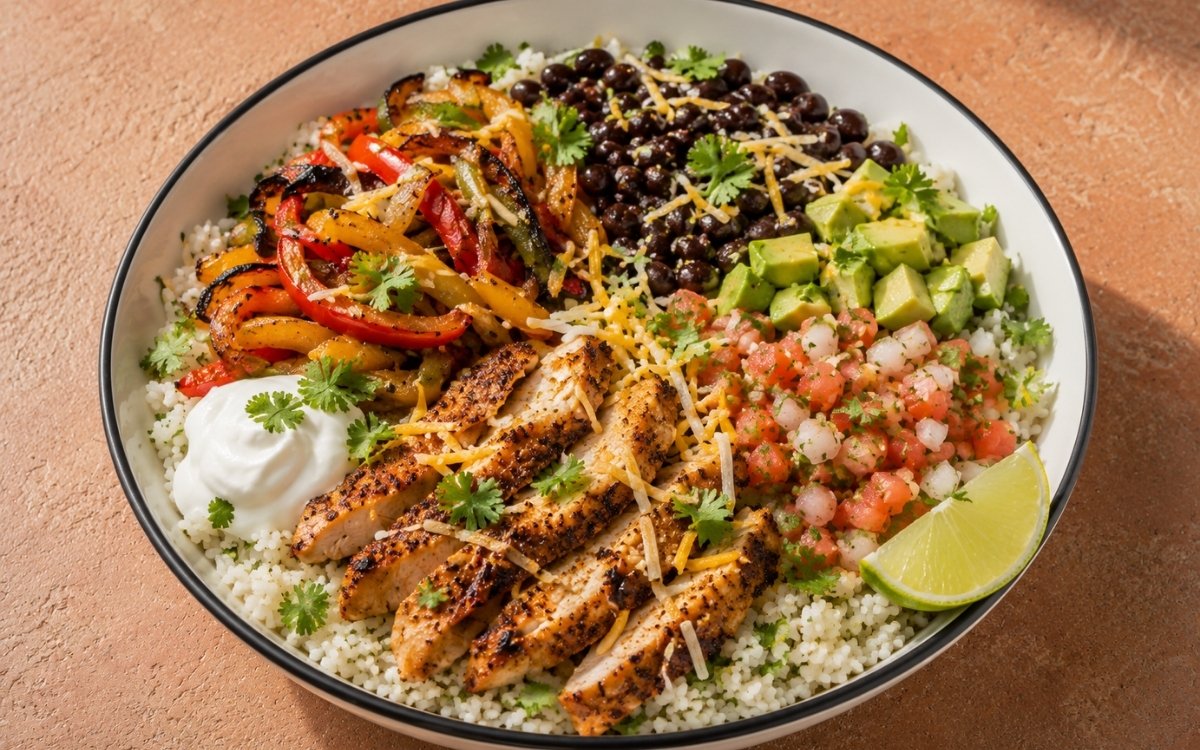
- Slice the rested chicken strips on the bias if desired — the diagonal cut is both visually cleaner and produces a more tender mouthful by shortening any remaining muscle fibres. Divide the cilantro-lime rice among four bowls as the base, spreading it to cover the bottom evenly. Arrange the sliced chicken, charred peppers and onions, and black beans in distinct sections around the bowl — a sectioned arrangement rather than a mixed one keeps each component identifiable and allows each bite to be customised to the eater's preference. Top each bowl with 60g of diced avocado, 30g of shredded cheese placed over the warm components so it melts slightly, 60g of sour cream in a deliberate spoonful on one side, and 40g of pico de gallo. Finish with a scatter of fresh cilantro leaves across the entire surface and a lime wedge placed on the rim. Serve immediately — the contrast between the warm cooked components and the cool, fresh toppings is what makes this bowl genuinely satisfying, and it diminishes as the bowl approaches a uniform temperature.
Notes
The char on both the chicken and the vegetables is not simply an aesthetic choice — it is a flavor development technique. The Maillard reaction that produces the brown, slightly blackened crust on the chicken and the caramelised edges on the peppers and onions creates hundreds of new flavour compounds that are not present in the raw or pale-cooked versions of the same ingredients. Fajitas taste the way they do specifically because of this char — the slightly bitter, smoky, intensely savory edges that contrast with the sweet, juicy interior of the pepper and the tender interior of the chicken. Any technique that reduces the char — a non-stick pan that does not hold heat, an under-heated surface, overcrowded cooking that causes steaming — proportionally reduces the flavor of the finished dish.
The choice of mixed bell pepper colors is not decorative. Red and yellow bell peppers are significantly sweeter than green, with a higher natural sugar content that caramelises more readily under high heat. Green bell peppers have a more vegetal, slightly bitter character that provides contrast. Using a mix of two or three colors gives the finished fajitas a more complex, sweet-bitter balance than a single color would produce.
Pico de gallo is a fresh uncooked salsa of diced tomato, onion, jalapeño, cilantro, lime, and salt — its fresh, raw acidity and textural crunch provide the clean, bright contrast element that makes the bowl feel complete rather than heavy. Store-bought pico works perfectly well in this recipe. If making fresh, prepare it while the chicken marinates and allow it to rest for at least 10 minutes to meld before serving — this brief rest transforms it from a mixture of separate ingredients into a cohesive, unified condiment.