Ingredients
Method
Brew the Black Tea
- Bring 1.2 liters water to 95 to 98°C. Add the black tea and the pinch of salt, then steep for 4 minutes. Strain immediately and set aside. Do not oversteep, or the tea will turn harsh and tannic once chilled. Black tea's tannins tolerate this fuller, near-boiling heat well, but continuing to steep past the specified window still draws out increasingly harsh compounds regardless of the tea's own heat tolerance — the 4-minute mark is calibrated to extract genuine strength and depth without crossing into that harsher territory.
Make the Cherry Concentrate
- In a saucepan combine the pitted cherries, 180g sugar, and 350ml water. Bring just to a gentle simmer over medium-low heat. Cook for 8 to 10 minutes, stirring occasionally, until the cherries soften and release their juices. Lightly crush some of the fruit with a spoon, but do not cook it down into a jammy mixture. You want a bright, clean cherry concentrate, not a thick compote. Keeping this simmer genuinely gentle, rather than pushing toward a hard boil or extending the cook, is what softens the cherries enough to release their juice and colour without also reducing the mixture toward the thicker, more cooked-down sweetness a longer or harder cook would produce.
Infuse the Rosemary
- Remove the cherry mixture from the heat. Lightly bruise the 3 rosemary sprigs between your fingers and add them to the hot cherry concentrate. Cover and steep for 8 to 10 minutes, then taste. Once the rosemary note is noticeable but not piney or medicinal, strain out the cherries and rosemary. Do not boil the rosemary in the liquid for a long time, or it can become woody and bitter. Infusing the rosemary only after the pan is off active heat, relying on the cherry mixture's own residual warmth for the steep, is what extracts its aromatic oils gently rather than through sustained direct heat — that gentler approach is exactly what protects the herb from developing the woody, bitter character prolonged boiling would cause.
Combine and Balance
- Pour the strained cherry-rosemary concentrate into the brewed black tea. Add 250 to 350ml cold water until the flavor is balanced: strong black tea first, then cherry, then rosemary in the background. The final yield should be about 2 liters. This specific flavour ordering — tea first, cherry second, rosemary trailing — functions as a genuine target worth tasting for directly, since the recipe's own identity depends on rosemary staying clearly secondary rather than taking over the drink.
Chill
- Refrigerate until fully cold, at least 1 hour. That resting period lets black tea's tannic strength, cherry's fruit depth, and rosemary's herbal note fully integrate together, producing a more unified flavour than serving the drink immediately after mixing.
Serve
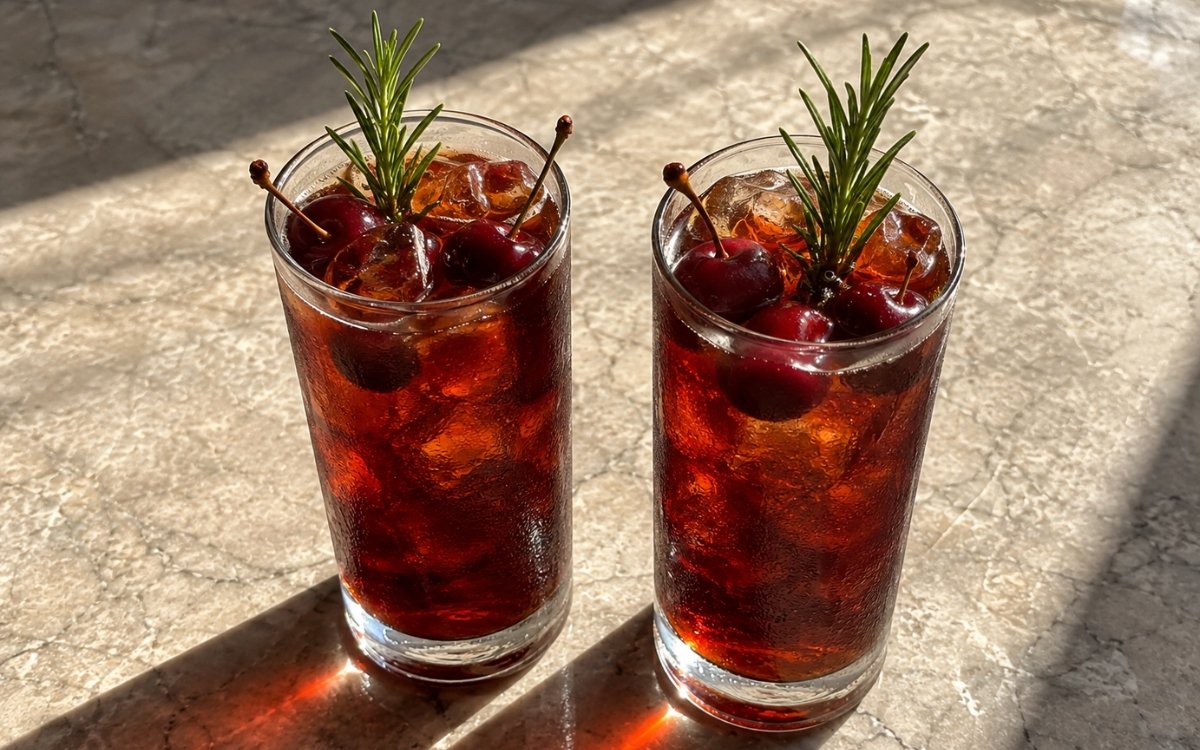
- Fill tall glasses with ice. Add 2 fresh cherries with stems to each glass and a small rosemary sprig standing in the glass. Pour over the chilled tea and serve immediately. Standing a fresh rosemary sprig directly in the glass, alongside whole cherries with their stems still on, gives the drink a genuine visual and aromatic presence at serving that reinforces its layered identity right from the first sip.
Notes
Keeping the cherry cook at a genuine gentle simmer, never a hard boil, deserves recognition as the technique most responsible for whether this concentrate tastes bright and clean or heavy and cooked-down. Cherries do need real heat to soften and release their juice and colour, but pushing that same process toward a harder boil or extending the cook time moves the result toward a thicker, more familiar jammy sweetness — the gentle, patient heat specified here extracts what's needed while keeping the fruit's own bright character fully intact.
Infusing the rosemary directly in the hot cherry concentrate, but only once the pan is off active heat, deserves attention as a deliberate, efficient technique choice. That residual warmth is more than sufficient to extract rosemary's aromatic oils over the specified steep time, while avoiding the sustained direct heat that would otherwise push the herb toward the woody, bitter character this recipe specifically warns against.
Tasting the rosemary infusion as it steeps, rather than trusting a fixed time blindly, deserves the same respect this collection gives to every genuinely assertive herb. Rosemary's own piney, resinous character can develop quickly, and active tasting during that steep is what lets the herb be pulled at precisely the point where it's noticeable but still secondary, rather than overpowering the cherry and tea beneath it.
The recipe's own explicit flavour ordering — strong black tea first, then cherry, then rosemary trailing in the background — deserves to be treated as the drink's actual organizing principle. Every earlier technique choice, from the controlled tea brewing to the gentle cherry simmer to the careful rosemary infusion, exists specifically to deliver that exact layered result rather than letting any single component dominate the others.