Ingredients
Method
Prepare the Pork
- Cut the pork into 4 long strips, each about 4–5cm thick. Char siu cooks best in long narrow strips rather than one large roast. That gives more caramelized surface and the right sliceable texture. Pat dry. That specific, narrow strip shape genuinely maximizes the exterior surface area available to the marinade and glaze relative to the meat's own volume — a single large roast simply couldn't offer the same proportion of that caramelized, lacquered exterior.
Make the Marinade
- In a bowl, combine the hoisin, light soy, dark soy, oyster sauce, honey, brown sugar, Shaoxing wine, five-spice, white pepper, garlic, ginger, fermented bean curd liquid or char siu sauce if using, and optional red coloring. Mix until smooth. Reserve 3 tbsp marinade in a separate bowl for later basting. Do not contaminate this reserved portion with raw pork. That deliberate, early separation of a clean basting portion is a real, necessary food-safety step — any marinade that's actually touched raw pork needs to be either discarded or thoroughly cooked before it can safely be brushed onto the meat again.
Marinate the Pork
- Add the pork to the marinade and coat thoroughly. Cover and refrigerate for at least 8 hours, preferably 18–24 hours, turning once or twice if possible. Overnight marination gives the pork its characteristic depth and color. A short marination will taste flatter and penetrate less. That extended time gives the marinade's own salt and aromatics genuine hours to actually work into the meat itself, rather than only seasoning its outer surface.
Bring Pork to Room Temperature
- Remove the pork from the fridge 30–40 minutes before roasting. Preheat the oven to 220°C / 425°F. Line a tray with foil and set a rack over it if possible. Add a little water to the tray underneath the rack to reduce smoking and catching drips, or line well. Arrange the pork strips on the rack. Roasting on a rack gives better air circulation and better lacquered edges. If roasting directly on a tray, turn more carefully and expect slightly less even caramelization. That elevated rack position lets hot air circulate freely around every side of each strip, building real, even colour rather than the meat simply sitting in its own rendered fat and juices.
First Roast
- Roast for 15 minutes. Meanwhile mix the reserved marinade with 2 tbsp honey and 1 tbsp hot water. This becomes the basting glaze. After 15 minutes, remove the tray and brush the pork generously with glaze. Turn the pork and brush the second side. Return to the oven for 10 minutes. Diluting the reserved marinade with a little honey and hot water at this stage builds a genuine glaze consistency specifically suited for brushing on and re-lacquering, distinct from the marinade's own thicker, raw consistency.
Finish Roasting and Caramelize
- Turn and baste again. Roast for another 8–12 minutes, until the pork is glossy, browned, and lightly charred at the edges. If needed, switch to broil / grill for 1–3 minutes at the end to deepen the lacquer and create the characteristic charred spots. Watch closely during the final stage — the sugars in the marinade burn fast. The pork should be cooked through but still juicy, with caramelized edges. Internal temperature should be about 68–72°C / 155–162°F before resting. For shoulder or neck, slight extra carryover is fine and keeps it succulent. That close watching during the final, brief broiler finish reflects a real, narrow margin — the marinade's own considerable sugar content caramelizes quickly, and the line between deep lacquer and genuine burning is a matter of seconds at this stage.
Rest and Reduce the Juices
- Transfer the pork to a board and rest for 10 minutes. While it rests, pour the roasting juices from the tray into a small saucepan, skim excess fat if needed, and simmer briefly until syrupy enough to spoon. The glaze should lightly coat the back of a spoon, not be watery. This is what you drizzle over the sliced pork and rice. That resting period gives the pork's own internal juices genuine time to redistribute evenly, protecting them from running out onto the board the moment it's sliced too soon.
Cook the Rice
- Rinse the jasmine rice until the water runs mostly clear. Cook 300g rice using your usual method. For absorption method, use about 1:1.1 to 1:1.2 rice to water by weight depending on the rice and cooker. Fluff and keep warm. That thorough rinsing removes surface starch that would otherwise make the finished rice stickier and clumpier than this dish's own neutral, fluffy base is meant to be.
Blanch the Bok Choy
- Bring a pot of salted water to a boil. Blanch the bok choy for 45–90 seconds, depending on size, until the stems are just tender but still bright and crisp. Drain well. Toss lightly with a few drops of oil if desired. Do not overcook. Bok choy should stay green and fresh-tasting, not dull and limp. That genuinely brief blanching time is calibrated specifically to soften the vegetable just enough while protecting both its own vivid green colour and its crisp-tender bite from turning dull and limp.
Slice and Assemble
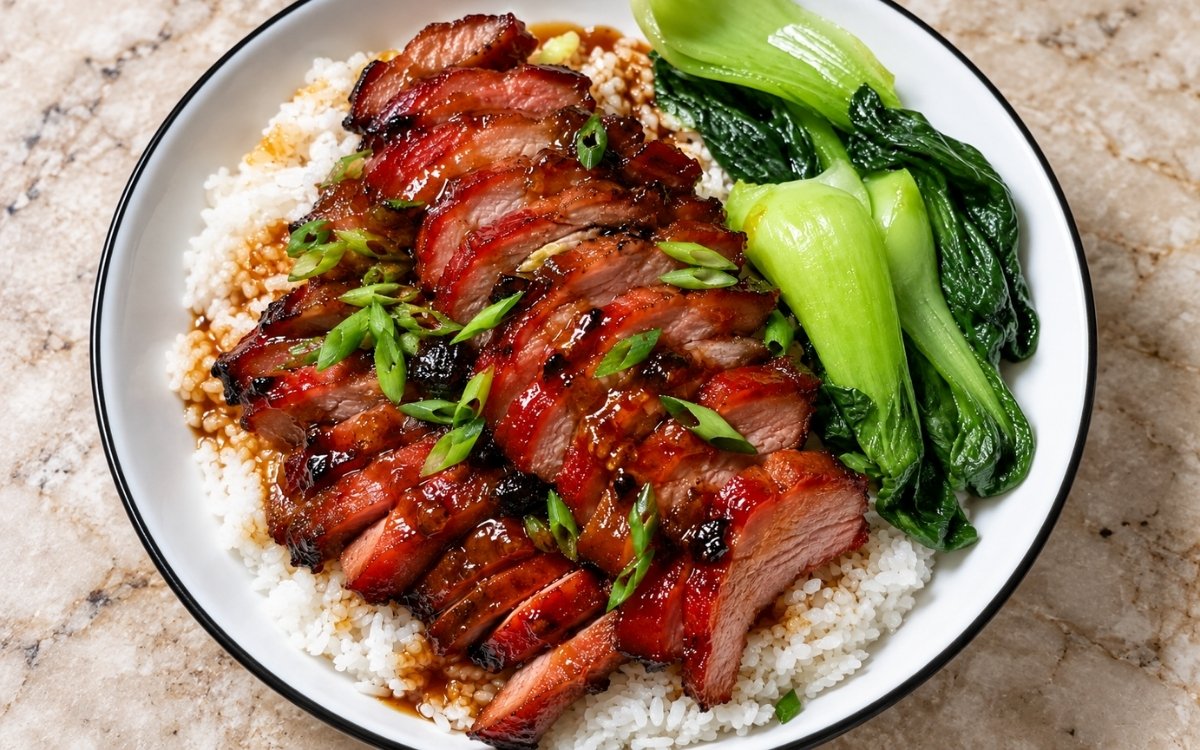
- Slice the rested char siu across the grain into medium slices. For each serving, add a mound of rice, fan over sliced char siu, place bok choy alongside, spoon over reduced glaze / pan juices, and finish with sliced scallions. Serve immediately. Slicing specifically across the grain, rather than with it, is what keeps every piece of pork genuinely tender and easy to eat, cutting through the meat's own muscle fibers rather than leaving them intact and chewy.
Notes
Cutting the pork into long, narrow strips rather than roasting one large piece deserves genuine recognition as the technique most directly responsible for this dish's whole classical texture and appearance. That shape genuinely maximizes the exterior surface relative to the meat's own volume, giving the marinade and basting glaze considerably more area to lacquer than a single large roast ever could.
Marinating for a genuine minimum of 8 hours, ideally a full 24, deserves the same attention this technique receives throughout this collection's other deeply marinated proteins. The recipe's own explicit contrast — real depth and colour from overnight marination versus a flatter, less penetrated result from a shorter soak — reflects exactly how much this single stage matters to the finished dish's own character.
Basting with the reserved, uncontaminated marinade at two separate stages during roasting deserves genuine respect as the technique responsible for char siu's characteristic sticky, deeply lacquered exterior. That repeated basting, rather than a single early application, is what builds real, layered glaze depth across the roasting time rather than relying on one coat to carry the whole finish.
Watching the pork closely during its final, brief broiler stage deserves attention as a real, narrow-margin technique given how much sugar this particular marinade carries. The recipe's own explicit warning that "the sugars in the marinade burn fast" reflects a genuine, tight window between the deep, glossy lacquer this dish depends on and outright burning.