Ingredients
Method
Make the Tomatillo Broth
- Add the tomatillos, serranos, roughly chopped onion, and garlic to a saucepan. Cover with water and bring to a simmer. Cook for 8–10 minutes, until the tomatillos have changed from bright green to olive green and are fully softened, but not falling apart. Drain, then blend with the cilantro and about 500ml of the beef stock until smooth. Add the remaining stock and blend again if needed. Pour the blended mixture into a pot and bring to a gentle simmer. Season with the salt and a few grinds of black pepper. Simmer uncovered for 10 minutes to cook out the raw edge. The broth should taste savory, lightly tangy, and fully cooked, not raw or aggressively sharp from the tomatillos. This dedicated 10-minute cooking window after blending is what actually rounds out the tomatillos' naturally sharp, raw acidity into something genuinely savoury — that transformation doesn't happen automatically simply by combining the broth with the beef later.
Cook the Bacon
- In a heavy pot or Dutch oven, cook the diced bacon over medium heat until the fat has rendered and the bacon is deep golden and crisp, 8–10 minutes. Lift the bacon out with a slotted spoon and reserve for topping. Leave the rendered fat in the pot. The bacon must be properly crisp, since it provides the signature crunchy topping and a lot of the base flavor. Leaving the rendered fat behind in the pot, rather than draining it away, means the beef about to be browned there will pick up genuine bacon flavour directly through that fat, building a foundational layer of flavour before the beef itself even goes in.
Brown the Beef
- Season the finely chopped beef with the salt and black pepper. Raise the heat to medium-high. If the pot looks dry, add a small splash of neutral oil. Add the beef in 2 batches so it browns rather than steams. Cook each batch quickly, stirring and breaking it up, until the meat loses its raw color and develops browned edges, about 2–3 minutes per batch. Return all the beef to the pot. The beef should be finely chopped and lightly browned, not grey and boiled. Batch cooking matters here. Finely chopped beef releases considerable moisture quickly once it hits a hot pan, and a crowded pot traps that moisture around the meat rather than letting it evaporate — working in properly spaced batches is what lets each piece actually sear and brown rather than simply steam in its own released juices.
Finish the Carne en su Jugo
- Pour the simmered tomatillo broth over the beef. Add the cooked pinto beans and the bean broth or water. Bring to a gentle simmer and cook for 10–12 minutes, just long enough for the beef, bacon fat, tomatillo broth, and beans to come together. Taste and adjust salt and pepper. The final texture should be brothy and spoonable, with plenty of finely chopped beef and beans throughout. It should not be thick like chili or loose like plain soup stock. Keeping this final combined simmer genuinely brief, rather than extending it, is what protects both the beef's own tenderness and the broth's fresh, lively tomatillo character — this dish is specifically meant to taste bright and just-cooked rather than long-simmered and heavy.
Serve
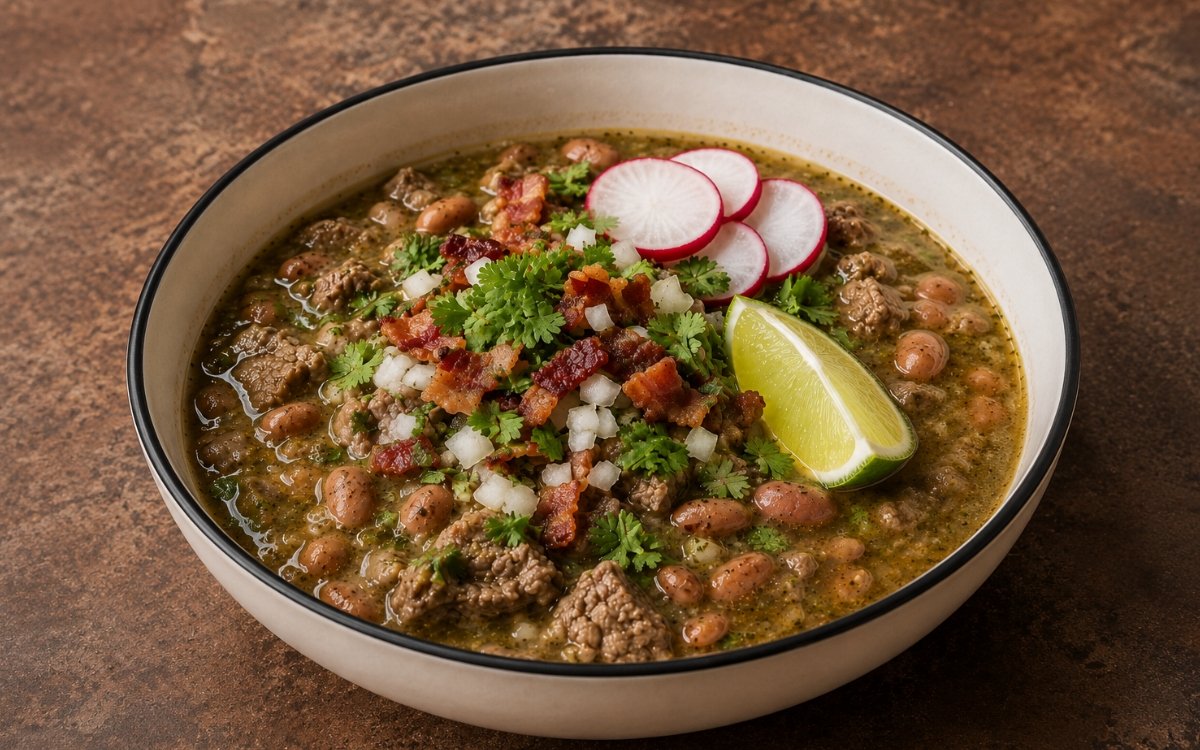
- Ladle into bowls. Top each serving generously with the reserved crispy bacon, diced white onion, chopped cilantro, and thin radish slices. Serve with lime wedges for squeezing over at the table. This generous, topping-heavy finish is a genuine, deliberate part of the dish's balance rather than optional garnish — the crisp bacon, sharp raw onion, fresh cilantro, and peppery radish each contribute real texture and flavour contrast against the warm, savoury broth beneath them.
Notes
Cooking the blended tomatillo broth thoroughly before it ever meets the beef deserves genuine attention as the step most responsible for whether the finished broth tastes rounded or raw. Tomatillos carry a naturally sharp, sometimes aggressive acidity straight from the blender, and that raw edge doesn't simply mellow out once the broth is later combined with beef and beans — it needs its own dedicated simmering time first to actually cook out and develop into something genuinely savoury.
Browning the finely chopped beef in properly spaced batches, rather than adding it all to the pot at once, is worth understanding as a real technique requirement given how much moisture finely cut meat releases under heat. A crowded pot traps that released moisture directly around the meat, and the beef essentially steams in it rather than developing the browned edges this recipe specifically calls for — working in batches gives each piece the direct pan contact it needs to actually sear.
Leaving the rendered bacon fat in the pot rather than discarding it, and browning the beef directly in that fat, is a small but genuinely consequential technique choice. That fat carries real bacon flavour into the beef from this very early stage, building a layer of smoky richness into the meat itself that simply combining crispy bacon as a topping later wouldn't replicate on its own.
The recipe's own explicit instruction against over-simmering once the beef and tomatillo broth are combined reflects this dish's real identity as something fresh and briefly cooked, distinct from a long-braised stew. Carne en su jugo is specifically meant to taste bright and lively — extending that final simmer well past the specified window would begin working against exactly the freshness this dish is built around.