Ingredients
Method
Marinate the Carne Asada
- Combine the orange juice, lime juice, oil, soy sauce, cilantro, garlic, brown sugar, ancho chilli powder, cumin, oregano, black pepper, and salt in a shallow non-reactive dish. Add the skirt steak and turn several times until every surface is coated. Cover and refrigerate for 2–4 hours. Do not marinate longer than 8 hours. The citrus will eventually begin breaking down the meat's surface and can make it soft or mealy. The soy sauce and salt are doing most of the actual flavour-penetration work here through osmosis; the citrus juices are primarily there for brightness and for kickstarting surface tenderisation, which is exactly why the window is capped — citric acid denatures surface proteins in a way that helps at 2–4 hours and actively works against you well past that point, turning a firm sear-ready exterior into something pasty.
Prepare the Referenced Components
- During the marinating period, prepare ½ batch of Salsa Roja according to its separate recipe. Hold it at room temperature or reheat it gently before serving; refrigerator-cold salsa will cool the entire plate. Prepare the complete 4-serving Cilantro Lime Jasmine Rice recipe so it finishes shortly before the steak. Keep it covered and fluff it immediately before plating. This is the parallel-prep sequencing that makes the whole plate come together at once rather than in stages — both components can be built entirely within the marinating window, so the only thing left to actively cook once the steak comes out of the fridge is the steak itself and the cebollitas.
Temper and Dry the Steak
- Remove the steak from the refrigerator approximately 30 minutes before cooking. Lift it from the marinade and remove any garlic or cilantro pieces clinging heavily to the surface. Pat the steak thoroughly dry with paper towels. This step is non-negotiable. Wet steak will steam, and excessive marinade solids will burn before the meat develops a proper crust. Identify the direction of the grain before cooking so the steak can later be sliced correctly. A genuinely dry surface is what allows the pan or grill's heat to go directly into browning rather than first evaporating surface moisture — any lingering marinade liquid or clinging aromatics will scorch in the high heat this cut needs, leaving bitter black flecks instead of an even, deeply caramelised crust. Marking the grain direction now, while the raw steak's fibres are still easy to see, saves guesswork later once the surface is dark and charred.
Preheat the Grill or Pan
- Preheat an outdoor grill, cast-iron skillet, or griddle over very high heat until the surface is extremely hot and just beginning to smoke. Lightly brush the cooking surface with neutral oil. Do not pour in a large quantity, which would fry the marinade residue instead of creating a concentrated char. Skirt steak is thin enough that it needs the surface at near-maximum heat the instant it makes contact — anything less and the exterior won't develop meaningful colour before the thin cut is already overcooked through.
Grill the Carne Asada
- Lay the skirt steak flat against the hot surface without overcrowding. For skirt steak, cook undisturbed for approximately 2–3 minutes on the first side, until deeply browned with dark char marks and caramelised edges. Flip once and cook for another 2–3 minutes. Remove the steak when its thickest section registers 54–56°C for a final pink-medium centre after resting or approximately 57–60°C after carryover cooking. Flank steak is usually thicker and may require approximately 4–5 minutes on the first side and 3–4 minutes on the second side. Do not cook by time alone. Thickness and cooking-surface temperature matter more than the clock. The gap between the pulled temperature and the target resting temperature is carryover cooking — residual heat continues moving inward for several minutes after the steak leaves direct heat, which is why pulling at the final target temperature would overshoot it by the time it's sliced.
Rest the Steak
- Transfer the steak to a board and rest uncovered for 8–10 minutes. Do not slice immediately. Resting allows the internal temperature to stabilise and prevents the juices from flooding the cutting board. During active cooking, muscle fibres contract and push moisture toward the centre of the cut; the rest period lets that pressure even back out across the whole piece, so slicing immediately after cooking would release most of that moisture onto the board rather than into the meat itself.
Char the Cebollitas
- While the steak rests, toss the spring onions with 15ml oil, salt, and black pepper. Place them on the hot grill or skillet and cook for 5–7 minutes, rotating every 1–2 minutes. The bulbs should become tender and caramelised while the green tips develop visible blackened patches. They should be blistered and smoky but still retain their shape — not burned into dry strings. This is the moment to use the residual heat of the same cooking surface rather than starting a separate pan, and the rest period gives exactly enough time to char the onions properly without either component sitting around cooling down.
Slice the Carne Asada
- Cut the rested steak diagonally against the grain into slices approximately 6–8mm thick. For long pieces of skirt steak, divide the steak into manageable sections first, then slice each section against its individual grain direction. Slicing with the grain will make even correctly cooked skirt steak unpleasantly chewy. Skirt steak's grain doesn't always run in a single straight line across the whole cut — it can shift direction partway along the muscle — which is exactly why marking the grain before cooking and re-checking it at the cutting board, section by section, matters more here than with a more uniform cut like a sirloin.
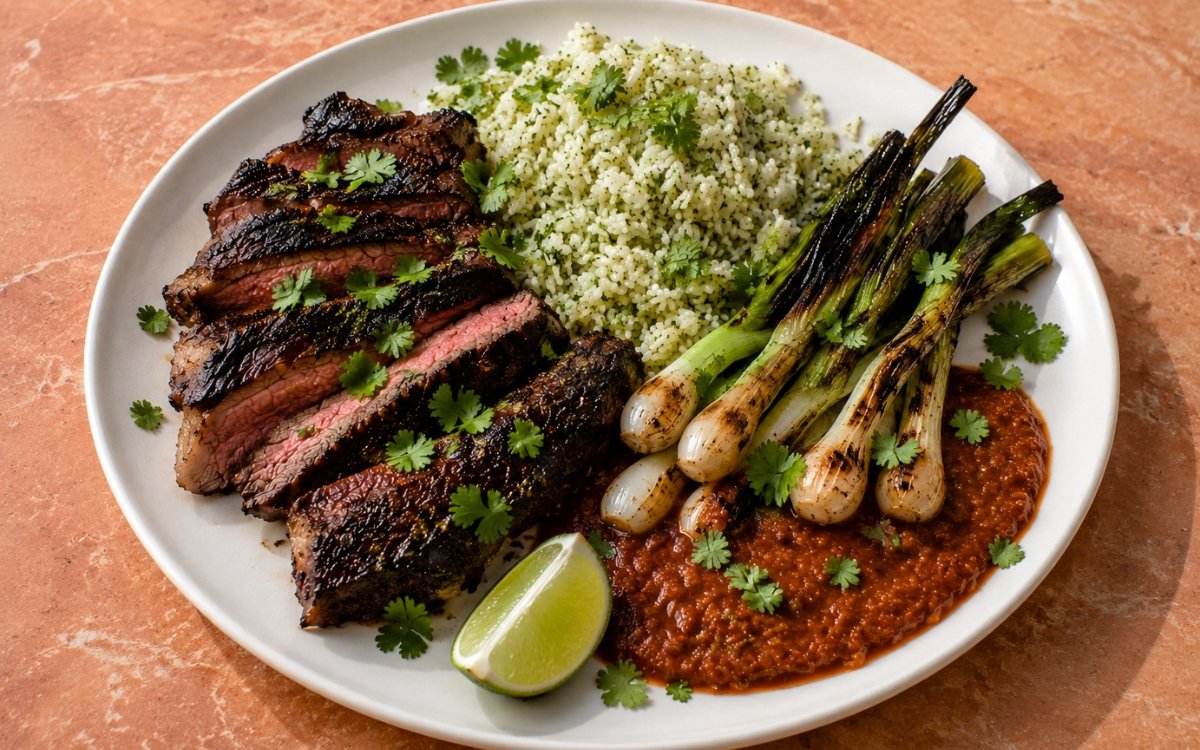
Assemble the Plates
- Divide the components equally among four large plates. Arrange the steak beside the rice rather than directly over it so the charred crust remains visible. Spoon the salsa roja into a small pool beside or partially underneath the cebollitas instead of pouring it over the steak. Finish with loosely scattered cilantro and lime wedges. Serve immediately while the steak, rice, and cebollitas are hot. Keeping the salsa off the steak directly is a textural decision as much as a visual one — pooled salsa or rice liquid touching the crust for even a few minutes will soften it, and the entire point of the grilling stage was to build that crust.
Notes
Outside skirt steak is specifically recommended here over other cuts for two reasons: its open, coarse grain takes up marinade flavour faster than a denser cut would, and its high fat marbling keeps it juicy through the very high heat this preparation requires. Flank steak is a reasonable substitute and is called out directly in the ingredient list, but it's a leaner, more uniform cut that behaves differently on the grill — it needs a longer first-side sear to develop equivalent char, runs a slightly lower risk of overcooking because it's thicker, and rewards being sliced thinner at the board than skirt steak does.
The 2–4 hour marinating window, capped at 8 hours, is worth taking seriously rather than treating as a rough suggestion. Citrus-based marinades read as "the longer the better" in a lot of home cooking, but skirt and flank steak are both thin, open-grained cuts with a lot of surface area relative to their thickness — the acid reaches deep into the meat quickly, and pushing well past the recommended window doesn't add more flavour so much as it starts degrading texture, turning the surface soft and slightly mushy rather than continuing to tenderise evenly.
This plate is deliberately built around parallel timing rather than a strict sequence. Both the rice and the salsa can be completed entirely during the steak's marinating period, which means that once the steak comes out of the refrigerator, the only remaining active cooking is the steak itself and the quick cebollitas char — a total of well under 20 minutes of hands-on cooking at the very end. That structure is what keeps a dish with four distinct components from turning into a stressful, multi-pan juggling act right before serving.
The distinction between resting the steak and resting the plate matters. The steak needs its own 8–10 minute rest, uncovered, before slicing — but the finished plate itself is not a make-ahead dish. Once assembled, the charred crust on the steak and the blistered skin on the cebollitas both begin softening on contact with the warm rice and salsa within minutes, which is why the assembly step calls for serving immediately rather than plating in advance.