Ingredients
Method
Marinate the Carne Asada
- Combine the orange juice, lime juice, oil, soy sauce, cilantro, garlic, brown sugar, ancho chilli powder, cumin, oregano, black pepper, and salt in a shallow non-reactive dish. Add the skirt steak and turn several times until every surface is coated. Cover and refrigerate for 2–4 hours if time allows. If making this faster, marinate for at least 30 minutes at room temperature while preparing the fries. Do not marinate longer than 8 hours because the citrus will start breaking down the meat's surface. The soy sauce and salt do most of the actual seasoning work through osmosis, while the citrus juices are mainly there for brightness and light surface tenderising — which is exactly why even a short 30-minute marinate at room temperature still produces a well-seasoned steak if the longer refrigerated version isn't practical.
Cold-Soak the Fries
- Place the thick-cut potatoes in a large bowl with cold water, vinegar, and half of the salt. Soak for 45 minutes. Drain, rinse, and dry extremely well with towels. This step is not optional if you want crisp fries. Wet potatoes going into hot oil are dangerous and will fry badly. The cold soak draws out excess surface starch that would otherwise cause the fries to stick together and fry unevenly — the vinegar adds a touch of acidity that helps the potato hold its shape through two separate fries, rather than breaking down at the edges.
Prepare the Guacamole and Pico
- Prepare ½ batch of Classic Guacamole according to the referenced recipe. Keep it chunky and only lightly folded; it should sit in thick spoonfuls over the fries, not spread like sauce. Prepare 1 full batch of Pico de Gallo according to its own recipe. Drain off excess liquid before topping the fries so the pico does not make the fries soggy. Handling both of these cool, fresh components well ahead of the actual frying and grilling stages is what keeps the final assembly moving quickly once the fries and steak are both hot and ready.
First Fry the Potatoes
- Heat neutral oil to 150°C in a heavy pot. Fry the potatoes in batches for 5–6 minutes, until cooked through and pale blond but not browned. Transfer to a rack and let cool for at least 15 minutes. Do not brown the fries in the first fry. This stage cooks the interior; the second fry creates the crust. The lower temperature here is calibrated to cook the potato's interior through gently, without the surface browning and setting a crust too early — that crust-building is deliberately saved for the second, hotter fry.
Temper and Dry the Steak
- Remove the steak from the marinade and let excess marinade drip off. Pat the steak thoroughly dry with paper towels and remove any large bits of garlic or cilantro stuck to the surface. This is the turning point. Wet steak will steam and leak juice over the fries instead of giving you dark charred carne asada. A genuinely dry surface is what lets the grill's heat go directly into browning rather than first evaporating surface moisture — this matters even more here than in a standalone carne asada plate, since any steaming or leaking juice from an under-dried steak ends up soaking directly into the fries below it.
Cook the Carne Asada
- Preheat a grill, cast-iron skillet, or griddle over very high heat until just beginning to smoke. Lightly oil the surface. Cook the steak for 2–3 minutes per side for skirt steak, or 4–5 minutes on the first side and 3–4 minutes on the second side for thicker flank steak. Remove when the thickest part reaches 54–56°C for a final pink-medium centre after resting. Rest for 8–10 minutes, then slice against the grain and chop into bite-sized pieces. Keep the charred edges visible. Resting before chopping matters just as much here as it would on a plate — cutting into the steak too soon releases its juices onto the board rather than keeping them in the meat, and those juices are exactly what shouldn't end up pooling under the fries.
Second Fry the Potatoes
- Increase the oil to 185°C. Fry the cooled potatoes again in batches for 2–4 minutes, until deep golden, crisp, and rigid at the edges. Transfer to a rack and season immediately with the remaining salt. If the fries are soft at this stage, the oil was too cool or the batch was too crowded. This second, hotter fry is what builds the genuinely rigid, crisp exterior the whole dish depends on — a fry that's merely golden but still flexible won't hold its structure once it's loaded with warm, moist toppings.
Melt the Cheese
- Spread the hot fries across a wide oven-safe tray or plate. Scatter the mozzarella evenly over the fries, then sprinkle cotija through the top layer. Place under a hot broiler for 2–4 minutes, just until the mozzarella melts and stretches but before the fries dry out. Cotija does not melt like mozzarella; it is there for salty sharpness. The mozzarella is doing the actual melting. Working quickly here, spreading the fries and cheese while everything is still hot from frying, is what lets the broiler finish the melt in just a couple of minutes rather than needing longer, drier heat that would compromise the fries' crispness.
Layer the Carne Asada Fries
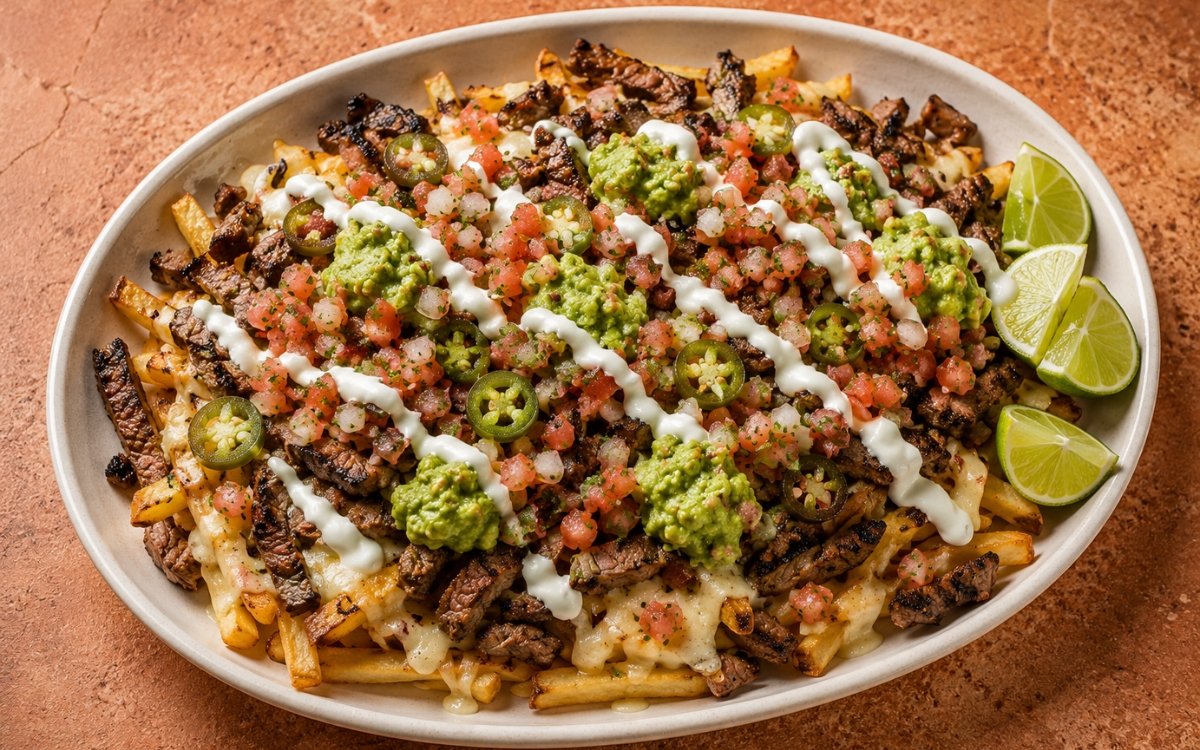
- Scatter the chopped carne asada over the melted cheese. Add thick spoonfuls of guacamole in visible patches rather than spreading it flat. Scatter pico de gallo generously across the top. Drizzle sour cream over everything in loose white lines. Add lime wedges at the edge. Adding the guacamole in distinct spoonfuls rather than spreading it into an even layer keeps each topping visually and texturally separate on the tray, which is both the traditional presentation and a practical choice — a spread layer of guacamole covers and softens more of the crisp fries underneath than scattered spoonfuls do.
Serve
- Serve immediately while the fries are still crisp, the cheese is melted, and the carne asada is warm. Squeeze fresh lime over the top just before eating. This dish has almost no holding window — the crisp fries begin softening the moment they're buried under warm, moist toppings, so serving without any delay is what preserves the contrast between the crunchy base and everything piled on top.
Notes
The double-fry technique is worth understanding as two genuinely distinct jobs rather than a single frying process repeated twice. The first, cooler fry is entirely about cooking the potato's interior through evenly, with browning deliberately avoided at this stage. The second, hotter fry is where the actual crisp crust develops, building a rigid exterior strong enough to support a substantial load of meat, cheese, and toppings. Skipping straight to a single fry at high heat produces fries that are either underdone inside or browned on the outside before the centre has properly cooked — neither approaches the sturdy, genuinely crisp result this loaded format requires.
Drying the steak thoroughly before grilling matters more in this recipe than it might in a simpler preparation, precisely because of what sits underneath it. In a standalone plate, a slightly under-dried steak mostly costs some crust quality. Here, any moisture that steams off or juice that leaks during cooking ends up directly on the fries below once everything is assembled, actively working against the crisp base the entire dish depends on.
The order of assembly — cheese melted directly onto the hot fries first, then the warm carne asada, then the cool guacamole and pico de gallo, and finally the sour cream drizzle — is a deliberate temperature and moisture sequence. Building from hot, dry components up to cool, moist ones keeps the coolest, wettest toppings sitting on top rather than trapped against the fries, where they'd have the most time and contact to soften the crisp base before the dish is even served.
This is a dish with essentially no assembled holding time, and every step before final assembly exists to compress that vulnerable window as much as possible. Preparing the guacamole and pico well ahead, resting and chopping the steak efficiently, and moving quickly from the second fry into cheese-melting and layering are all about minimising the gap between a tray of genuinely crisp fries and the moment they're served — that gap is where the whole dish either succeeds or turns soggy.