Ingredients
Method
Marinate the Chicken
- Combine the yogurt, ginger, garlic, lemon juice, oil, salt, Kashmiri chili, cumin, coriander, turmeric, and garam masala in a bowl. Add the chicken and mix until every piece is fully coated, then cover and refrigerate for at least 2 hours, preferably overnight. A longer marinade seasons the meat more deeply and keeps it more tender once it's been through both the char and the final simmer.
Start the Rice
- Rinse the basmati rice in several changes of cold water until the water runs mostly clear. Soak it for 20 minutes if time allows, then drain well. Combine the rice, 450 ml water, salt, and the optional butter or oil in a saucepan with a tight-fitting lid. Bring to a gentle boil, stir once, cover, lower the heat to the minimum, and cook for 12 minutes. Turn off the heat and let the rice stand covered for 10 minutes, then fluff gently with a fork. Keep the lid on throughout the resting time — the trapped steam is what finishes the grains, and lifting the lid early lets that steam escape before the rice is fully done.
Char the Chicken
- Remove the chicken from the fridge 20–30 minutes before cooking. For the broiler or grill method, arrange the pieces on a rack over a tray or on skewers and cook on high heat for 10–15 minutes, turning once, until lightly charred in spots and nearly cooked through. For the pan method, heat a heavy skillet or grill pan over high heat with a little oil and cook the chicken in batches for 2–3 minutes per side, until well browned and lightly charred; it doesn't need to be fully cooked yet. Set the chicken aside with any juices. Keep the pan from getting crowded so the chicken sears instead of steaming — that char carries a good part of the dish's finished flavor.
Build the Sauce Base
- Heat the oil or ghee and 25 g of the butter in a large sauté pan or pot over medium heat. Add the onion and cook for 8–10 minutes, stirring regularly, until fully softened and lightly golden, then add the ginger and garlic and cook for 30–60 seconds, just until fragrant. Stir in the tomato paste and cook for 1 minute. Add the Kashmiri chili, cumin, coriander, turmeric, and garam masala, stirring for 20–30 seconds to bloom the spices. Pour in the passata or crushed tomatoes along with 1 teaspoon of salt to start, then simmer over medium-low heat for 12–15 minutes, stirring regularly, until the sauce thickens, deepens in color, and loses its raw tomato edge. Add 1–2 teaspoons of sugar only if the tomatoes taste sharp. This stage needs its full simmer time — a tomato base that's cooked down too quickly carries a raw, acidic taste straight through to the finished sauce.
Blend and Finish the Sauce
- For a classic smooth butter chicken texture, blend the sauce until very smooth with an immersion blender, or carefully transfer it to a blender and blend smooth, then return it to the pan. Add 120 ml hot water first to loosen, adding more as needed until the sauce is thick but pourable. Lower the heat, stir in the cream and crushed kasuri methi, then add the charred chicken and any resting juices. Simmer gently for 5–7 minutes, until the chicken is fully cooked and tender and the sauce clings to the meat — internal temperature should reach at least 74°C. Finish with the remaining 15 g butter, stirring until glossy, and adjust the salt to taste. Once the cream is in, keep the sauce at a gentle simmer rather than a hard boil so it stays smooth instead of breaking.
Serve
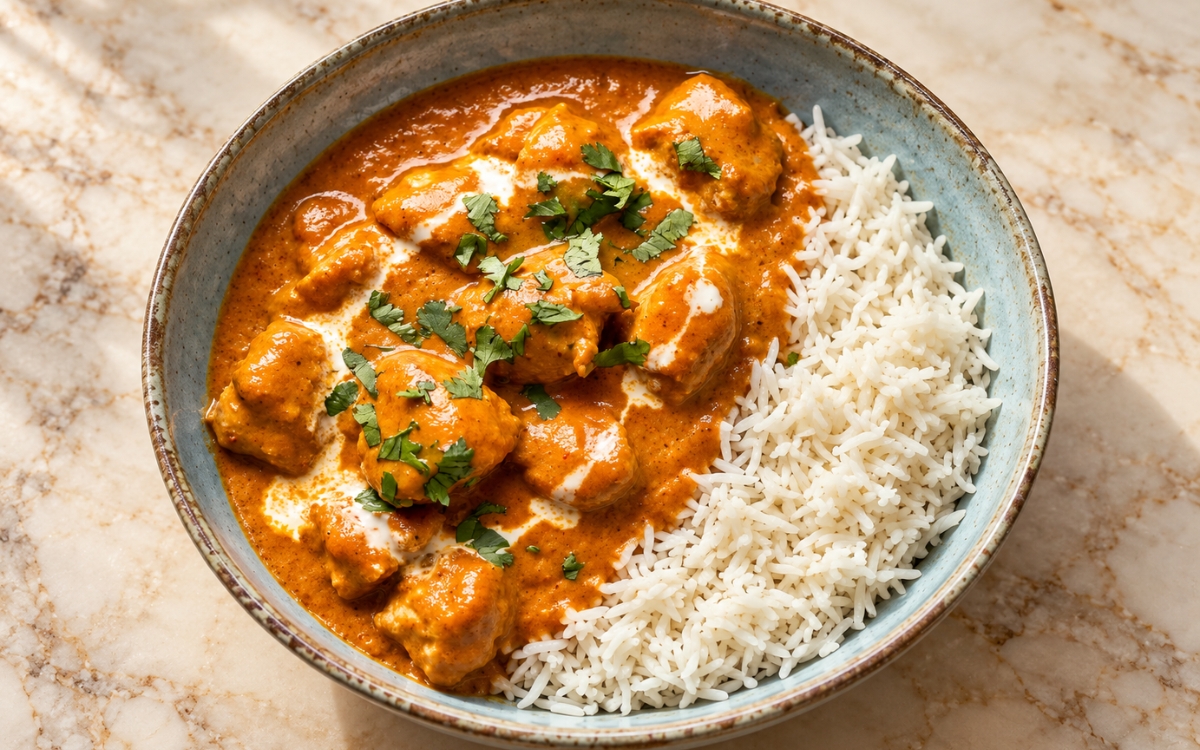
- Divide the basmati rice into 4 bowls, using the equivalent of 75 g uncooked rice per serving. Spoon the butter chicken alongside or partly over the rice, then finish each bowl with a small swirl of cream and a little chopped cilantro. Serve right away.
Notes
The most classical result comes from combining several specific choices at once: chicken thighs rather than breast, a full yogurt marinade, charring the chicken before it meets the sauce, and blending the sauce smooth before the cream and butter go in. Skipping any one of these still gives a good dish, but together they're what produce the familiar restaurant-style result.
A small amount of onion gives the sauce body and a background sweetness, even though some versions of butter chicken use very little or none at all; blending the finished base afterward keeps the texture polished either way, so the onion's presence doesn't show up as discrete pieces.
Kasuri methi plays a similar role here to its role in other tomato-cream curries in this style — a small quantity that contributes a disproportionate share of the dish's familiar restaurant aroma, and leaving it out changes the final smell and flavor more than the measured amount would suggest.
Kashmiri chili powder gives the sauce its rich orange-red color without pushing the heat level very high, which is why swapping in a hotter chili powder at the same quantity will change the dish's spice level more than its color.