Ingredients
Method
Prepare the Salad Base
- Finely shred the 300g green cabbage and 150g red cabbage with a sharp knife or mandoline, aiming for strands no thicker than about 2–3mm. If you rinse the cabbage, spin or pat it completely dry, since any water left on the strands dilutes the dressing. Halve the 200g cherry tomatoes, choosing ones that are ripe but still firm so they hold their shape when tossed. Roughly tear the 20g cilantro leaves and tender stems, setting a small handful of leaves aside for the finish, and cut the small lime into wedges. Keep the cabbage, tomatoes and cilantro covered in the fridge until assembly. That fine, dry shred is what lets the dressing and crunchy toppings spread evenly through the salad instead of sliding to the bottom of the bowl.
Toast the Seeds and Fry the Garlic
- Toast the 30g pumpkin seeds in a dry frying pan over medium heat for 3–4 minutes, shaking often, until they puff, pop and smell nutty, adding the 60g roasted peanuts for the final 1–2 minutes just to refresh them. Tip them onto a plate, then toast the 25g sesame seeds in the same pan for 1–2 minutes, until pale golden and aromatic. Meanwhile, place the 8 thinly sliced garlic cloves in a small saucepan with the 60ml neutral oil and set it over medium-low heat. Once the oil bubbles gently, at about 140–150°C, fry for 4–6 minutes, stirring constantly, until the slices turn evenly deep golden and genuinely crisp, then lift them onto paper towel, where they darken slightly as they drain. Pour the garlic oil into a small bowl to cool, and have the 40g fried broad beans ready, if using. That moderate heat matters because over-toasted seeds and dark brown garlic turn bitter and pile onto the bitterness of the tea leaves.
Make the Tea Leaf Dressing
- Taste the 80g pickled tea leaves first and, if they are very wet or heavily seasoned, squeeze them lightly to remove the excess liquid. Finely chop any long or clumped leaves until they are evenly fine, then place them in a bowl. Add the 2 tbsp neutral oil, 1 tbsp of the cooled garlic oil, the 1 tbsp lime juice, the finely grated garlic clove, the ¼ tsp sugar, the ½ tsp light soy sauce and the chopped green chillies, if using. Add the 1 tsp fish sauce gradually, starting with half if the leaves taste very salty, and mix thoroughly into a loose, spoonable paste. Let the dressing rest for 10 minutes while the toppings cool, then taste again; it should be savoury, slightly tart, earthy and pleasantly bitter, never harsh or overly sour, with a pinch of salt added only if it still tastes flat. That short rest is what lets the garlic, lime and fish sauce meld into the tea leaves rather than tasting like separate seasonings.
Assemble the Salad
- Place the shredded green and red cabbage, cherry tomatoes and torn cilantro in a large mixing bowl. Add about half to two-thirds of the tea leaf dressing and toss lightly with your hands or two spoons, lifting from the bottom rather than pressing down, so the tomatoes stay whole. Add roughly half of the peanuts, pumpkin seeds, sesame seeds, garlic chips and fried broad beans, then toss again very briefly, just two or three turns. The dressing should coat parts of the salad and sit in small dark, flavourful pockets rather than disappearing completely. If a forkful of cabbage still tastes plain, add a little more of the remaining dressing. That deliberately partial toss is what keeps the toppings crisp and the tea leaf flavour genuinely vivid, because fully mixed crunch softens within minutes in the dressing.
Finish and Serve
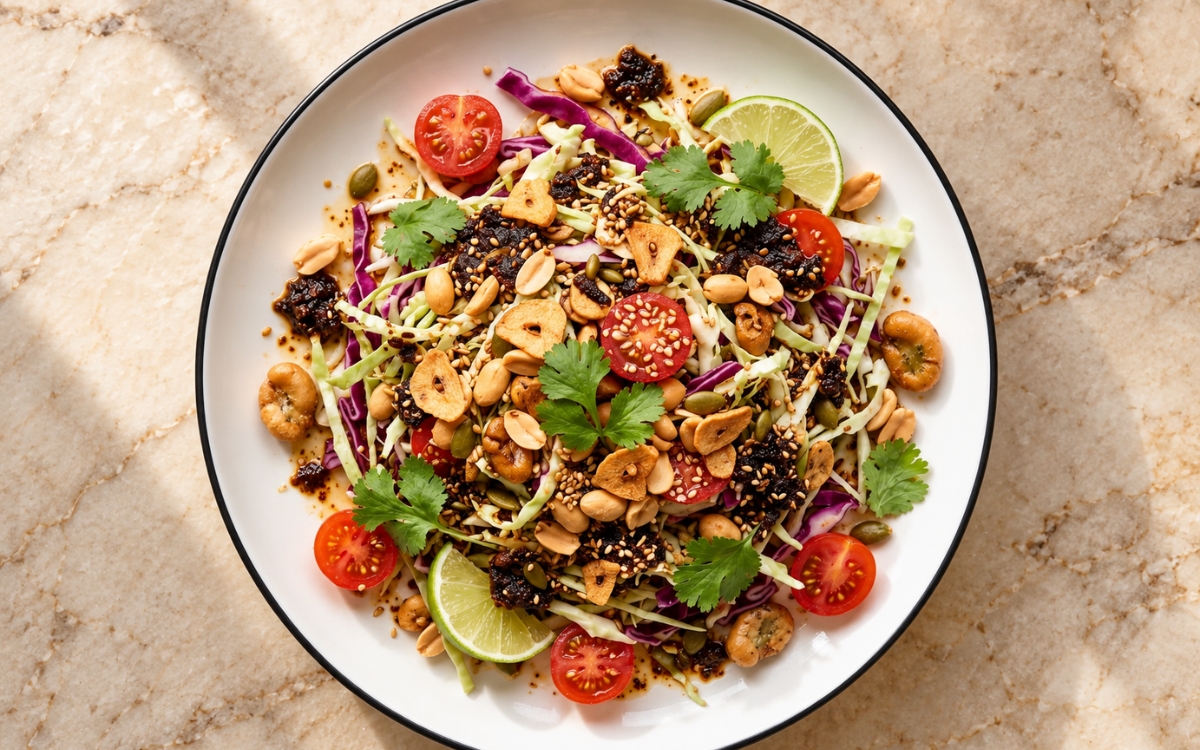
- Transfer the salad to a large serving bowl or platter. Dot the remaining tea leaf dressing over the top in small spoonfuls, then scatter over the rest of the peanuts, pumpkin seeds, sesame seeds, garlic chips and fried broad beans. Sprinkle over the 1 tbsp dried shrimp powder and 1 tbsp crispy fried shallots now, if using. Finish with the reserved cilantro leaves and serve straight away with the lime wedges, so everyone can squeeze genuinely fresh lime over their portion at the table. Divide into 4 portions, making sure each one gets cabbage, tomato, herbs, dressing and several crunchy elements. That immediate serving is what keeps the contrast sharp, because dressed cabbage starts to weep and the toppings lose their snap the longer the salad sits.
Notes
Holding back part of the dressing and toppings deserves genuine recognition as the technique most directly responsible for whether the salad tastes vivid or muddy. The recipe's own note that "Classical Burmese tea leaf salad is all about contrast: bitter-fermented tea leaves, fresh vegetables, salt, acid, nuttiness, and crunch" explains why — tossing everything together dissolves those contrasts within minutes, while a partial toss keeps dark pockets of dressing and a crisp layer on top.
Toasting the seeds and frying the garlic with restraint deserves the same attention this technique receives throughout this collection's other crunchy salad dishes, because the toppings carry half the flavour. The recipe's own warnings "Do not over-toast the nuts and seeds; bitterness will overpower the salad" and "Garlic chips should be deeply golden, not dark brown" reflect how the tea leaves already supply bitterness, so scorched toppings tip the balance into harshness.
Using authentic pickled tea leaves deserves genuine respect as the detail most directly responsible for the salad's identity. The recipe's own instruction "do not substitute plain brewed tea leaves" reflects how fermentation turns raw tea into the soft, earthy, pleasantly bitter lahpet that seasons the cabbage, while brewed leaves taste only tannic and flat and leave the salad without its defining flavour.
The strength of the tea leaf dressing deserves attention as a genuine, checkable balance point rather than a loose approximation. The recipe's own target that the mixture should be "assertive but not excessive" gives a clear test — a forkful of dressed cabbage should taste savoury, tart and earthy on its own, but if the tea flavour coats every strand heavily, the rest of the dressing belongs on top rather than in the bowl.