Ingredients
Method
Char the Aromatics
- Set a large heavy stockpot, at least 5 litres, over medium-high heat with no oil. Lay the halved onion cut-side down alongside the 40g sliced ginger and the 5 lightly crushed garlic cloves, and char for 8–10 minutes, turning the ginger and garlic occasionally, until all three are browned in spots with a few darker patches. Lift the garlic out early if it darkens faster than the onion, because blackened garlic tastes bitter. Transfer the aromatics to a plate and let the pot cool for a minute before the meat goes in. That light charring is what gives the broth a rounded, gently smoky sweetness that raw aromatics cannot provide.
Start the Broth
- Put the 1kg beef chunks and 500g beef bones into the pot, then add the charred onion, ginger and garlic and the 4 bruised lemongrass stalks. Pour in 2.2 litres of the water, adding up to 300ml more if the meat and bones are not fully covered. Bring slowly to a gentle boil over medium-high heat, about 15 minutes, then immediately lower the heat until only small, lazy bubbles break the surface. Skim the grey foam carefully and often during the first 20–30 minutes of simmering, until the surface stays mostly clear. That early, patient skimming is what keeps the finished broth clean-tasting and bright rather than murky.
Simmer Until Tender
- Keep the broth at a low, steady simmer for 1½–2 hours in total, partially covered, topping up with a splash of hot water only if the level drops below the meat. Check the beef from the 1½-hour mark: a chunk should yield easily to a fork and bite cleanly, but still hold its shape rather than collapsing into shreds like a stew. Shank usually needs the full 2 hours, while chuck often softens sooner. Never let the pot return to a rolling boil, because hard bubbling clouds the broth and tightens the meat fibres. That gentle, unhurried simmer is what turns tough, collagen-rich beef genuinely tender while drawing deep flavour into the broth.
Strain the Broth
- Lift the tender beef out with a slotted spoon onto a board, cover it loosely and set it aside to cool slightly. Strain the broth through a fine sieve into a large bowl, then discard the bones, onion, ginger, garlic and lemongrass. Rinse the pot if any residue clings to the bottom and pour the strained broth back in, leaving behind any sediment that settled in the bowl. Keep it hot over low heat. There should be roughly 1.8–2 litres; if there is much less, add hot water to bring it back up. That clean strain is what leaves a clear, beefy base ready to carry the bold flavour oil.
Make the Annatto Chilli Oil
- Heat the 2 tbsp neutral oil in a small pan over low-medium heat, add the 2 tbsp annatto seeds and let them sizzle gently for 1–2 minutes, until the oil turns deep orange-red. Strain out and discard the seeds, then return the coloured oil to the pan. Add the 3 minced garlic cloves and minced shallot and cook for about 1 minute, until fragrant but not browned. Stir in the 3 tbsp chilli flakes or chilli paste and cook for only 20–30 seconds, just until aromatic. Meanwhile, stir the 1½ tbsp shrimp paste into 3–4 tbsp hot broth in a small bowl, let any grit settle for a minute, then pour only the clearer liquid into the chilli oil and discard the sediment. That separate oil is what gives the broth its vivid red colour, its steady heat and its distinctive savoury funk.
Season and Merge the Broth
- Scrape the whole chilli-oil mixture into the hot broth and stir well. Season with the 2 tbsp fish sauce, 1 tbsp of the salt and the 1 tbsp sugar, plus the MSG if using, then taste. Add up to ½ tbsp more salt or a little extra fish sauce only if the broth still tastes flat; it should taste savoury, spicy, fragrant with lemongrass and pleasantly funky, rounded rather than sharply sour. Simmer gently for 15–20 minutes so the flavours merge and a red-orange sheen of chilli oil gathers on the surface. If the broth looks dull brown, the chilli base was underpowered, and a spoonful of extra chilli oil restores the colour. That final shared simmer is what fuses the beefy base and the chilli oil into one cohesive broth.
Prepare the Bowl Extras
- While the broth merges, slice the cooled beef across the grain into bite-size pieces, and slice the 200–250g chả lụa into thin rounds or half-moons. If using the pork blood cubes, cut them into bite-size pieces and warm them gently in a small pan of hot broth or hot water for 3–4 minutes, never at an aggressive boil, which turns them spongy and crumbly. Thinly slice the 4–6 scallions and 2 red chillies, roughly chop the 20–25g cilantro, pick the Thai basil leaves, rinse and drain the 150–200g bean sprouts and cut the 2 limes into wedges. If using them, finely shred the banana blossom and purple cabbage, and keep the banana blossom in cold water until serving so it does not darken. That fresh, crisp handling is what gives each bowl its contrast of texture against the hot, rich broth.
Warm the Noodles
- Bring a pot of water to a boil while the broth merges. Dip the 800g cooked thick round rice noodles into the boiling water for 30–60 seconds to loosen and reheat them; if cooking from dried instead, boil them according to the packet, usually 8–12 minutes, until springy with no chalky centre. Drain well, rinsing briefly in warm water only if the strands stick together, and never chill them under cold water right before serving. Divide the noodles between 4 deep bowls, about 200g each. That brief, warm handling is what keeps the noodles thick, springy and hot enough to stand up to the broth instead of turning mushy.
Assemble the Bowls
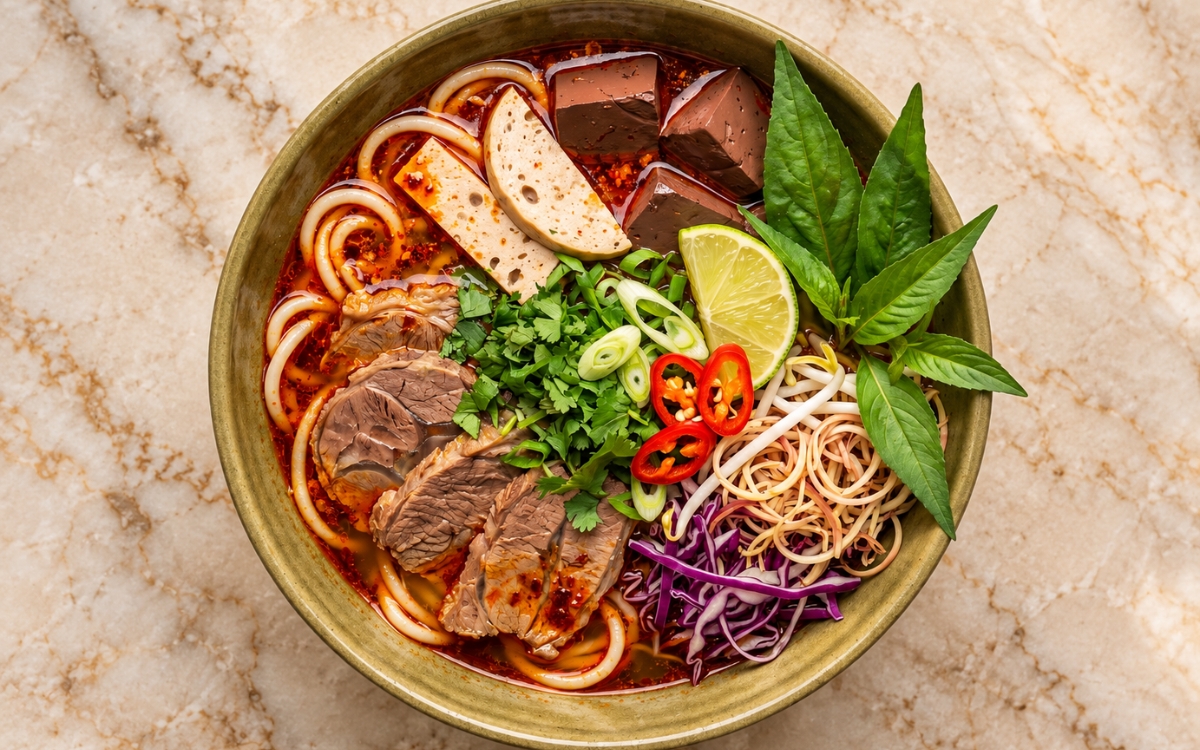
- Bring the broth back to a steaming simmer. Top each bowl of noodles with a quarter of the sliced beef, a quarter of the chả lụa and the warmed blood cubes if using. Ladle over plenty of the very hot red broth, about 450–500ml per bowl, so the noodles and toppings heat through. Scatter over the scallions and cilantro, then add the Thai basil, sliced chilli, bean sprouts and any drained banana blossom or purple cabbage on top or alongside, with lime wedges and any extra chilli oil at the table. Keep the solid garnish restrained so the broth, noodles and beef still lead the bowl. Serve immediately. That last-minute assembly is what keeps the noodles springy and the herbs genuinely fresh.
Notes
The gentle simmer deserves genuine recognition as the technique most directly responsible for whether this broth tastes clean and beefy or cloudy and flat. The recipe's own warning, "Do not hard-boil the broth for a long time," reflects how a rolling boil churns fat and protein into the liquid and tightens the meat fibres — leaving the broth murky and the shank tough instead of genuinely tender.
Dissolving and settling the shrimp paste deserves the same attention this technique receives throughout this collection's other boldly seasoned soups and curries, because it carries the broth's defining savoury funk. The recipe's own reminder, "You want the depth of flavor, not a muddy gritty broth," explains why only the clearer liquid goes in, since coarse paste stirred straight into the pot leaves sediment and a dull, muddy finish.
The choice of thick round rice noodles deserves genuine respect as the detail most directly responsible for the identity of the finished bowl. The recipe's own note that "Thin pho noodles will change the identity too much" holds because thick, springy strands carry the heavier, oil-slicked broth and keep their bite, while thin flat noodles go limp and turn it into a genuinely different soup.
The colour of the broth deserves attention as a genuine, checkable readiness cue rather than a loose approximation of the seasoning. A vivid red-orange broth with a sheen of chilli oil shows that the annatto and chilli base did its job, while a dull brown one means the oil was underpowered — as the recipe's own note puts it, it "likely needs a better chili oil base or more annatto/chili."