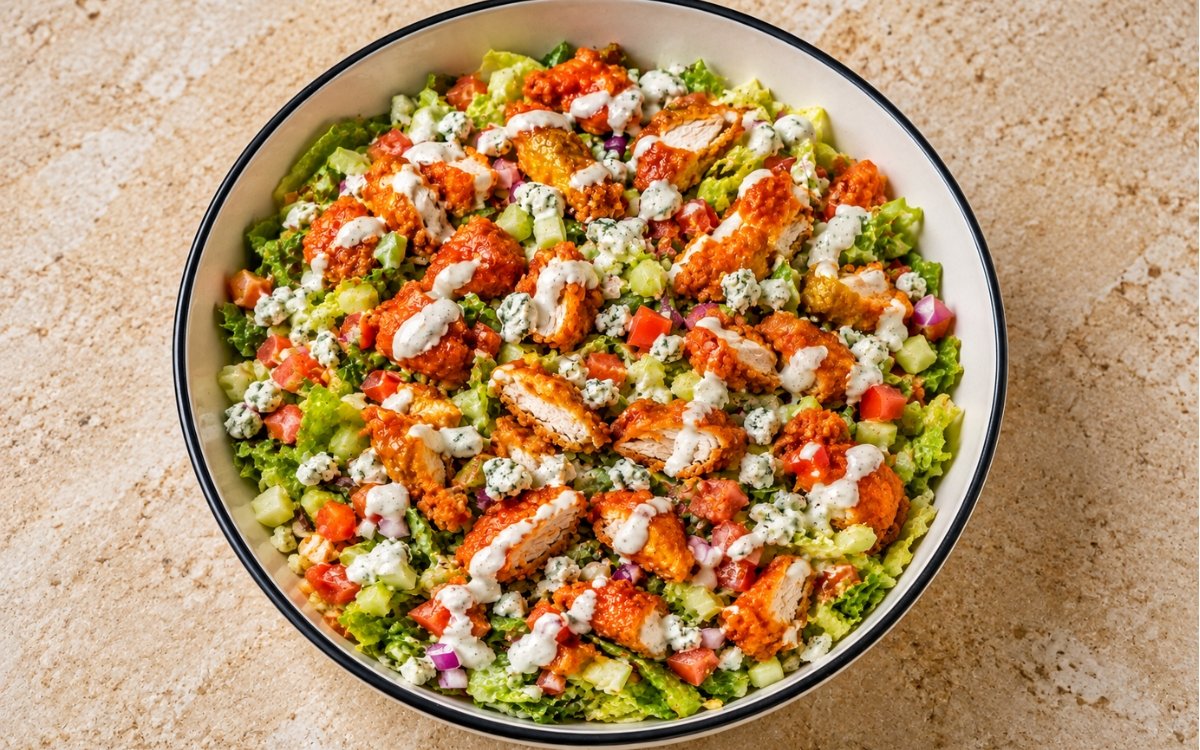
Ingredients
Method
Make the Ranch
- In a bowl, whisk together the mayonnaise, sour cream, buttermilk, lemon juice, vinegar, garlic, chives, parsley, dill, onion powder, salt, and black pepper. Adjust with a little more buttermilk if needed. The ranch should be creamy and pourable, but still thick enough to cling to the salad. The ranch should taste slightly too bold on its own. Once it hits cold lettuce, celery, chicken, and Buffalo sauce, the flavour softens. That deliberate over-seasoning accounts for real, predictable dilution — a ranch that tastes perfectly balanced in the bowl would read as flat once spread across this many other components.
Prep the Chicken
- Cut the chicken into bite-size pieces, about 3–4cm each. Season with salt, black pepper, garlic powder, onion powder, and paprika. Add the buttermilk and egg, then mix until the chicken is evenly coated. Let sit for 15 minutes. Do not marinate small chicken pieces for hours here. The goal is adhesion and light seasoning, not breaking down the texture. That specifically brief marinating window reflects real understanding of what small, bite-size pieces actually need — buttermilk's mild acidity works on protein structure the way any acid does, and pieces this small would be affected considerably faster than a whole cutlet or breast.
Prepare the Coating
- In a shallow dish, whisk together the flour, cornstarch, baking powder, salt, garlic powder, onion powder, and paprika. Lift the chicken from the buttermilk mixture, letting excess drip off, then coat thoroughly in the flour mixture. Press the coating onto each piece. Place the coated chicken on a tray or rack and rest for 5–10 minutes. The coating should look slightly damp and craggy in spots before frying. If it looks completely powdery, it has not bonded yet. That brief rest gives the buttermilk residue clinging to the chicken genuine time to begin binding with the dry coating, producing real adhesion before the pieces ever meet the shock of hot oil.
Fry the Chicken
- Heat neutral oil to 175–180°C. Fry the chicken in batches for 4–6 minutes, depending on size, until golden, crisp, and cooked through. The internal temperature should reach 74°C. Transfer to a wire rack and season lightly while hot. Do not overcrowd the oil. Crowding drops the temperature, extends the fry time, and makes the chicken heavier and less crisp. Frying in properly small batches protects the oil's own temperature from dropping too far when cold, breaded chicken is added — a significant drop lets the coating absorb excess oil rather than frying crisp.
Make the Buffalo Sauce
- In a small saucepan over low heat, combine the hot sauce, butter, honey, vinegar or lemon juice, and garlic powder. Stir until the butter melts and the sauce is smooth. Keep warm but do not boil hard. That genuinely low heat lets the butter melt in smoothly without the sauce separating, keeping it properly emulsified and glossy rather than greasy.
Sauce the Chicken
- Place the hot crispy chicken in a bowl. Add the Buffalo sauce and toss quickly until coated. Sauce the chicken right before assembling. If it sits too long in the sauce, the crust softens and loses the contrast that makes the salad work. That immediacy matters directly because the crisp coating built through frying is genuinely vulnerable to the sauce's own moisture — the longer the contact, the more that crust softens, undermining the exact textural contrast this salad depends on.
Prepare the Salad Base
- Wash and dry the romaine and iceberg very thoroughly. Chop into bite-size pieces. Place in a large bowl with the diced tomato, celery, and red onion. Add a small amount of ranch and toss lightly. The greens should be lightly coated, not drowned. The Buffalo chicken and blue cheese bring more richness on top. Any residual surface water on the greens would dilute the ranch on contact and prevent it from properly clinging, which is exactly why thorough drying matters as much here as it does for the dressing's own careful, light application.
Assemble
- Transfer the dressed chopped salad to a wide bowl or serving platter. Top with the Buffalo chicken pieces, blue cheese crumbles, extra celery if desired, and a final drizzle of ranch. Finish with black pepper. Adding the chicken, blue cheese, and final ranch only at this last assembly stage keeps every component in its own distinct layer, rather than everything blending together before serving.
Serve
- Serve immediately while the chicken is still warm and crisp and the salad is cold. This salad's whole appeal depends on that direct contrast between warm, crackling chicken and cold, crisp greens — any real delay lets both drift toward the same temperature, losing exactly the distinction the dish is built around.
Notes
Saucing the fried chicken only right before assembly deserves genuine recognition as the technique most responsible for whether this salad achieves real textural contrast or ends up soggy. The crisp coating built through careful frying is genuinely vulnerable to the Buffalo sauce's own moisture, and the longer that contact lasts, the more the crust softens — timing that saucing as close to serving as possible is what protects the crispness this dish depends on.
Building the ranch dressing deliberately bold, tasting almost too strong on its own, deserves the same attention this technique receives throughout this collection's other dressings meant to season a whole composed dish. That intentional over-seasoning accounts for the real, predictable dilution that happens once the ranch meets cold lettuce, celery, warm chicken, and Buffalo sauce all at once — a ranch balanced perfectly by itself would taste flat by the time it's actually part of the finished salad.
Resting the coated chicken briefly before it ever reaches the hot oil deserves genuine respect as a real, functional step rather than a minor pause. That rest gives the buttermilk residue clinging to each piece real time to begin binding with the dry coating, producing genuine adhesion before the chicken meets the oil — skipping it risks more of that coating simply falling away during frying.
Frying the chicken in properly small, uncrowded batches deserves the same attention this collection gives to every fried preparation. A crowded pot drops the oil's temperature meaningfully, and that drop lets the coating absorb excess fat before it has a real chance to crisp, producing heavier, greasier chicken than the properly light, crackling result this salad depends on.