Ingredients
Method
Prepare the Pan and Oven
- Heat the oven to 175°C / 350°F. Grease an 8x8-inch pan for thicker blondies or a 9x9-inch pan for slightly thinner ones, then line it with parchment, leaving overhang on two sides for easy lifting. That parchment overhang makes clean removal much easier later and helps preserve the crackly top when it's time to slice.
Brown the Butter
- Add the butter to a light-colored saucepan or skillet over medium heat, melt it fully, then continue cooking, stirring often, until it foams, the milk solids turn deep golden brown, and it smells nutty and toasted. Remove from the heat immediately and scrape all of the browned milk solids into a mixing bowl, then let it cool for 8 to 10 minutes, until warm but not hot. Don't leave the dark specks behind in the pan — they carry a significant amount of the flavor this recipe is built around. The finished butter should look amber-gold and smell fragrant rather than dark brown or bitter.
Build the Sugar Base
- Add the brown sugar and granulated sugar to the warm browned butter and whisk well until glossy and mostly smooth, then let the mixture sit for 2 to 3 minutes before whisking again to help the sugar dissolve and improve the shine on top. Add the eggs and egg yolk one at a time, whisking well after each addition, then whisk in the vanilla and salt. Whisking thoroughly at this stage matters — a well-emulsified butter-sugar-egg base is what produces a better crackly top and a smoother, denser crumb.
Add the Dry Ingredients
- Whisk together the flour and baking powder in a separate bowl, then add them to the wet mixture and fold with a spatula just until no dry streaks remain, folding in any mix-ins at the end. Don't overmix once the flour is added — overmixing develops gluten and makes the blondies tougher and more cakey instead of dense and chewy.
Pan and Bake
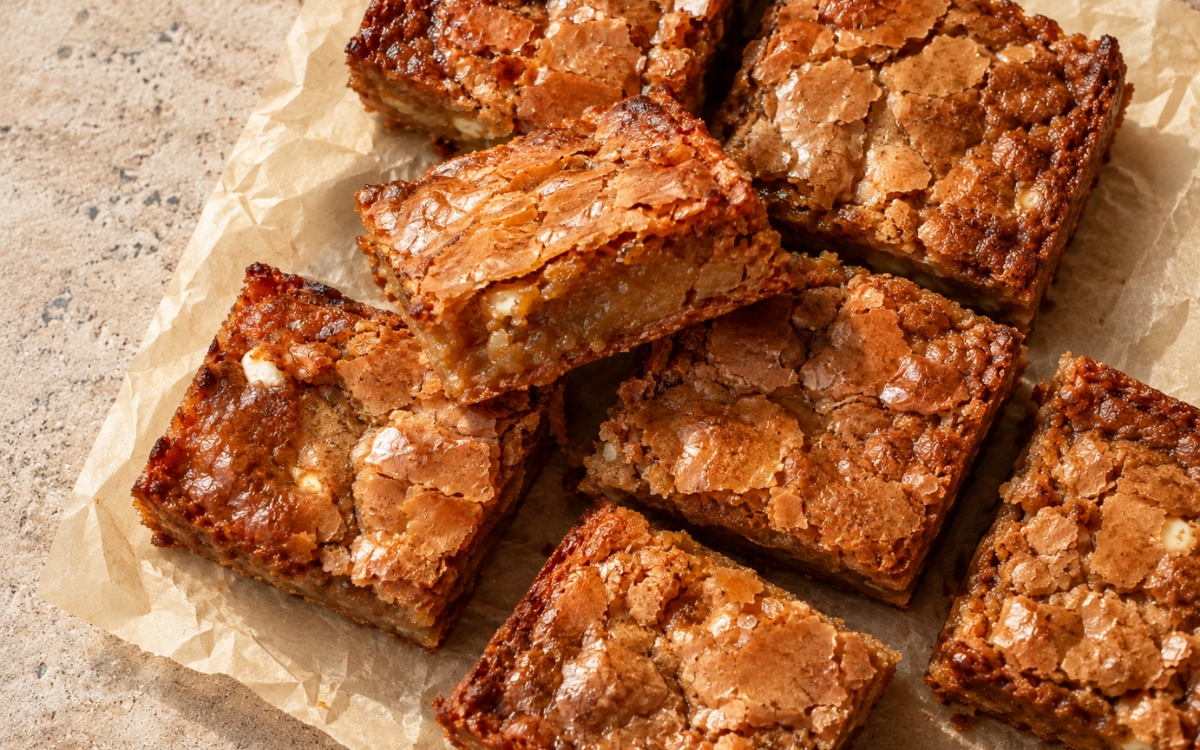
- Spread the batter evenly in the prepared pan — it will be thick — and bake for 28 to 34 minutes depending on the pan size, usually 31 to 34 minutes for an 8x8-inch pan or 28 to 32 minutes for a 9x9-inch pan. The blondies are done when the top is shiny, crackly, and set, the edges are browned and pulling very slightly from the pan, the center looks just set rather than wet, and a toothpick inserted in the center comes out with moist crumbs rather than raw batter. A slightly underbaked center is correct here — pull them when a faint softness remains, since they keep setting as they cool, and overbaking trades that fudgy chew for a drier, more cakey texture.
Cool Fully Before Cutting
- Cool in the pan for 20 to 30 minutes, then lift out using the parchment and transfer to a rack or leave on the counter until fully cooled, about 1 hour more. Cooling completely before cutting matters for getting clean, dense slices — a blondie cut too early will seem too soft in the interior and may tear instead of showing its proper chewy crumb.
Slice
- Use a sharp knife to cut into 16 squares, wiping the blade between cuts for the cleanest edges. For very neat bakery-style squares, chill the blondies for 20 to 30 minutes after cooling, then slice.
Notes
Browning the butter does more than add flavor — it also reduces some of the butter's moisture content, which concentrates the toasted flavor further and improves the final chew. That's part of why brown butter blondies end up denser and more flavorful than a standard blondie made with plain melted butter.
Letting the browned butter cool slightly before the eggs go in isn't optional if a smooth batter is the goal. Butter straight off the heat is hot enough to partially cook the eggs on contact, which would leave small curdled streaks through the batter instead of a uniform, glossy base.
Whisking the sugar into the butter while it's still warm, rather than after it's fully cooled, is specifically what produces the thin, glossy, crackly top these blondies are known for. A cooled butter base doesn't dissolve the sugar the same way, and the finished top tends to look duller as a result.
Resisting the urge to bake until the toothpick comes out completely clean protects the texture this recipe depends on. Blondies pulled at that stage have already overbaked past the fudgy interior the recipe is aiming for, and there's no way to recover that chew once it's gone.