Ingredients
Method
Prepare the Sausage Patties
- Divide the breakfast sausage into 4 equal portions and shape them into patties slightly wider than the biscuits, since they will shrink a little during cooking. Keep the patties fairly even in thickness so they cook at the same rate. Shaping the patties intentionally wider than the biscuit itself accounts for the real, predictable shrinkage that happens during cooking — starting them at the biscuit's own width would leave the finished patty noticeably smaller than the bread around it.
Cook the Sausage
- Heat a skillet over medium to medium-high heat. If the sausage is lean, add a small amount of oil. Cook the patties for about 4 to 5 minutes per side, until browned, cooked through, and no longer pink in the center. Transfer to a plate and keep warm. Let the sausage develop real browning before flipping. That crust gives the sandwich much of its savory flavor. Avoid pressing hard on the patties or you squeeze out juices. Giving the patties genuine, sustained contact with the hot pan before ever flipping is what lets real browning actually develop — moving or pressing them too early or too often interrupts that contact before a proper crust has any chance to form.
Warm the Biscuits
- While the sausage rests, warm the split biscuits in a low oven or lightly toast the cut sides in a dry skillet. The biscuits should be warmed through and lightly refreshed, not dried out. The biscuit should still feel tender and flaky. If you over-toast it, the sandwich becomes dry and crumbly instead of soft and rich. That restrained warming, stopping well short of a deep toast, is what protects the biscuit's own delicate, flaky layers — pushing the heat further would dry out exactly the tenderness a proper buttermilk biscuit depends on.
Whisk the Eggs
- In a bowl, whisk together the eggs, milk or cream, 2g salt, and part of the black pepper until fully combined. The mixture should look smooth and evenly yellow. Whisking only until smooth and evenly coloured, rather than continuing longer, is enough to fully incorporate the seasoning and liquid without introducing excess air that could affect the finished eggs' texture.
Cook the Soft Folded Eggs
- Lower the skillet heat to medium-low and add the butter. Once melted, pour in the eggs. Let them sit briefly, then stir gently with a spatula, pushing the eggs inward as they set. Once softly scrambled but still slightly glossy, divide them into 4 portions in the pan and fold each portion into a compact shape that will fit the biscuit. Cook only until softly set. Pull the eggs while they still look slightly moist. They will keep cooking from residual heat. Overcooked eggs go dry and rubbery, which ruins the texture of this sandwich. Folding each portion into a compact shape while the eggs are still genuinely soft, rather than after they've fully set, is what lets that shaping happen cleanly — eggs pulled too firm would resist folding into the neat, biscuit-sized portion this sandwich depends on.
Melt the Cheese
- Place one slice of American cheese over each warm sausage patty or directly over each egg portion while still warm, so it softens and melts. You want the cheese fully melted and lightly flowing, not stiff and cold. Placing the cheese directly against whichever component is still genuinely warm lets residual heat begin melting it immediately, rather than the cheese sitting as a cold, separate layer that would need its own direct heat source.
Assemble the Sandwiches
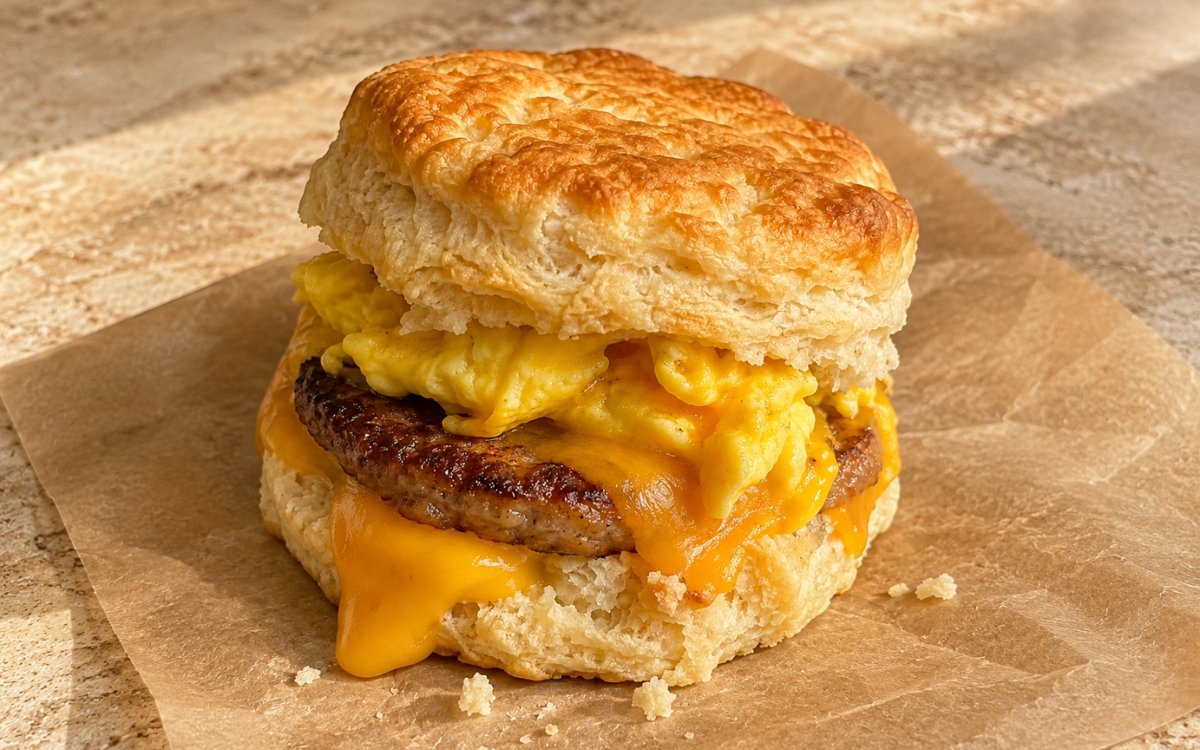
- Set the biscuit bottoms out. Add a sausage patty to each one, then the soft folded egg, then any melted cheese if you melted it separately. Cap with the biscuit tops. If you want a more tightly held sandwich, let them sit for 1 minute after assembling so the cheese helps bind everything together. That brief rest lets the still-warm, softened cheese begin to firm up just slightly around the other fillings, giving the whole sandwich a little more structural cohesion before it's picked up and eaten.
Serve
- Serve immediately while hot. Offer hot sauce on the side if desired. Serving without delay is what actually delivers this sandwich's whole appeal — the tender biscuit, the still-warm sausage, the soft egg, and the properly melted cheese are all at their individual best only in the moments right after assembly.
Notes
Letting the sausage patties develop real, genuine browning before ever flipping them deserves recognition as the technique most responsible for this sandwich's overall savoury depth. That crust isn't incidental — it's specifically where much of the patty's own developed flavour comes from, and pressing or moving the sausage too early or too often interrupts the sustained pan contact that browning actually requires.
Folding the scrambled eggs into their compact shape while they're still genuinely soft and slightly glossy, rather than waiting for them to fully set, deserves the same attention this collection gives to every soft-cooked egg preparation. That timing is what allows the eggs to be shaped cleanly into a neat, biscuit-sized portion while also leaving enough residual moisture and gentle carryover cooking to keep the finished eggs tender rather than dry.
Warming the biscuit only lightly, stopping well short of a deep toast, deserves real respect as a deliberate restraint specific to what this particular bread needs. A proper buttermilk biscuit depends on real, flaky tenderness, and pushing the warming stage toward a genuine toast would dry out exactly that quality — the light warming specified here refreshes the biscuit without compromising its own delicate texture.
Placing the cheese directly against whichever component is still genuinely warm, rather than adding it cold at final assembly, deserves attention as a small but functionally important detail. That placement lets residual heat begin the melting process immediately, producing a properly soft, flowing cheese layer rather than one that stays stiff and separate.