Ingredients
Method
Prep the Potatoes
- Cut the potatoes into small even cubes and pat them dry well with paper towels. Toss with the oil, salt, black pepper, garlic powder, and paprika. Small even cubes cook more quickly and crisp more evenly. Dry potatoes brown better and are less likely to steam. Cutting every piece to a genuinely consistent size is what lets them all reach the same doneness together — mismatched cubes force a compromise where larger pieces stay undercooked while smaller ones overcook in the same amount of time.
Cook the Breakfast Potatoes
- Heat a large skillet over medium to medium-high heat. Add the seasoned potatoes in a fairly even layer. Cook for about 12 to 15 minutes, stirring only occasionally, until they are golden brown, crisp on the outside, and tender in the center. Transfer to a plate. The potatoes should be properly browned and crisp, not pale and soft. If they color too fast, lower the heat slightly so they finish cooking through. Stirring only occasionally, rather than constantly, gives the potatoes genuine, sustained contact with the hot pan — that patience is exactly what allows real browning to develop rather than being interrupted before it has a chance to form.
Cook the Bacon
- In the same skillet or a separate skillet, cook the bacon over medium heat until crisp, about 8 to 10 minutes, turning as needed. Transfer to a paper towel-lined plate, then chop into bite-size pieces. Chopping the bacon into smaller pieces after cooking, rather than leaving whole strips, distributes it evenly throughout the filling once the burrito is rolled, rather than concentrating it in just one bite.
Make the Scrambled Eggs
- In a bowl, whisk together the eggs, milk or cream, salt, and black pepper until smooth. Heat a nonstick skillet over medium-low heat and add the butter. Once melted, pour in the eggs. Cook slowly, stirring gently with a spatula, until softly set and still slightly glossy, about 3 to 5 minutes. Remove from the heat immediately. Do not cook the eggs until fully dry in the pan. They should stay soft because they will warm again in the burrito and continue setting slightly from residual heat. Cooking over genuinely low heat, and stirring gently rather than vigorously, is what produces large, soft curds rather than small, tightly set ones — that gentler technique is directly responsible for the eggs staying tender through the additional warming they'll get inside the assembled burrito.
Warm the Tortillas
- Warm the tortillas briefly in a dry skillet, microwave, or low oven just until soft and pliable. Warm tortillas roll more easily and are less likely to crack. That brief warming loosens the tortilla's own structure just enough to fold and roll cleanly around a generous filling, without the resistance a cold, stiff tortilla would offer.
Assemble the Burritos
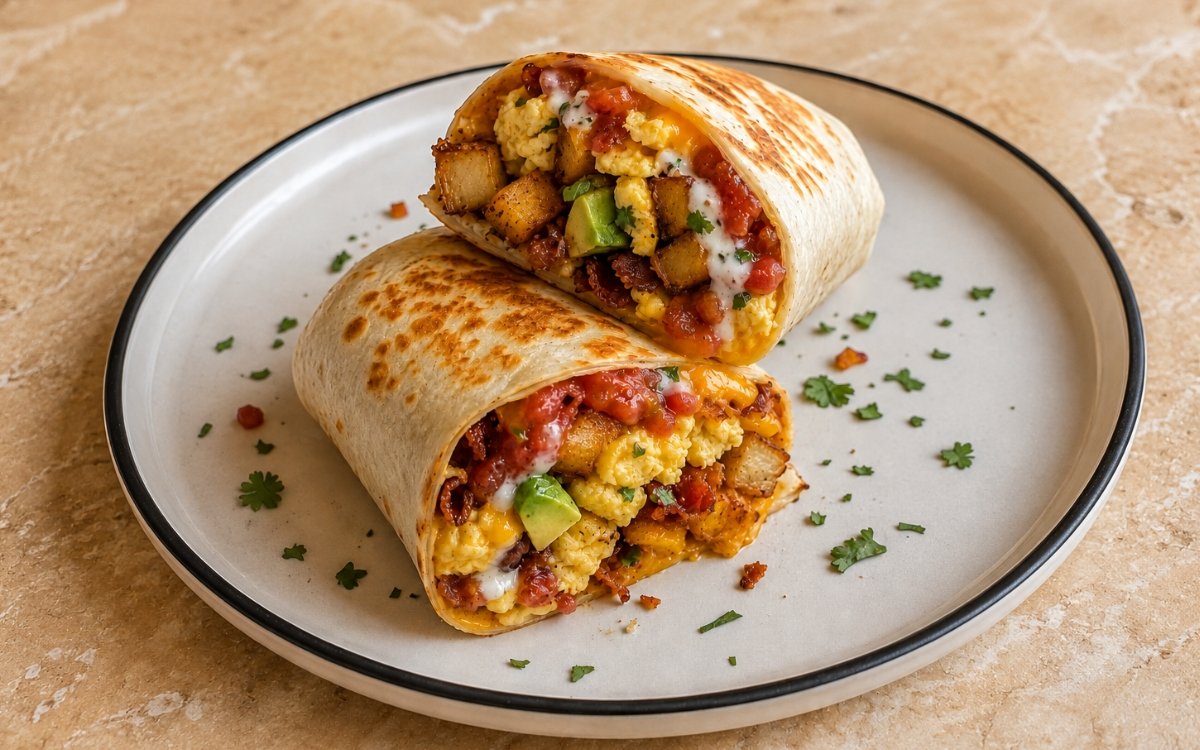
- Lay the tortillas out on a work surface. Divide the cheese among the tortillas first, placing it in the lower center of each tortilla. Top with the scrambled eggs, crispy potatoes, bacon, salsa, avocado, and a little crema. Add a little chopped cilantro if using. Keep the filling centered and do not overfill. Placing the cheese down first helps it melt from the heat of the eggs and potatoes. Keep the filling compact so the burritos roll tightly and slice cleanly. Layering the cheese directly against the tortilla, beneath the warm eggs and potatoes, lets residual heat from those components begin melting it immediately, rather than the cheese sitting cold and separate on top of everything else.
Roll the Burritos
- Fold the sides inward over the filling, then roll each tortilla up tightly from the bottom into a burrito. Place seam-side down. Placing the finished burrito seam-side down keeps that fold pressed closed under its own weight, giving the seam a head start on sealing before it ever reaches the hot pan.
Toast the Burritos
- Heat a clean dry skillet over medium heat. Place the burritos seam-side down first and toast for about 1 to 2 minutes per side, until lightly golden with toasted spots and the burritos are warmed through. Toast just enough to set the seam and give the tortilla color. Too much time in the skillet can dry out the tortilla and overcook the eggs. Starting seam-side down specifically is what actually seals that fold shut through direct, sustained contact with the hot pan — flipping to the seam side later wouldn't give it the same dedicated, uninterrupted heat exposure.
Serve
- Cut the burritos in half on a diagonal and serve warm. If you like, add a little extra salsa or crema on the side. Letting the toasted burritos rest for a minute or two before cutting, as the recipe's own notes suggest, lets the filling settle slightly so the cross-section stays clean rather than spilling out immediately.
Notes
Cooking every component of this burrito separately, rather than combining them in one pan, deserves genuine respect as the organizing principle behind the whole recipe. Potatoes need real, sustained time and space against a hot pan to crisp properly; eggs need gentle, low heat and minimal disturbance to stay soft. Combining these two processes in a shared pan would force a compromise that serves neither component well — treating them as genuinely separate tasks is what lets each one reach its own proper result.
Pulling the scrambled eggs while they're still slightly glossy and underset deserves the same attention this technique receives throughout this collection's other egg dishes. Eggs continue cooking from residual heat even off direct heat, and the eggs in this burrito face two additional rounds of warmth — first during assembly against warm potatoes and bacon, then again during the final toast — pulling them early is what accounts for all that additional cooking still to come.
Layering the cheese directly against the tortilla, beneath the warmer components rather than on top, reflects genuine thought about how melting actually happens in this assembly. That placement lets the residual heat radiating from the eggs and potatoes begin working on the cheese immediately, rather than the cheese sitting as a cold, separate layer that would need its own direct heat source to melt.
Starting the final toast with the burrito seam-side down deserves recognition as a small but genuinely functional detail. That position gives the fold the most direct, sustained contact with the hot pan available during the whole toasting process, which is specifically what seals it closed rather than leaving it vulnerable to unrolling.