Ingredients
Method
Infuse the condensed milk
- Place the sweetened condensed milk in a small saucepan and warm gently over very low heat, stirring continuously to prevent scorching or separation. Add the lime zest and allow it to steep for about 3–4 minutes until fragrant and lightly citrusy. Do not allow the mixture to boil or thicken. Remove from heat and let the infused milk cool completely so the citrus oils stabilize and integrate smoothly.
Prepare the lime pulp
- Trim the top and bottom of each lime to create a flat surface, then cut into wedges. Using a small sharp knife, carefully separate the juicy pulp from the peel by slicing along the inside of the rind. Remove all visible seeds and discard the peel completely. This precision step ensures bright acidity without introducing bitter pith compounds that would ruin the drink’s balance.
Blend the base
- Add the lime pulp, cooled lime-zest–infused condensed milk, cold water, sugar, and ice into a high-speed blender. Blend for about 30–45 seconds until fully smooth and creamy. The mixture should look pale, slightly frothy, and evenly emulsified with no visible pulp chunks.
Strain for texture
- Pour the blended mixture through a fine-mesh sieve into a large pitcher, pressing lightly with a spoon to extract liquid while leaving behind fibrous solids. This creates a refined, silky texture and prevents gritty mouthfeel.
Serve immediately
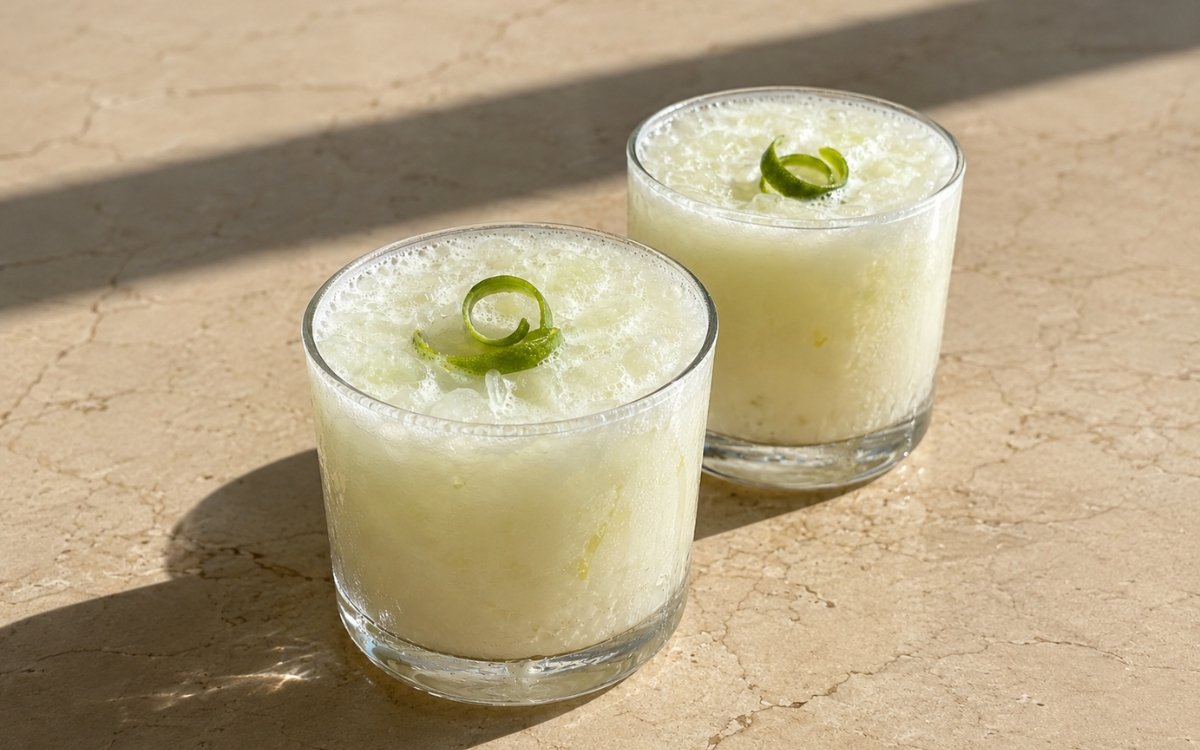
- Fill serving glasses with fresh ice and pour over the Brazilian lemonade. Garnish with lime peel twists for aroma and visual lift. Serve while fully cold and creamy for optimal flavor and structure.
Notes
Use fresh, heavy limes with thin skin and high juice content. Dry or thick-skinned fruit produces weak flavor and excess bitterness.
Lime zest infusion should remain short and gentle. Overheating condensed milk can cause caramelization or graininess.
Minimal sugar is intentional. Condensed milk already provides sweetness and body, so extra sugar should only fine-tune acidity.
Cold water and ice are structural elements. They dilute acidity and allow the drink to feel refreshing rather than heavy.
Straining defines the final texture. Skipping this step results in fibrous residue and an unrefined drink.
Brazilian lemonade is not designed for storage. Separation and flavor dulling begin quickly after blending.