Ingredients
Method
Prepare the Calamari
- If using whole cleaned squid tubes, slice them into rings about 1–1.5cm thick. Leave small tentacles whole if they are bite-sized; if very large, separate them into smaller clusters. Pat the calamari very dry with paper towel. This step matters: excess surface moisture turns the flour coating patchy and heavy rather than light and crisp. Season lightly with fine sea salt and a small amount of black pepper. The calamari should be dry and lightly seasoned, not wet or sitting in liquid at the bottom of the bowl. Squid naturally holds a fair amount of surface moisture, and that moisture works directly against an even, light coating — thorough drying here is what allows the flour mixture to adhere evenly rather than clumping unevenly against damp patches.
Prepare the Coating
- In a wide bowl or tray, combine the all-purpose flour, cornstarch, and baking powder. Mix thoroughly so the starch and baking powder are evenly distributed. The flour gives structure, the cornstarch helps create a lighter and crisper shell, and the small amount of baking powder helps the coating fry up a little more delicate and airy rather than dense. Dredge the calamari in the flour mixture until evenly coated, then shake off the excess. Let the coated calamari rest on a tray for 10–15 minutes before frying. After resting, the flour should look slightly hydrated and cling more firmly to the squid. This helps the coating fry more evenly and stay attached. That brief rest lets residual moisture on the squid's surface begin working into the dry coating just enough to set it in place — a coating that goes straight into hot oil without this pause is considerably more likely to shed into the fryer.
Fry the Calamari
- Heat neutral oil in a deep pot or fryer to 180°C. Fry the calamari in small batches for 1½ to 2½ minutes, depending on size, until pale golden and crisp. Do not overcrowd the pot — crowding drops the oil temperature and makes the coating greasy. Transfer each batch to a wire rack or paper towel-lined tray and season immediately with a little fine sea salt while hot. The coating should be light, dry, and pale golden rather than dark brown. The calamari inside should be just cooked — tender, juicy, and not rubbery. Overcooking even by a minute too long will make the squid noticeably tougher. Squid's proteins tighten quickly under sustained heat, and there's a genuinely narrow window where it stays tender before crossing into tough, rubbery territory — this recipe's short fry time exists specifically to stay inside that window rather than accidentally crossing past it.
Prepare the Bread
- Split the semi-baguettes or baguette portions open lengthwise. If desired, warm them briefly in the oven for 2–3 minutes so the crust refreshes and the interior softens slightly, but do not toast them hard. This sandwich should keep the classic feel of a crusty roll rather than become aggressively toasted. The bread should be crisp outside and still pleasant to bite through, not dry or shatteringly hard. A brief, gentle warm rather than a hard toast is what refreshes the crust's texture without pushing it toward the kind of resistant, jaw-testing crust that would fight against the light, crisp calamari filling.
Assemble the Bocadillos
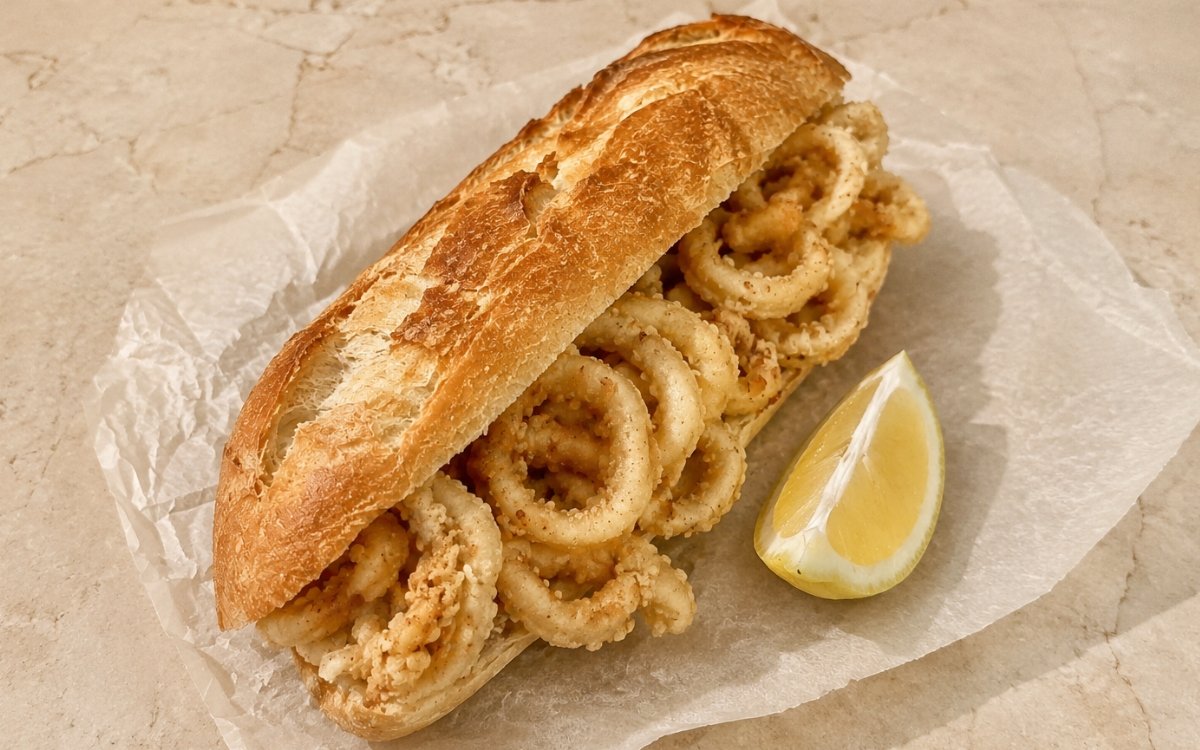
- Fill each roll generously with a quarter of the hot fried calamari. Do not press the bread down too much — keep the sandwich loose enough so the calamari stays crisp and the rings keep some volume. Serve immediately with lemon wedges on the side for squeezing just before eating. The final sandwich should feel abundant, with the rings visibly spilling from the bread. The calamari should still sound and feel crisp when bitten. Pressing the sandwich down firmly would compress and crush the calamari's light, airy coating — keeping the fill loose and generous protects that crispness right up until the first bite.
Notes
Drying the calamari thoroughly before it ever meets the dry dredge is worth understanding as the single detail most responsible for whether the finished coating turns out light and even or patchy and heavy. Squid holds real surface moisture even after an initial pat-dry, and any of that lingering water works directly against the flour mixture's ability to cling evenly — the more thorough the drying, the more consistent and properly crisp the finished coating.
Resting the dredged calamari for 10–15 minutes before frying deserves real respect despite how passive it looks. That brief window lets the flour begin to hydrate just slightly from the squid's own residual moisture, setting the coating in place before it faces the shock of hot oil. Skipping this rest and frying immediately after dredging is one of the more common reasons a coating sheds and clumps loose in the fryer instead of staying properly attached.
The genuinely brief fry time, just 1½ to 2½ minutes depending on size, reflects real respect for squid's specific cooking behaviour. Unlike many proteins that tolerate a range of doneness, squid moves from tender to tough within a fairly narrow window at proper frying temperature — pulling it the moment the coating turns pale golden, rather than waiting for deeper colour, is what keeps the calamari inside genuinely tender rather than rubbery.
Keeping the bread only lightly warmed rather than hard-toasted, and assembling the sandwich loosely rather than pressed, both protect the same underlying goal from different directions. This bocadillo's whole identity rests on texture contrast — crisp calamari against pleasantly crusty but still bite-able bread — and both an overly hard crust and a compressed, crushed filling would work against that specific balance.