Ingredients
Method
Brew the Black Tea
- Heat the water to 90–95°C. Add the black tea bags and steep for 2½–3 minutes maximum. Remove the tea bags without squeezing, since squeezing forces out the most concentrated, bitter fraction held inside them. Let the tea cool to lukewarm.
Sweeten While Warm
- While the tea is still warm, stir in 1½ tablespoons of honey until fully dissolved. Taste and add up to ½ tablespoon more only if needed. The drink should stay lightly sweetened, never syrupy — blueberry will contribute its own natural sweetness during the next steps, so restraint here keeps the final balance correct.
Cool to Room Temperature
- Let the tea cool completely to room temperature before adding the lemon peel.
Infuse the Lemon Peel
- Add the lemon peel strips to the cooled tea and let infuse for 4–5 minutes only, just until a clean citrus aroma develops. Remove the peel promptly to avoid bitterness — this step is purely aromatic, contributing fragrance rather than acidity.
Extract the Blueberry Juice
- Place the blueberries in a small bowl and gently mash them with a fork just enough to release juice. Do not purée — a full purée would break down the skins entirely, releasing more of their mild tannic character than a gentle mash allows.
Strain
- Strain through a fine-mesh sieve, pressing gently to extract the blueberry liquid without forcing skins or pulp through — forcing the solids through the sieve introduces a heavier, more astringent character that a light touch specifically avoids.
Combine and Taste
- Stir the strained blueberry juice into the tea. Taste and adjust carefully — blueberry should lift the black tea, not dominate it. Start conservatively and add gradually, keeping the tea's own structured character as the clearly perceptible foundation.
Chill
- Refrigerate for 1–2 hours until fully cold and integrated. The cold rest allows the tea, lemon fragrance, and blueberry's bright character to settle into a single cohesive whole.
Serve
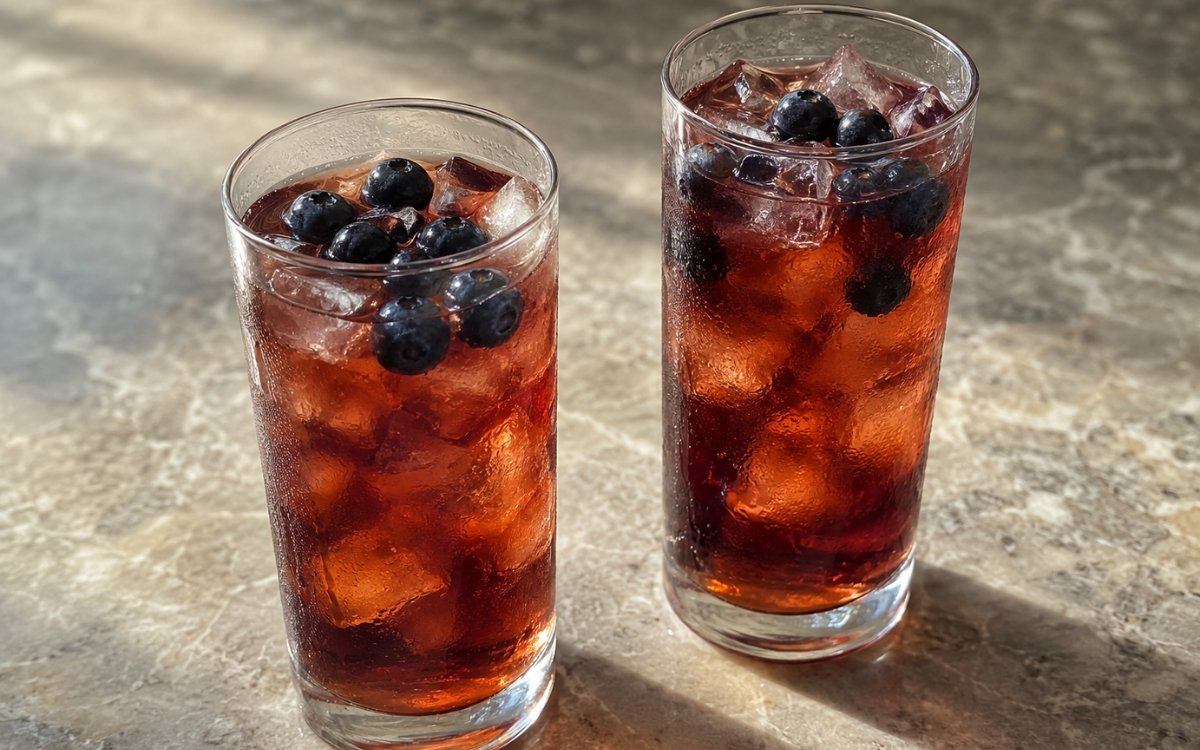
- Fill glasses with ice, pour over the chilled blueberry iced black tea, and garnish with fresh blueberries and optional lemon peel twists. Serve cold, clean, lightly fruity, and tea-forward.
Notes
Gentle fork-mashing rather than blending is the specifically correct technique for blueberries in this preparation, the same principle applied to pomegranate elsewhere in this collection. A light mash releases the juicy interior while leaving most of the skin's mild tannic compounds contained rather than fully released, producing a brighter, cleaner-tasting result than a full purée would.
Straining with a light touch matters as much as the mashing itself. Even gently mashed berries leave some skin and pulp in the mixture, and pressing that material through the sieve during straining reintroduces the same heaviness the gentle mashing was designed to avoid.
Blueberry ripeness and freshness affect the final result meaningfully — plump, fully ripe berries release juice readily under a light mash, while underripe or slightly shrivelled berries yield less juice and require more effort that risks over-mashing.