Ingredients
Method
Cook the Bacon
- Lay the bacon slices in a cold skillet in a single layer, working in batches if needed. Set the pan over medium heat and cook slowly so the fat renders properly and the bacon becomes crisp without burning. Turn the slices as needed until deeply golden, wavy, and crisp. Transfer the cooked bacon to a wire rack or a plate lined lightly with paper towel. The bacon should be fully crisp and well rendered, but still have a little structure — not brittle and burnt. Starting the bacon in a cold pan, rather than one already hot, lets its fat render gradually as the pan heats alongside it — bacon added directly to a hot pan tends to seize and brown unevenly on the outside before its interior fat has had time to fully melt out.
Prepare the Tomato and Lettuce
- Slice the tomatoes into thick, even rounds. Season both sides lightly with salt and black pepper. Let them sit for 2–3 minutes, then lightly blot with paper towel if they release too much moisture. Wash and dry the lettuce thoroughly. The lettuce needs to be properly dry so it stays crisp and does not water down the sandwich. The tomatoes should taste seasoned and juicy, but not drip excessively into the bread. Salting the tomato draws some of its internal liquid out through osmosis over that brief rest — blotting afterward removes that released moisture before it ever has a chance to soak directly into the toast once the sandwich is assembled.
Toast the Bread
- Toast the white bread until golden and crisp. You want a proper toast here — enough color and structure to hold the fillings, but not so dark that the bread becomes hard and shatters when bitten. Let the toast cool for a minute so the mayonnaise does not melt too quickly. This brief cooling window matters directly for the next step — mayonnaise spread onto still-hot toast would begin to thin and run rather than sitting as a proper, spreadable layer.
Assemble the BLTs
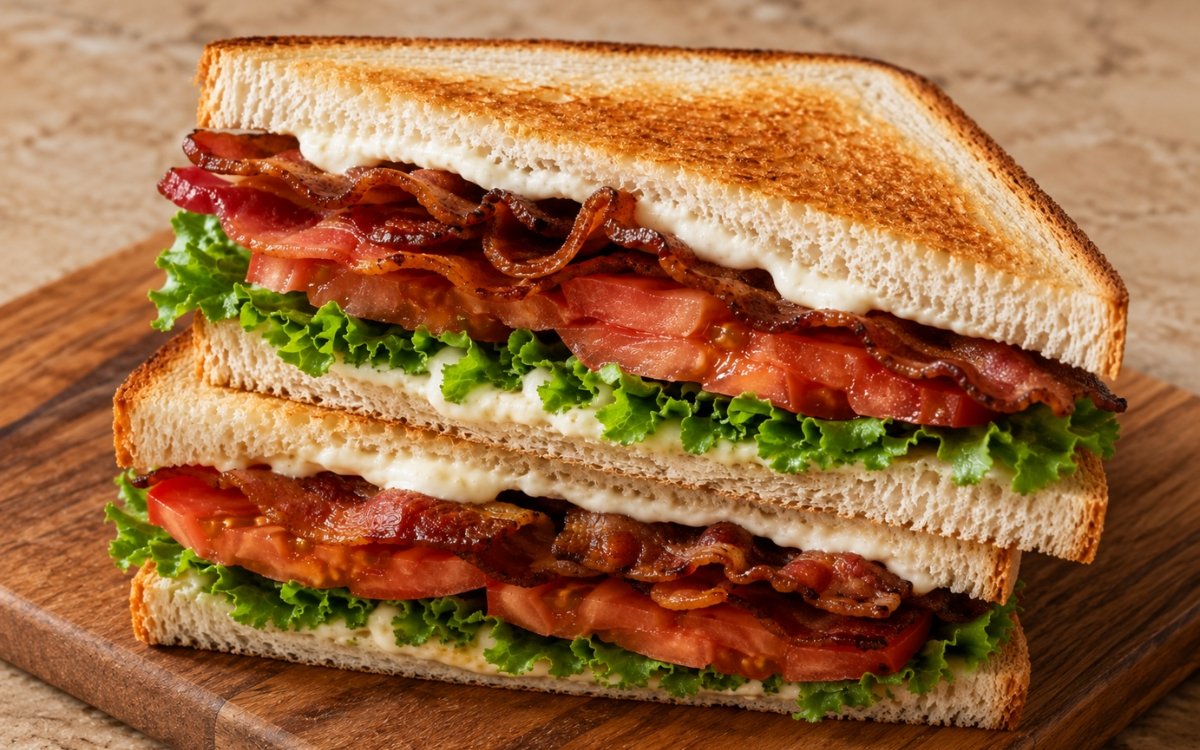
- Spread a generous layer of mayonnaise on one side of each slice of toast. On 4 of the slices, layer: lettuce, tomato slices, and 4 slices of crispy bacon. Top with the remaining slices of toast, mayonnaise side facing inward. Press very lightly so everything settles without crushing the sandwich. The finished sandwich should feel full and structured, with distinct layers and the bacon sitting high enough to give that classic BLT bite. Layering in this specific order — lettuce closest to the mayo, tomato in the middle, bacon on top — puts the driest component directly against the mayonnaise-coated bread while keeping the crisp bacon at the top, farthest from any moisture the tomato might still carry.
Slice and Serve
- Trim nothing — keep it classic. Cut each sandwich diagonally into 2 triangles and serve immediately. For the best presentation and eating texture, stack the halves so the cut side faces out. Serving immediately, before the toast has any real time to sit against the tomato and lettuce, is what preserves the crisp, structured bite this sandwich depends on — every minute of delay works against the toast's texture regardless of how carefully the wetter components were prepared.
Notes
Starting the bacon in a cold pan rather than a preheated one deserves genuine credit as the technique most responsible for how evenly it renders and crisps. That gradual approach gives the fat real time to melt out of the bacon before any browning begins in earnest — bacon dropped into an already-hot pan instead often seizes on contact, browning unevenly on the outside while the fat closer to the centre hasn't had a proper chance to render, leaving chewier, less consistently crisp results.
Managing moisture from both the tomato and lettuce is worth understanding as two related but distinct problems, both addressed with the same underlying goal. The tomato's own juice is drawn out by salting and then removed by blotting; the lettuce's moisture is handled simply by thorough drying after washing. Both techniques exist for the same reason — protecting the toast, which has genuinely limited tolerance for excess liquid from either direction.
Spreading mayonnaise on both inner sides of the bread rather than only one, as this recipe calls for, does real double duty. Beyond providing the sandwich's classic, balanced mayonnaise presence in every bite, that layer also functions as a light barrier between the bread and whatever moisture the tomato still carries even after blotting — a genuine, if modest, extra line of defence for the toast's structure.
The specific layering order — lettuce first against the mayo, tomato in the middle, bacon on top — reflects real thought about where moisture and crispness need to sit relative to one another. Placing the driest element closest to the bread and the crispest element farthest from any lingering tomato moisture is a small but deliberate structural choice that protects the sandwich's overall texture.