Ingredients
Method
Prepare the Small Corn Tortillas
- Prepare the Homemade Corn Tortilla dough according to its separate recipe, but divide the rested dough into 24 equal balls of about 22g each instead of 8 large tortillas. Keep the dough balls covered at all times so the masa surface does not dry out. Press each tortilla to about 11.4cm / 4.5 inches diameter and cook on a dry hot surface until lightly charred, flexible, and just cooked through. Stack immediately under a towel so the tortillas steam and stay pliable. Do not overcook them at this stage because they will be fried again in birria fat. The smaller diameter is specific to this preparation — full-size tortillas would be unwieldy once folded and stuffed, while the 11.4cm size folds cleanly into a compact taco that fries evenly on both sides at once.
Season and Sear the Beef
- Pat the brisket, top round, and beef shank very dry with paper towels. Season all sides with the kosher salt and black pepper. Heat the neutral oil in a large Dutch oven over medium-high heat until shimmering. Sear the beef in batches, 3–4 minutes per side, until deeply browned. Do not crowd the pot. Transfer the browned beef to a tray. The goal is a dark crust and fond on the bottom of the pot, not fully cooked meat. The fond left behind by searing is the foundation of the consommé's depth — it's the first layer of roasted, concentrated beef flavour that the fried chile base and the braising liquid will build on top of, which is why searing in batches rather than crowding the pot matters: crowded meat releases moisture and steams instead of browning, and a pale pot means a flatter-tasting broth.
Toast and Soften the Chiles
- Place the guajillo chiles for the consommé in a dry skillet over medium heat and toast for 10–15 seconds per side, just until fragrant and slightly pliable. Do not let them darken aggressively or smoke; burned guajillo turns bitter fast. Cover the toasted chiles with hot water and soak for 15 minutes until softened. Drain before blending. The brief dry toast blooms the chile's fruity, slightly smoky aromatic compounds, which is a different effect than simply rehydrating a raw dried chile — but the window is narrow, since the same compounds that make toasting worthwhile turn acrid within seconds of scorching.
Blend the Consommé Base
- In a blender, combine the softened guajillo chiles, white onion, garlic, chipotle peppers, adobo sauce, tomato paste, apple cider vinegar, chicken bouillon powder, beef bouillon powder, smoked paprika, oregano, thyme, cumin, cinnamon, kosher salt, and about 500ml of water. Blend until completely smooth. The mixture should be deep red, thick, and pourable. If your blender leaves visible chile skin, strain the sauce before adding it to the pot. A high-powered blend at this stage matters for the finished consommé's texture — any unblended chile skin fragments will remain as a slightly gritty texture in the final broth, which straining corrects.
Fry the Consommé Base
- Return the Dutch oven to medium heat. Add 30ml neutral oil if the pot looks dry. Pour in the blended chile base and cook for 4–5 minutes, stirring often and scraping the bottom, until the sauce darkens slightly, thickens, and smells roasted rather than raw. This step is important; raw chile paste gives the consommé a flat, dusty flavour. Frying the paste briefly in oil before adding any liquid is the same technique used for building depth in mole and adobo-style sauces — the paste's flavour compounds bloom in fat rather than diluting immediately into water, which is the difference between a consommé that tastes rounded and one that tastes like blended raw chile in broth.
Braise the Beef
- Return all seared beef and any juices to the pot. Add the bay leaves and enough water to barely cover the meat, usually 2.5–3 litres. Bring to a simmer, then reduce the heat to low. Cover and cook gently for 3–3½ hours, turning the meat every 45 minutes, until the brisket and top round shred easily and the shank collagen has softened into the broth. The liquid should barely bubble; a hard boil will make the meat dry and cloudy. A gentle simmer keeps the connective tissue converting to gelatin slowly and evenly — a hard boil agitates the proteins too aggressively, tightening the muscle fibres and pushing moisture out faster than the collagen can break down to replace it, which is what produces dry, stringy meat in a cloudy broth instead of tender meat in a clear one.
Make the Birria Salsa
- While the beef braises, toast the guajillo chiles and chiles de árbol for the salsa for 10–15 seconds per side until fragrant. Add them to a small saucepan with the Roma tomatoes, tomatillos, and garlic. Cover with water and simmer for 8–10 minutes, until the tomatillos turn dull green and the tomatoes soften. Transfer the softened chiles, tomatoes, tomatillos, and garlic to a blender. Add the chipotle pepper, adobo sauce, apple cider vinegar, salt, and 60ml of the cooking water. Blend until smooth. Add more water only if needed to loosen. Taste and adjust with salt or vinegar. The salsa should be spicy, sharp, and spoonable, not watery. The tomatillos' dull, muted green colour is the visual cue that their raw grassiness has cooked off — bright, glossy green tomatillos are still under-simmered and will carry a sharper, less rounded acidity into the finished salsa.
Shred the Beef and Finish the Consommé
- Remove the beef from the pot and transfer it to a tray. Discard the bay leaves. Pull the meat from the shank bones and discard the bones. Shred the beef into juicy strands, keeping some larger pieces for texture. Strain the consommé through a fine sieve if you want a smoother dipping broth. Let the consommé stand for 5 minutes, then skim off the red fat from the surface into a shallow bowl. Do not throw this fat away; it is what gives quesabirria tacos their red-orange colour and crisp fried shell. Moisten the shredded beef with 180–240ml hot consommé so it stays juicy but not wet. The 5-minute stand is enough time for the rendered fat to fully separate and rise, since fat is less dense than the watery broth beneath it — skimming too early leaves fat behind in the consommé, and skimming too aggressively risks pulling flavourful broth along with it.
Prepare the Taco Filling Station
- Set up the shredded beef, shredded Oaxaca cheese, diced white onion, chopped cilantro, warm tortillas, birria fat, hot consommé, and salsa before frying. Quesabirria has to be assembled fast. If the beef is cold, rewarm it with a splash of consommé before filling the tacos. Cold meat will prevent the cheese from melting properly. Assembling everything within reach before the pan is hot is what keeps the frying stage moving continuously — the fat-dipped tortilla starts cooking the moment it hits the pan, so hunting for an ingredient mid-fry risks one side scorching while you find the next component.
Fry the Quesabirria Tacos
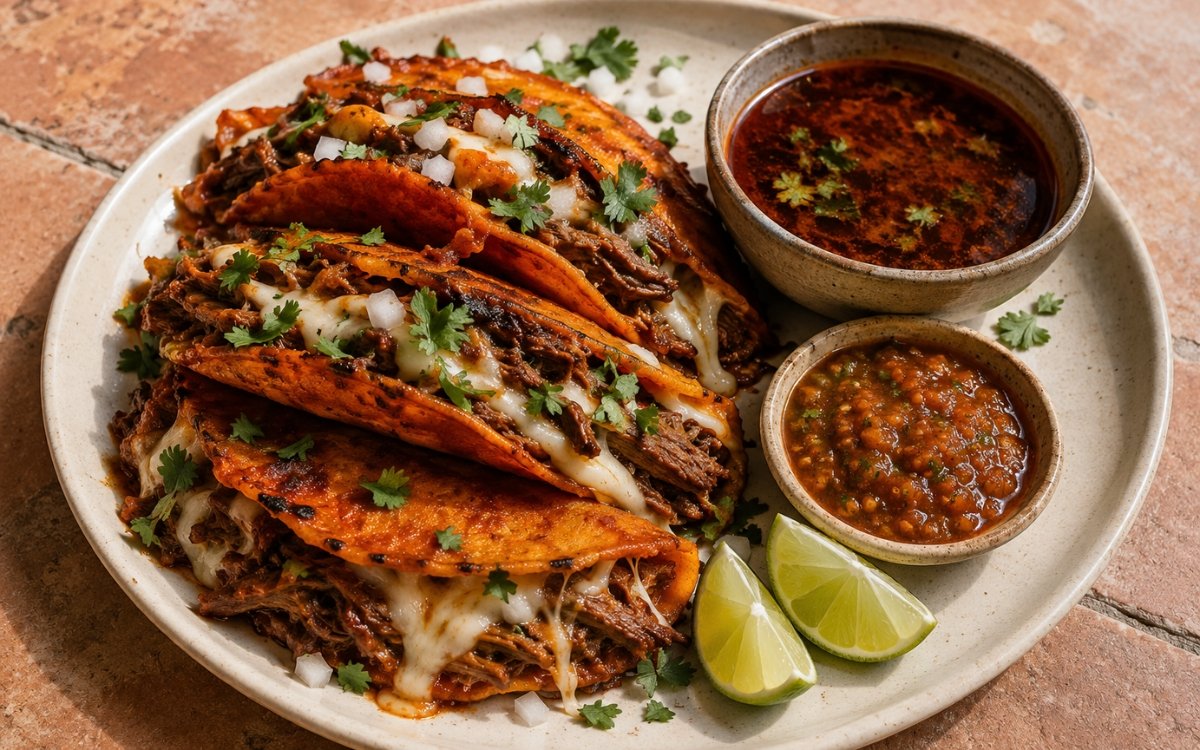
- Heat a large skillet or griddle over medium heat. Dip one tortilla lightly into the red birria fat, coating both sides without soaking it in broth. Lay it flat on the hot skillet. Add about 25g Oaxaca cheese and 45–55g shredded beef to one side of the tortilla. Add a small pinch of diced onion and cilantro. Fold the tortilla over and press gently with a spatula. Cook for 2–3 minutes per side, until the tortilla is deep red-orange, crisp at the edges, and the cheese is fully melted. Repeat with the remaining tortillas, working in batches. A light, even dip in fat rather than a full soak in broth is the deciding factor between a tortilla that fries crisp and one that turns soggy — fat coats the surface and conducts heat for frying, while the watery broth would simply steam the tortilla instead of browning it.
Serve
- Ladle 120–150ml hot consommé into a small cup for each serving. Serve three quesabirria tacos per plate with the consommé beside them for dipping. Add birria salsa on the side, lime wedges, and fresh cilantro scattered over the tacos. Serve immediately while the tacos are crisp, the cheese is still stretchy, and the consommé is hot. The dip-as-you-eat format is deliberate — each bite gets a fresh hit of hot, rich broth rather than the taco sitting pre-soaked and losing its crisp shell before it reaches the table.
Notes
The three-cut beef blend is worth understanding rather than treating as an arbitrary ingredient list. Brisket contributes richness and a good fat-to-meat ratio; top round is a leaner cut that shreds into distinct, satisfying strands rather than falling apart into mush; and the bone-in cross-cut shank is what gives the consommé its body, since its high collagen content slowly converts to gelatin over the long braise and gives the finished broth a very slight natural thickness and mouthfeel that a leaner cut alone can't replicate. Using only lean beef produces a thinner broth and a drier, less interesting filling.
The red fat skimmed from the finished consommé is genuinely the turning point of this recipe rather than an optional garnish. It's rendered directly from the beef and infused with the chile base's colour and flavour over the full braise, and it is specifically what fries the tortillas to a crisp, deep red-orange shell rather than a pale, soft one — dipping the tortillas into the watery broth instead of the skimmed fat produces a soggy result that never properly crisps, since broth is mostly water and fat is what actually conducts high, even frying heat.
Timing across this recipe is layered rather than sequential. The chile toasting, blending, and frying happen before the beef ever returns to the pot, and the birria salsa can be made entirely during the 3–3½ hour braise rather than afterward, which means the only time-pressured stage is the final assembly and frying — everything else can be built calmly across the braising window. Treating the salsa and the tortilla dough as parallel tasks rather than sequential ones is what keeps the total active time well below the 5-hour total.
Frying the tacos is the one stage in this recipe that rewards genuine speed and organisation over careful technique. Once the fat-dipped tortilla hits the hot skillet, the window for building a well-melted, well-crisped taco is short, and the recipe's instruction to set up every component — beef, cheese, onion, cilantro — before the pan is even hot exists because searching for an ingredient mid-fry is the most common way this dish goes wrong, either scorching one side or leaving the cheese under-melted.