Ingredients
Method
Brew the White Tea
- Heat the water to 75–80°C, do not boil. Add the white tea bags and steep for 3–4 minutes. Remove the tea bags and let the tea cool to lukewarm. This tea is intentionally stronger than normal — the reduced 900 ml volume concentrates the same 6 bags into a more assertive base than the standard 1.65-litre recipes in this collection use, specifically because the club soda will dilute everything considerably once it's added.
Prepare the Basil Blueberry Smash
- Add the blueberries and basil leaves to a blender. Blend briefly just until smooth and aromatic. Do not overblend or heat the mixture — the basil should stay green and fresh. As with the mango basil technique elsewhere in this collection, blending the herb directly with the fruit protects its volatile aromatic oils far better than steeping it in tea would, keeping the basil bright rather than dulled.
Strain the Smash
- Strain the mixture through a fine-mesh sieve into a bowl or measuring jug. Do not press the pulp. Discard the solids and keep the smooth, deeply coloured liquid.
Combine
- Stir 200–240ml of the strained basil blueberry liquid into the cooled white tea. Taste. The base should be softly fruity and clearly herbal, not sweet or thick.
Chill
- Refrigerate the base for 1–2 hours until fully cold.
Finish with Club Soda
- Just before serving, gently stir in the ice-cold club soda. Mix slowly to preserve carbonation — aggressive stirring at this stage undoes the entire point of using sparkling water.
Serve
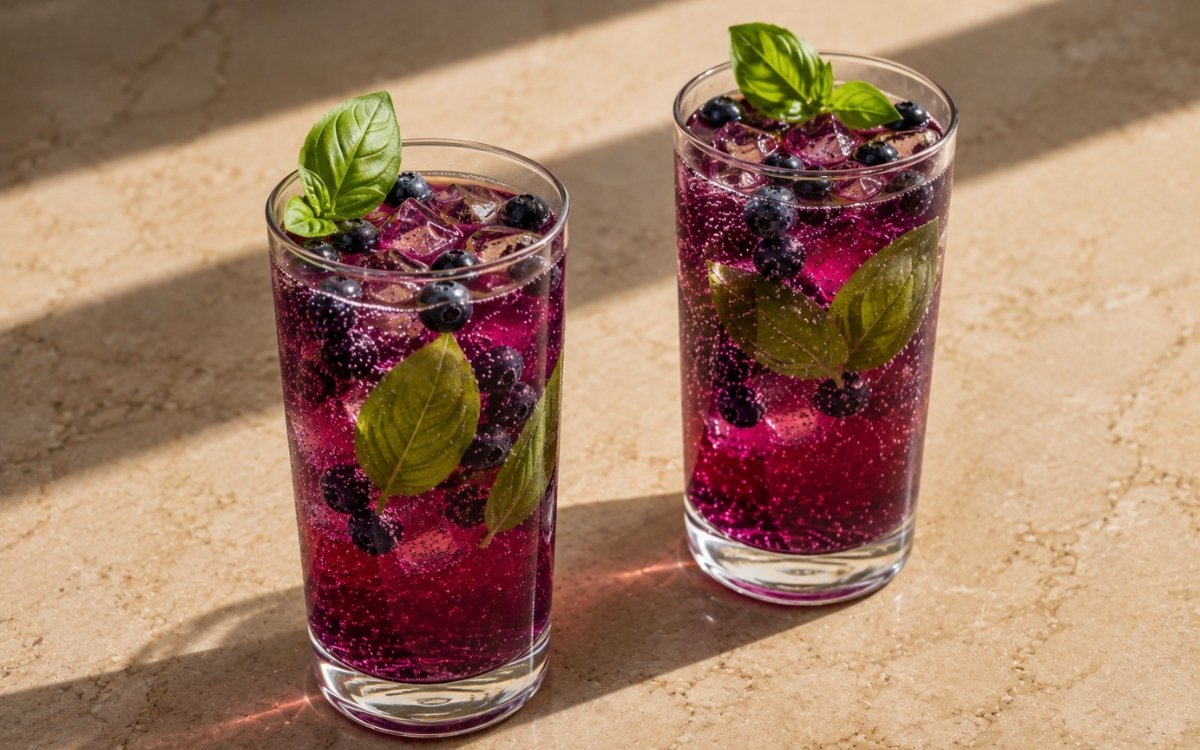
- Fill glasses with ice, pour over the sparkling basil blueberry cooler, and garnish with fresh blueberries and basil leaves.
Notes
Basil must stay bright and aromatic — smash only, never cook. The blending technique used here, identical in principle to the mango basil pairing elsewhere in this collection, protects the herb's volatile oils through the fruit's natural sugars and moisture rather than through any added heat.
Blueberries are the only sweetener. If it tastes flat, your fruit was weak — there's no honey or sugar to fall back on here, which means ripe, flavourful blueberries are essential rather than optional.
White tea must remain present; if it disappears, you used too much smash. The 200–240ml range is a guideline, not a fixed rule — taste as you combine and stop once the tea's quiet presence is still detectable underneath the fruit and herb.
Reduced brew volume is intentional — soda is part of the structure, not an afterthought added at the end. Brewing at full strength in a smaller volume of water specifically anticipates the dilution that club soda will introduce.