Ingredients
Method
Make the Bao Dough
- In the bowl of a stand mixer, combine flour, sugar, instant yeast, baking powder, and salt. Add the lukewarm milk or water and neutral oil. Knead with the dough hook for 8–10 minutes, until smooth, soft, and elastic. The dough should feel supple, not sticky-wet. Cover and proof for 60–75 minutes, until about doubled. Bao dough should be smooth and soft before proofing. If it is rough, knead longer. Rough dough gives wrinkled buns. That thorough kneading, worked until genuinely smooth, is what builds enough gluten structure to prevent the pleated, folded bun from wrinkling once it's actually steamed.
Marinate the Chicken
- Season the chicken pieces with salt, white pepper, garlic powder, onion powder, and optional paprika or chili powder. In a bowl, whisk together buttermilk, egg, soy sauce, ginger, and garlic. Add the chicken and coat well. Marinate for 1 hour while the bao dough proofs. Keep the chicken pieces around 50–60g each. Bigger pieces overpower the bun and take too long to fry; smaller pieces dry out. That specific piece size is calibrated precisely to the bao's own scale — large enough to feel substantial inside the folded bun, small enough to fry through completely within the recipe's own brief frying windows.
Shape the Bao Buns
- Punch down the dough and divide into 12 equal pieces, about 70g each. Roll each piece into a smooth ball. Rest for 10 minutes, covered. Roll each ball into an oval about 12–13cm long. Brush the surface lightly with neutral oil, then fold in half without sealing. Place each folded bun on a small square of parchment. Cover and proof for 25–35 minutes, until slightly puffed and airy. Do not overproof. The buns should look puffy but still hold their shape. Overproofed bao collapse and wrinkle after steaming. Brushing the oiled surface before folding, rather than leaving the dough bare, is what keeps the two folded layers from actually sealing together during steaming, letting the bun open cleanly once it's time to fill.
Prepare the Cucumber and Sauce
- Toss cucumber ribbons with rice vinegar, sugar, salt, and sesame seeds. Rest for 15–20 minutes, then drain lightly before using. Mix Kewpie mayo, sriracha, lime juice, sesame oil, honey, and salt until smooth. Drain the cucumber before assembling. Wet cucumber will soften the fried chicken crust. That deliberate draining step protects the crisp chicken from a real, specific risk — any residual pickling liquid left on the cucumber would transfer directly onto the crust the moment the bun is assembled, softening it well before it's even eaten.
Steam the Bao
- Bring a steamer to a steady simmer. Steam the bao buns in batches for 8–10 minutes, leaving space between them. Turn off the heat and let them sit covered for 2 minutes before opening the lid. Do not open the steamer immediately. Sudden temperature change can wrinkle the bao. Keep warm, covered with a clean towel. That brief, covered rest after the heat is off lets the buns' own internal temperature settle gradually, protecting their smooth surface from the real risk of wrinkling under a sudden shift from hot, humid steam to open air.
Prepare the Dredge
- In a wide bowl, mix flour, potato starch, cornstarch, baking powder, salt, white pepper, garlic powder, onion powder, and paprika or chili powder. Drizzle 2–3 tbsp of the chicken marinade into the dry dredge and rub it through with your fingers to create small shaggy crumbs. Those little wet flour crumbs become the craggy fried texture. A perfectly smooth dry dredge gives a flatter crust. That deliberate introduction of moisture into an otherwise dry mixture is specifically what creates real, irregular texture — a dredge left perfectly smooth and dry would coat the chicken far more evenly and flatly, missing the rough, craggy surface this recipe is built around.
Dredge the Chicken
- Lift chicken from the marinade, letting excess drip off. Press each piece firmly into the dredge, squeezing the coating onto the chicken so it forms rough ridges. Shake off loose flour. Place on a rack and rest for 10 minutes before frying. The coating should hydrate slightly and look rough, not dusty. This rest helps the crust stick during frying. That brief resting period lets the dredge's own moisture continue working into the coating, giving it genuine time to adhere properly to the chicken before it ever meets the shock of hot oil.
First Fry
- Heat oil to 160–165°C. Fry the chicken in batches for 4–5 minutes, until pale golden and cooked through. Transfer to a wire rack. Do not stack the chicken and do not drain directly on paper towels. The first fry cooks the chicken and sets the crust. The second fry creates the real crunch. That deliberately moderate first-fry temperature gives the chicken genuine time to cook through at a manageable pace, leaving the crust's own final colour and crunch intentionally underdeveloped so the second, hotter fry has real room to finish the job.
Second Fry
- Increase oil to 185–190°C. Fry the chicken again for 1–2 minutes, until deeply golden, craggy, and very crisp. Internal temperature should reach 74°C. Rest on a wire rack for 2–3 minutes. The second fry must be hot and short. If it is too long, the crust darkens and the chicken dries out. That higher second-fry temperature is specifically what builds real, deep colour and maximum crispness quickly, in a genuinely brief window — since the interior is already properly cooked from the first fry, this stage exists purely to finish the crust.
Assemble
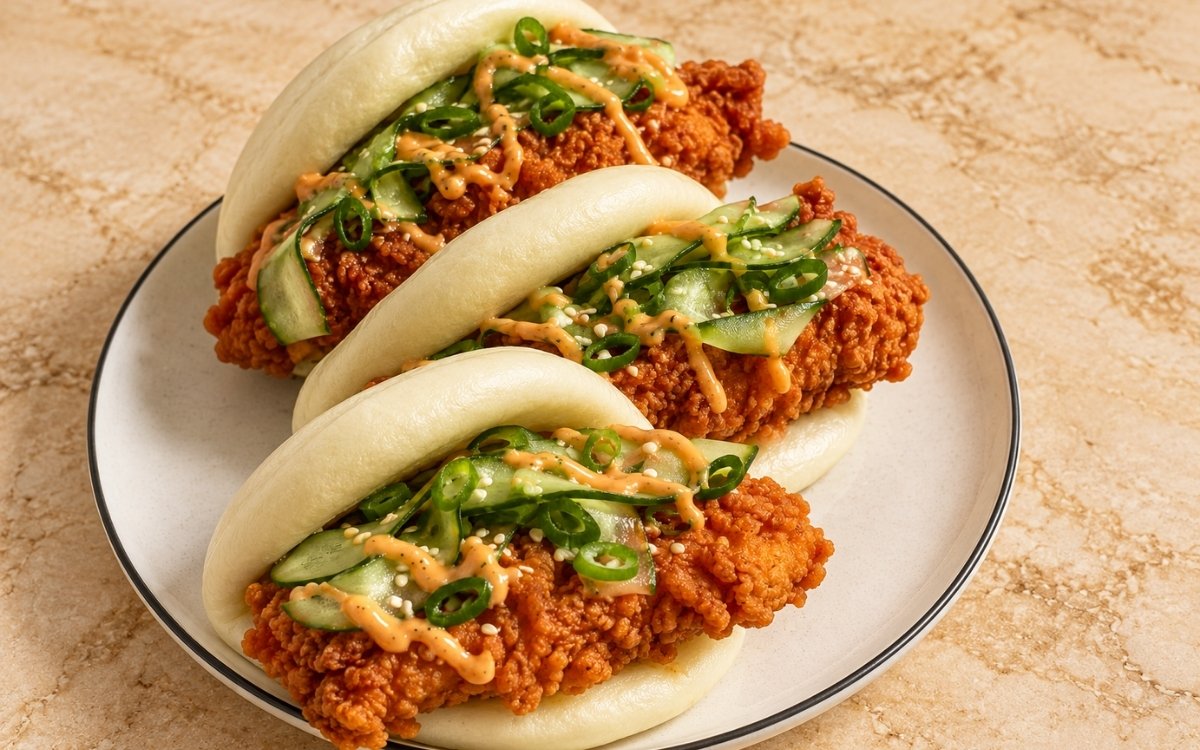
- Open each warm bao bun gently. Fill each bun with 1 piece crispy fried chicken, drained pickled cucumber ribbons, sriracha mayo drizzle, sliced scallions, and toasted sesame seeds. Serve immediately. Assembling only at this final, immediate stage protects every carefully built component — the bun's own softness, the chicken's real crispness, the cucumber's cold crunch — from compromising each other before the bao ever reaches the table.
Notes
Rubbing a little of the chicken's own wet marinade directly into the dry dredge deserves genuine recognition as the technique most directly responsible for this fried chicken's whole craggy, textured crust. The recipe's own explicit framing — "those little wet flour crumbs become the craggy fried texture" — reflects exactly how deliberate this step is; a perfectly smooth, dry dredge alone simply couldn't produce that same rough, irregular surface.
Double-frying the chicken in two genuinely distinct stages deserves the same attention this technique receives throughout this collection's other double-fried proteins. The first fry cooks the meat through at a moderate pace, deliberately leaving the crust's colour underdeveloped, while the second, considerably hotter fry has real room to finish building deep colour and maximum crispness in a genuinely brief window.
Draining the pickled cucumber thoroughly before it ever meets the fried chicken deserves genuine attention as a real, functional safeguard rather than a minor step. The recipe's own explicit warning that "wet cucumber will soften the fried chicken crust" reflects a real, immediate risk — any residual pickling liquid transfers directly onto that crisp coating the moment the bun is assembled.
Letting the steamed bao rest briefly, covered, before the steamer lid is ever opened deserves respect as a small but consequential detail. That gradual transition protects the bun's own smooth surface from the sudden temperature shift a too-quick lid opening would cause, which is specifically what risks wrinkling the finished bao.