Ingredients
Method
Boil the Pasta
- Bring a large pot of water to a full boil and salt it well. Add the ziti and cook until very al dente, about 2–3 minutes less than package directions. The pasta must be undercooked at this stage because it will continue cooking in the sauce and again in the oven. If you boil it fully now, the finished baked ziti will turn soft and bloated instead of holding distinct tubes. Before draining, reserve 120ml pasta water. Drain the pasta and set aside. Do not rinse. That deliberate undercooking accounts for the two full additional cooking stages still ahead — pasta boiled to a normal al dente here would end up considerably overcooked and mushy by the time it's finished baking.
Make the Meat Sauce
- Heat the olive oil in a large heavy skillet or sauté pan over medium heat. Add the onion and cook for 5–7 minutes, stirring often, until softened and lightly translucent but not deeply browned. Add the garlic and cook for 30 seconds more, just until fragrant. Add the ground beef and ground pork shoulder. Break the meat up well and cook for 8–10 minutes until the meat is browned, the raw color is gone, and much of the moisture has cooked off. Keep cooking until you see actual browning on the meat, not just grey steaming. That browned fond is important for depth of flavor. If there is an excessive amount of rendered fat, spoon off a little, but do not strip the pan completely dry. Add the tomato paste and cook for 1–2 minutes, stirring constantly, until it darkens slightly and loses its raw taste. Add the crushed tomatoes, passata, water, salt, black pepper, oregano, dried basil, and red pepper flakes if using. Stir well and bring to a gentle simmer. Cook uncovered for 20–25 minutes, stirring occasionally, until thickened. The sauce should be slightly thicker than a normal pasta sauce. It must coat the pasta heavily without turning watery. A thin sauce will make the casserole loose and prevent clean slices or spoonfuls. If it reduces too much, loosen with a splash of reserved pasta water. Taste and adjust salt. Add the sugar only if the tomatoes taste notably sharp. Watching specifically for real browning, rather than pulling the meat once it's simply grey, is what builds the fond responsible for a genuinely deeper, more developed sauce than pale, steamed meat alone would ever produce.
Make the Ricotta Mixture
- In a medium bowl, combine the ricotta, egg, Parmesan, parsley, salt, and pepper. Mix until smooth and evenly combined. The egg helps the ricotta set slightly during baking so the pockets stay creamy but not runny. That egg's own binding protein is specifically what keeps each dollop holding its shape as a distinct pocket, rather than dissolving loosely into the surrounding sauce once baked.
Combine the Pasta and Sauce
- Add the drained ziti to the meat sauce and toss thoroughly so every tube is coated. If the mixture looks too tight or dry, add a small splash of the reserved pasta water. At this point, the pasta should look saucy, not dry. The oven will absorb and thicken the mixture further. If it already looks dry in the pan, it will bake up heavy and tight. That reserved starchy pasta water, added only as needed, is a genuine tool for loosening the mixture right before it bakes, accounting for how much moisture the oven's own heat will absorb over the coming bake.
Assemble the Baked Ziti
- Preheat the oven to 220°C / 425°F. Transfer about half of the pasta and sauce mixture to a medium baking dish. Spoon over about half of the ricotta mixture in small dollops rather than spreading it flat. Scatter over about half of the mozzarella. Top with the remaining pasta mixture. Finish with the remaining ricotta in dollops, the remaining mozzarella, and the final Parmesan. Using dollops rather than a solid ricotta layer creates the classic ricotta pockets throughout the baked ziti instead of a separate dense layer. That deliberate dolloping technique, rather than spreading the ricotta flat, is what distributes real creamy pockets evenly throughout the finished dish, letting every serving carry some of that same contrast.
Bake
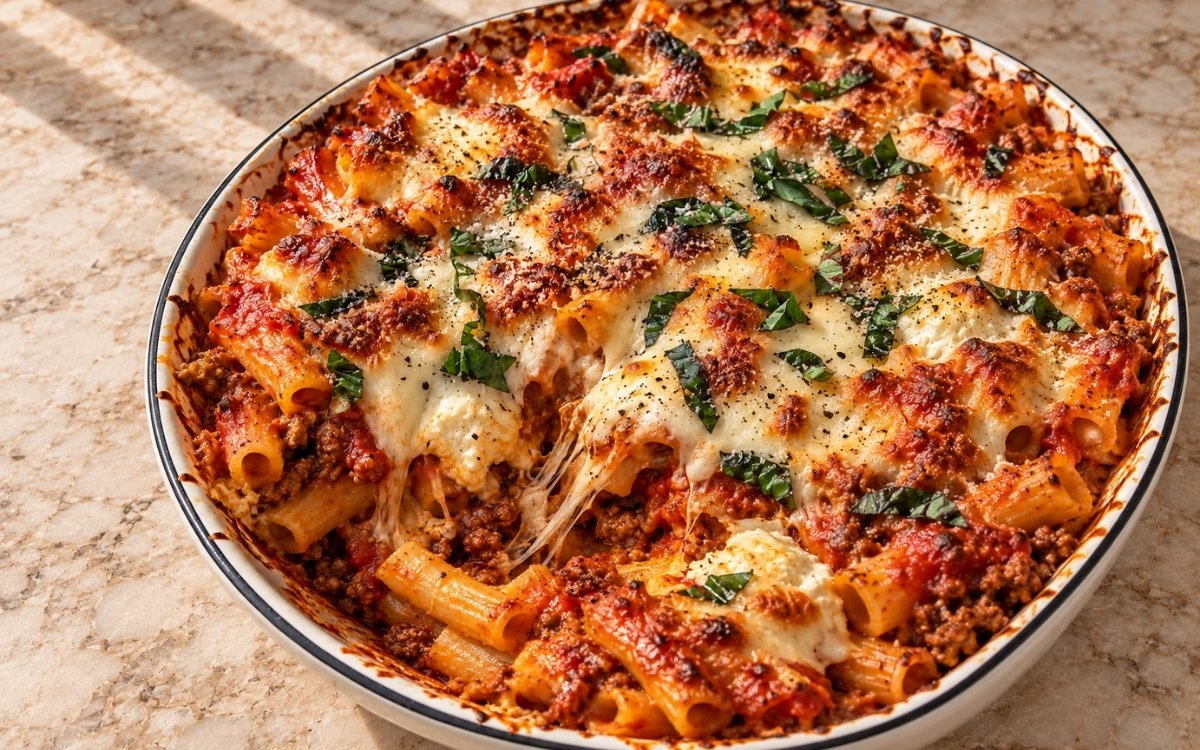
- Bake uncovered for 20–25 minutes, until the cheese is fully melted, the edges are bubbling, and the top develops browned spots. If you want deeper browning on top, switch to the broiler for 1–2 minutes at the end, watching constantly. Do not walk away — the cheese can go from browned to burnt very quickly. The dish is done when the sauce is visibly bubbling at the edges, the cheese is fully melted and lightly blistered, and the center is hot all the way through. That brief, closely watched broiler finish, used only if needed, builds real extra colour on top quickly without extending the overall bake long enough to dry out the casserole beneath it.
Rest and Finish
- Remove from the oven and let the baked ziti rest for 10–15 minutes before serving. This rest is important. Straight from the oven, the sauce and cheese are too loose and the structure has not settled. Resting allows the casserole to hold together better and gives cleaner spoonfuls with defined pasta, sauce, and cheese pockets. Finish with basil if using. That extended rest lets the whole casserole's internal structure firm up and settle, protecting every serving's own defined layers from collapsing into one loose, sliding mass the moment a spoon or knife touches it.
Notes
Boiling the ziti to a genuine, well-undercooked al dente deserves recognition as the technique most directly responsible for whether this casserole holds distinct tubes or bloats into mush. That pasta still has two full additional cooking stages ahead of it — tossed hot into the sauce, then baked in the oven — and pasta boiled to a normal, fully cooked al dente simply doesn't have the structural headroom to survive both of those stages without turning soft and overcooked.
Cooking the ground beef and pork until genuinely browned, rather than pulling the meat the moment its raw colour disappears, deserves the same attention this technique receives throughout this collection's other meat-based sauces. That real browning builds fond directly in the pan, and the recipe's own explicit distinction between "actual browning" and "just grey steaming" reflects exactly how much depth this one stage adds to the finished sauce.
Dolloping the ricotta mixture rather than spreading it into one flat, solid layer deserves genuine respect as the deliberate technique responsible for this dish's signature texture. That approach distributes distinct, creamy pockets evenly throughout the casserole, giving every serving a real mix of pasta, sauce, and ricotta rather than concentrating the cheese into one separate, dense band.
Letting the baked ziti rest for a full 10 to 15 minutes before serving deserves genuine attention as a real, structural necessity rather than simple patience. Straight from the oven, the sauce and cheese are still genuinely loose, and that resting period is specifically what lets the whole casserole's structure settle enough to produce clean, well-defined spoonfuls rather than a sliding, unstructured mass.