Ingredients
Method
Boil the Eggs
- Bring a saucepan of water to a gentle boil. Carefully lower in the eggs and cook for 7 minutes 30 seconds for a jammy center. As soon as the time is up, transfer the eggs straight into an ice bath and let them cool for about 5 minutes. This timing gives you fully set whites and soft, glossy yolks. Even 1 extra minute pushes them closer to hard-boiled. The immediate ice bath does genuine, active work here beyond simply cooling the eggs for easier handling — it halts the carryover cooking that would otherwise continue firming the yolk from residual heat even after the eggs are out of the boiling water.
Peel and Halve the Eggs
- Gently crack and peel the cooled eggs, then slice them in half lengthwise. Set aside carefully so the yolks stay neat and glossy. Peeling only once the eggs have properly cooled in the ice bath is what makes clean peeling actually possible — the shell releases far more easily from a fully chilled egg than one still carrying residual heat.
Make the Avocado Mixture
- Cut the avocados in half, remove the pits, and scoop the flesh into a bowl. Add the lemon juice, lemon zest, salt, black pepper, and olive oil. Mash with a fork until chunky and spreadable, not fully smooth. Keep the avocado slightly chunky for a more classic avocado toast texture. Over-mashing makes it heavy and less fresh-looking. Stopping the mash well short of fully smooth preserves real, distinct pieces of avocado throughout the mixture — that chunkiness is directly what keeps the finished spread reading as fresh and textured rather than dense and pasty.
Toast the Sourdough
- Toast the sourdough slices until deeply golden and crisp at the edges. You can use a toaster, grill pan, skillet, or oven. If you like, lightly brush or drizzle the bread with a little olive oil before toasting. The bread should be crisp enough to support the avocado without going soggy too fast, but not so hard that it shatters when you bite into it. That genuine, deep toast builds real structural resistance into the bread before the moisture-carrying avocado ever meets it, protecting against sogginess for as long as possible while the toast is eaten.
Assemble the Avocado Toast
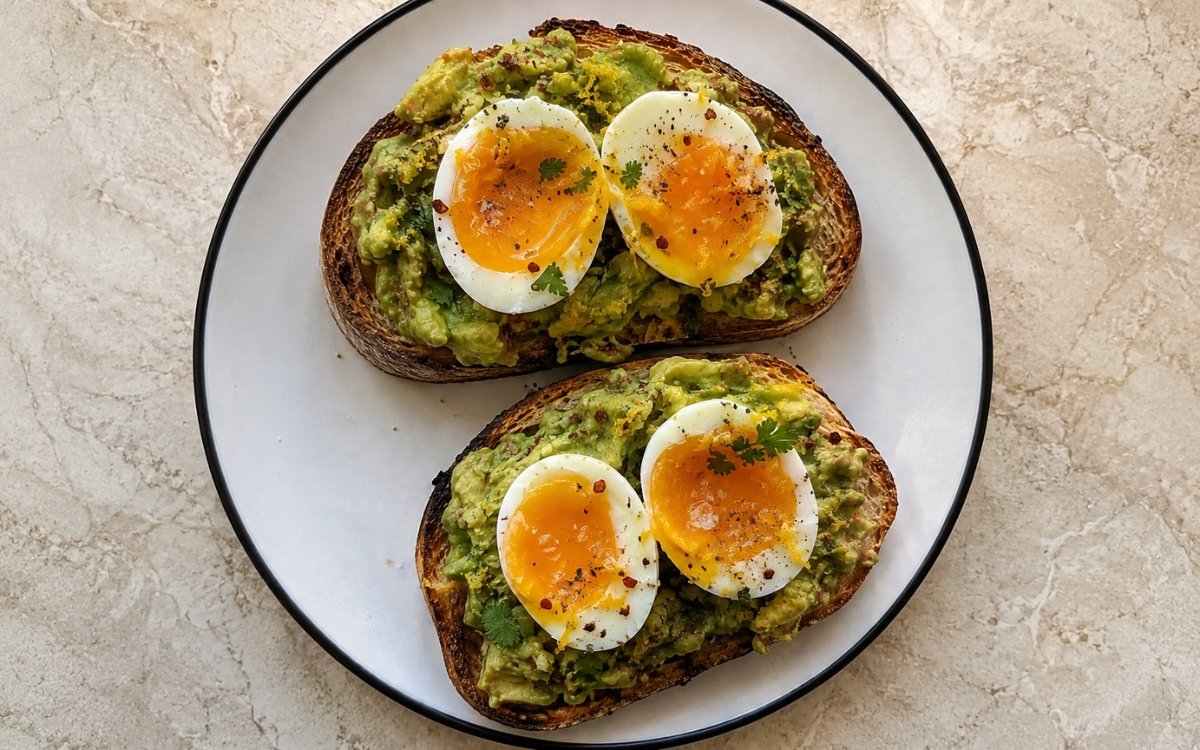
- Spread the smashed avocado generously over each slice of warm toast. Top each toast with 2 egg halves, so each slice gets one whole jammy egg. Spreading the avocado while the toast is still genuinely warm lets it settle slightly into the bread's surface, helping the two components adhere together rather than the avocado simply sliding off in one solid mass.
Finish and Serve
- Sprinkle with chili flakes, a little extra lemon zest, flaky salt, black pepper, and fresh herbs. Serve immediately while the toast is still crisp and the eggs are soft and glossy. That final scatter of flaky salt, fresh herbs, and a touch more lemon zest adds bright, textured contrast right at the surface, exactly where it's tasted first.
Notes
Boiling the eggs to that precise 7 minutes 30 seconds mark, then shocking them immediately in ice water, deserves genuine respect as the single detail most responsible for whether this dish's eggs turn out properly jammy or drift toward fully hard-boiled. Egg yolks continue cooking from residual heat for a real, meaningful amount of time even after leaving the boiling water — the ice bath's actual job is stopping that carryover cooking at exactly the right moment, not simply cooling the eggs for easier handling.
Mashing the avocado only to a chunky consistency, deliberately stopping well short of smooth, deserves attention as a genuine textural choice central to this dish's identity. A fully smooth avocado spread reads as heavier and less distinctly fresh; the chunkier texture specified here is what gives this toast its recognisable, classic character, with real pieces of avocado still visible and distinct throughout.
Toasting the bread until genuinely deeply golden, rather than lightly warmed, protects it against a real and specific vulnerability given what's about to sit on top. Avocado carries real moisture, and a properly deep toast builds enough structural resistance into the bread to delay the sogginess that direct, sustained contact with that moisture would otherwise cause fairly quickly.
Assembling the toast while the bread is still genuinely warm, spreading the avocado directly onto that warmth, is a small but worthwhile detail. That warmth helps the avocado settle and adhere slightly into the bread's surface, giving the finished toast a more cohesive bite rather than a spread that simply slides off in one piece.