Ingredients
Method
Wash and Dry the Romaine Lettuce
- Separate the romaine lettuce leaves from the core and rinse them thoroughly under cold running water to remove any dirt or grit. Shake off excess water and dry the leaves completely using a salad spinner or clean kitchen towels. Properly drying the lettuce is essential because excess moisture prevents the dressing from coating the leaves evenly and can dilute the flavor. Once fully dry, stack several leaves together and slice them crosswise into bite-sized pieces about 3–4 cm wide, then transfer the chopped lettuce to a large mixing bowl. Place the bowl in the refrigerator while preparing the dressing so the lettuce stays crisp and cold.
Prepare the Anchovies and Garlic
- Finely mince the anchovy fillets and garlic clove using a sharp knife. Continue chopping until the mixture forms a smooth paste-like consistency. This step helps the anchovies dissolve into the dressing rather than remaining as noticeable pieces. Anchovies provide the characteristic savory depth of Caesar dressing, so they should be evenly distributed throughout the mixture.
Begin the Caesar Dressing Base
- In a medium mixing bowl combine the mayonnaise, lemon juice, Dijon mustard, minced anchovies, minced garlic, and Worcestershire sauce. Whisk the ingredients together thoroughly until the mixture becomes smooth and evenly combined. The lemon juice provides brightness, the mustard adds gentle sharpness, and the Worcestershire contributes a subtle fermented umami depth.
Emulsify the Olive Oil
- While whisking continuously, slowly drizzle the olive oil into the bowl in a thin stream. Gradual incorporation allows the oil to emulsify with the other ingredients, creating a smooth and creamy dressing rather than a separated mixture. Continue whisking until the dressing thickens slightly and appears glossy.
Add Parmesan and Seasoning
- Stir the grated Parmesan cheese and black pepper into the dressing. The Parmesan contributes saltiness, umami, and body, thickening the dressing slightly while enhancing its flavor. Taste the dressing and adjust seasoning if necessary, adding a small squeeze of lemon juice or pinch of salt depending on preference.
Dress the Lettuce
- Remove the chilled romaine lettuce from the refrigerator. Spoon approximately three-quarters of the prepared dressing over the lettuce. Using salad tongs, gently toss the lettuce until every leaf is lightly coated with dressing. The goal is to coat the leaves evenly without oversaturating them.
Add Croutons and Final Parmesan
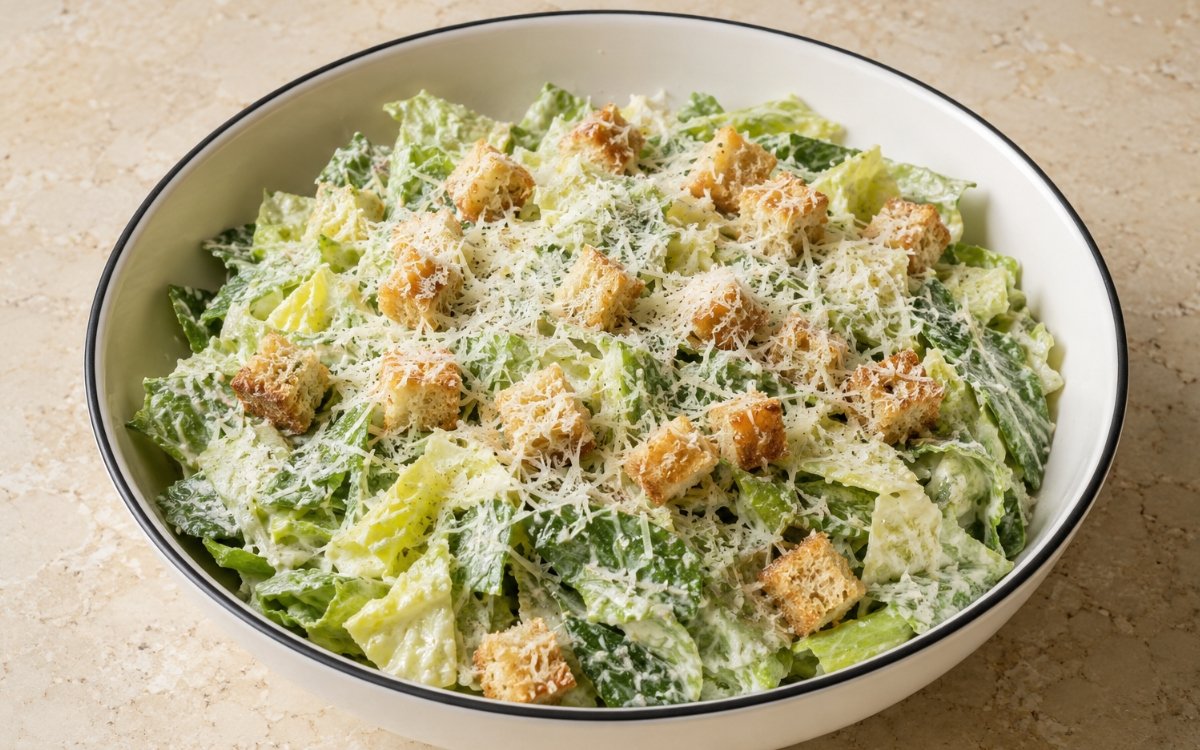
- Sprinkle the croutons and the freshly grated Parmesan cheese over the salad. Toss gently once more to distribute the toppings evenly without crushing the croutons or bruising the lettuce.
Serve Immediately
- Transfer the finished Caesar salad to a serving bowl or individual plates. Serve immediately while the lettuce remains crisp and the croutons stay crunchy. Offer the remaining dressing on the side for those who prefer additional flavor.
Notes
- Romaine lettuce is the traditional base for Caesar salad because its sturdy leaves maintain their crisp texture even when coated in dressing. Softer lettuces such as butter lettuce or mixed greens tend to wilt too quickly. Anchovies are a defining ingredient in authentic Caesar dressing. Although their flavor is subtle once blended into the dressing, they provide essential savory depth that distinguishes a true Caesar from simpler creamy salads. Freshly grated Parmesan cheese produces the best flavor and texture. Pre-grated cheeses often contain anti-caking agents that can affect the smoothness of the dressing. Homemade croutons significantly improve the texture of the salad. Toasting cubes of bread with olive oil and garlic creates crisp, flavorful croutons that remain crunchy longer. Because Caesar salad relies heavily on crisp lettuce and crunchy toppings, it should be assembled shortly before serving to maintain the best texture.