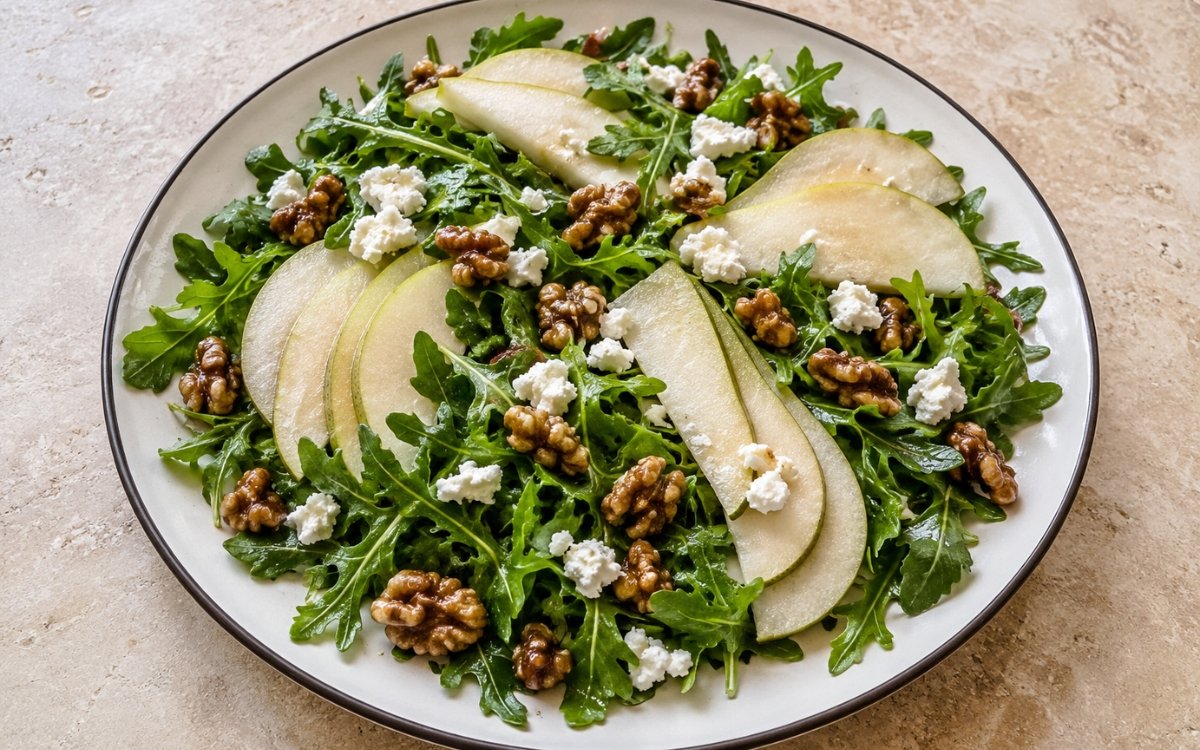
Ingredients
Method
Wash and Dry the Arugula
- Place the 120g of baby arugula in a large bowl of cold water and gently move the leaves around with your hands to loosen any dirt or debris. Lift the greens out of the water rather than draining the bowl, so the sediment stays behind at the bottom. Transfer the arugula to a salad spinner and spin until completely dry, or pat the leaves carefully with clean kitchen towels if you have no spinner. Place the dry leaves in a large mixing bowl and refrigerate briefly while you prepare the remaining ingredients. That thorough drying is what lets the dressing cling evenly to the leaves, because excess moisture dilutes the flavour and keeps the vinaigrette from coating them.
Slice the Pears
- Wash the 2 pears thoroughly and dry them with a towel. Cut each pear in half lengthwise and remove the core with a small knife or melon baller. Slice the halves into thin slices about 3–4 mm thick, leaving the skin on for colour and a subtle texture that suits the tender greens. If the pears will sit for more than a few minutes before serving, toss the slices with a small squeeze of lemon juice. That thin, even slicing is what keeps every slice tender and easy to eat, and the lemon juice is what slows the browning of the cut surfaces.
Prepare the Goat Cheese and Walnuts
- If you are using a log of goat cheese, crumble the 40g into small, irregular pieces with your fingers, handling it as little as possible so it stays light and creamy rather than compressed. Break any large clusters of the 30g of candied walnuts into smaller pieces. If you candied the walnuts yourself, make sure they have cooled completely before they go anywhere near the salad. That small, scattered cheese is what delivers creamy bursts in every bite, and fully cooled walnuts are what keep their sugar coating crisp.
Make the Honey Vinaigrette
- In a small bowl, combine the 20ml of extra-virgin olive oil, 15ml of apple cider vinegar, 10ml of honey, ½ tsp of Dijon mustard, and a little salt and black pepper. Whisk vigorously for about 20 seconds until the dressing turns smooth and lightly emulsified. Taste it on a single arugula leaf and adjust the salt and pepper a little at a time. That Dijon mustard is what stabilises the emulsion, while the honey is what balances the sharpness of the vinegar.
Build the Salad
- Remove the arugula from the refrigerator and spread it across a large serving platter, or divide it evenly among individual plates. Arrange the sliced pears evenly across the greens, then scatter the crumbled goat cheese over the top so every portion receives a balanced amount. Finish by sprinkling the candied walnuts over the salad, distributing them evenly so each serving has both crunch and sweetness. That order of layering is what keeps the toppings sitting attractively on the arugula instead of sinking to the bottom.
Dress and Serve
- Just before serving, drizzle the honey vinaigrette lightly over the salad, using only as much as the greens need. Toss very gently if you are serving from a bowl, or leave the salad layered if you are serving on individual plates. Serve immediately, while the arugula is crisp and the walnuts are still crunchy. That last-minute drizzle is what protects the delicate leaves, because arugula begins to wilt as soon as oil and vinegar reach it.
Notes
Dressing the salad only at the last moment deserves genuine recognition as the technique most directly responsible for whether the arugula arrives crisp or limp. Arugula is a thin, tender leaf that wilts quickly once oil and vinegar reach it — which is why the dressing waits in its bowl until serving, and why a dressed salad is best eaten within 20–30 minutes.
Choosing ripe but firm pears deserves the same attention as any other step, because the fruit carries most of the salad’s sweetness. Overripe pears turn soft and lose their shape when sliced, while underripe pears taste dull and lack aroma — Bosc and Anjou hold their shape and give balanced sweetness.
The goat cheese deserves genuine respect as the creamy, tangy element that bridges the sweet pears and the peppery greens. Crumbling it lightly by hand into small clusters keeps it soft and light rather than compressed, and feta or shaved Parmesan can stand in as alternatives if goat cheese is unavailable.
Keeping the candied walnuts crisp deserves attention as the detail that gives the salad its textural contrast. Whether store-bought or homemade, they should be fully cooled and added near the end — their caramelised coating stays crunchy only while it is dry, and that crunch is what balances the soft pears and creamy cheese.