Ingredients
Method
Make the Cold Lemon Sugar
- Zest the lemons carefully, taking only the yellow peel and leaving all white pith behind. Place the zest in a bowl with the sugar. Rub together with your fingertips for 2–3 minutes until the sugar becomes fragrant and slightly damp from the citrus oils. Let stand for 20–30 minutes so the sugar can pull out as much lemon oil as possible. Rubbing rather than simply mixing the zest into the sugar is what actually ruptures the peel's tiny oil glands, mechanically releasing those aromatic oils directly into the sugar without needing any heat.
Juice the Lemons
- Juice enough lemons to get 300ml fresh lemon juice. Pour the lemon juice over the lemon sugar and stir until the sugar is mostly dissolved. Let sit for 2–3 minutes, then stir again. Strain out the zest, pressing firmly to get all the syrupy lemon flavor. The lemon juice's own acidity helps dissolve the sugar while carrying the already-released lemon oils fully into the base, and pressing the spent zest firmly before discarding it captures as much of that flavourful syrup as possible.
Extract the Apple Flavor
- Core the apples and cut them into chunks. Keep the skin on for extra aroma and flavor, but discard the seeds and tough core. Add the apples to a blender with 400ml of the cold water and blend until completely smooth. Strain through a fine-mesh sieve, nut milk bag, or cheesecloth, pressing well to extract as much fresh apple liquid as possible. For a cleaner, clearer lemonade, strain a second time. Keeping the skin on the apple during blending is what carries genuine extra aroma and colour into the base — a peeled apple would produce a milder, less distinctly apple-forward result, since much of the fruit's own fragrance concentrates right at and just beneath the skin.
Build the Lemonade
- In a large pitcher, combine the lemon syrup, the strained apple liquid, the remaining 800ml cold water, and the pinch of salt, if using. Stir very well. Taste, then add a little more cold water if needed to bring the total volume close to 2 liters and to keep the flavor light, crisp, and refreshing. This tasting checkpoint matters directly given how much apple varieties can differ in natural sweetness and intensity — building in that adjustment stage accounts for that variability rather than assuming a fixed recipe always lands at the same balance.
Chill
- Refrigerate for 30 minutes so the lemonade becomes very cold and the flavors settle. That resting period lets the lemon and apple components fully meld together, producing a more unified flavour than serving the drink immediately after mixing.
Serve
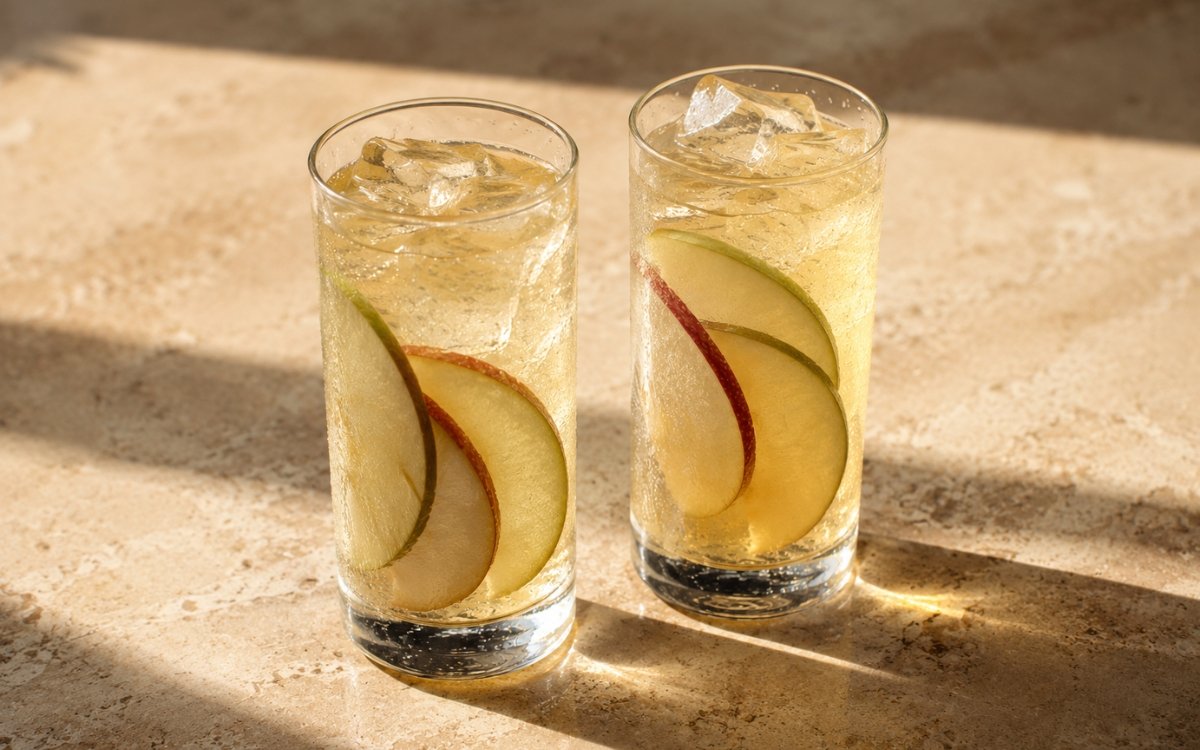
- Fill glasses with ice. Pour in the chilled apple lemonade and garnish with thin apple slices. Serve immediately. Serving right after chilling, rather than letting the pitcher sit out, keeps the drink at its coldest and most refreshing right when it's poured.
Notes
The strict avoidance of white pith throughout zesting deserves the same careful attention it receives across every citrus-forward drink in this collection, and it matters especially here given apple's own naturally delicate, easily-overwhelmed flavour. Lemon pith carries a real, distinct bitterness entirely separate from the fruit's natural tartness — even a small amount worked accidentally into the zest can introduce a flavour that competes directly with the apple's own gentler character.
Keeping the apple skin on through blending deserves recognition as a genuine, deliberate flavour decision rather than simply a shortcut to skip peeling. A meaningful concentration of an apple's own aromatic compounds sits right in and just beneath its skin — blending with skin intact carries that extra fragrance and even a touch of colour into the finished lemonade, producing a noticeably more apple-forward result than a peeled version would.
The optional second straining pass deserves attention as a real, deliberate choice about the finished drink's clarity rather than an unnecessary extra step. A single strain through fine mesh removes the bulk of the apple's solid pulp; a second pass catches whatever finer particles made it through the first, producing a genuinely clearer, more polished-looking lemonade for those who want that specific result.
The recipe's own guidance about apple variety — recommending sweet, crisp, aromatic types like Honeycrisp, Gala, Pink Lady, Fuji, or Ambrosia — deserves to be taken seriously rather than treated as a flexible suggestion. Since this drink relies entirely on the apple's own natural sweetness and character, starting with a genuinely flavourful variety matters directly, the same way ripe fruit matters in this collection's other fresh fruit lemonades.