Ingredients
Method
Prepare the Hot Dogs
- Pat the frankfurters completely dry with paper towels. Insert one wooden stick into each hot dog, pushing it about two-thirds of the way through without piercing the far end. Place the skewered hot dogs on a tray and refrigerate uncovered for 10 minutes while preparing the batter. A dry, cool surface helps the batter grip. Refrigerating the dried, skewered hot dogs briefly while the batter comes together lets any residual surface moisture continue evaporating, and the cooler surface also slows how quickly the hot batter begins cooking on contact, giving it a better chance to cling evenly before frying.
Dust the Hot Dogs
- Add the 40g flour to a shallow dish. Roll each hot dog lightly in flour, coating the surface, then shake off the excess. This step matters. Batter does not cling properly to wet, slippery sausage. Skipping the flour dusting gives patchy corn dogs. The thin flour layer gives the wet batter something dry and slightly textured to grip onto immediately, rather than sliding across the sausage's naturally smooth, slick casing — this is the same dry-dredge-before-wet-coating principle used for battered fish and other fried applications throughout this collection.
Make the Batter
- In a bowl, whisk the cornmeal, flour, sugar, baking powder, baking soda, salt, and black pepper if using. In a separate bowl, whisk the egg, buttermilk, honey, and oil or melted butter. Pour the wet mixture into the dry ingredients and whisk until just combined. The batter should be thick, smooth, and able to coat a hot dog heavily without sliding straight off. If it is too thick to dip cleanly, add milk 10ml at a time. Do not make it runny. Whisking only until just combined, rather than working the batter smooth and long, avoids overdeveloping gluten in the flour — a batter that's been mixed too aggressively can turn tough and dense rather than staying light with a good crumb once fried.
Transfer the Batter
- Pour the batter into a tall narrow glass or jar. This makes it easier to dip each hot dog evenly from top to bottom. The batter should come deep enough in the glass to cover almost the full hot dog in one dip. A tall, narrow vessel lets a single vertical dip coat the hot dog's entire length at once — a wide, shallow bowl would require multiple partial dips and risk uneven coverage or visible seams in the finished coating.
Heat the Oil
- Heat the neutral oil in a deep pot to 175–180°C. Do not guess the oil temperature. Too cool gives greasy, heavy batter. Too hot browns the outside before the batter cooks through. This window is a genuine balance point for a coating this thick — hot enough to crisp the exterior at a reasonable pace, but not so hot that the outside sets and darkens before the fuller depth of batter has had time to cook through to the frankfurter.
Dip the Corn Dogs
- Working one at a time, dip a floured hot dog into the batter. Twist gently as you lift it out so the batter coats evenly and the excess falls off in a slow ribbon. If bare spots appear, dip again lightly. The coating should be even but not absurdly thick. The gentle twisting motion on the way out uses gravity and rotation together to distribute the batter evenly around the full circumference of the hot dog, rather than letting it pool unevenly on one side as it drips.
Fry the Corn Dogs
- Carefully lower each battered hot dog into the hot oil, holding the stick for a second before letting it float. Fry in batches for 3–4 minutes, turning gently, until the batter is deep golden-brown, crisp, and slightly bumpy. Do not overcrowd the pot. Crowding drops the oil temperature and gives pale, oily corn dogs. Holding the stick briefly as the corn dog first enters the oil lets the batter's exterior begin setting immediately in the hot oil before it's released to float freely — releasing too early risks the still-wet batter dripping or sagging unevenly before it has any structure.
Drain
- Transfer the fried corn dogs to a rack. Let them drain for 2–3 minutes before serving. Do not pile them on top of each other. Steam trapped between hot corn dogs softens the crust. A single, uncrowded layer on the rack lets any residual surface oil drip away freely and lets steam escape rather than becoming trapped against the crisp coating of a neighbouring corn dog.
Serve
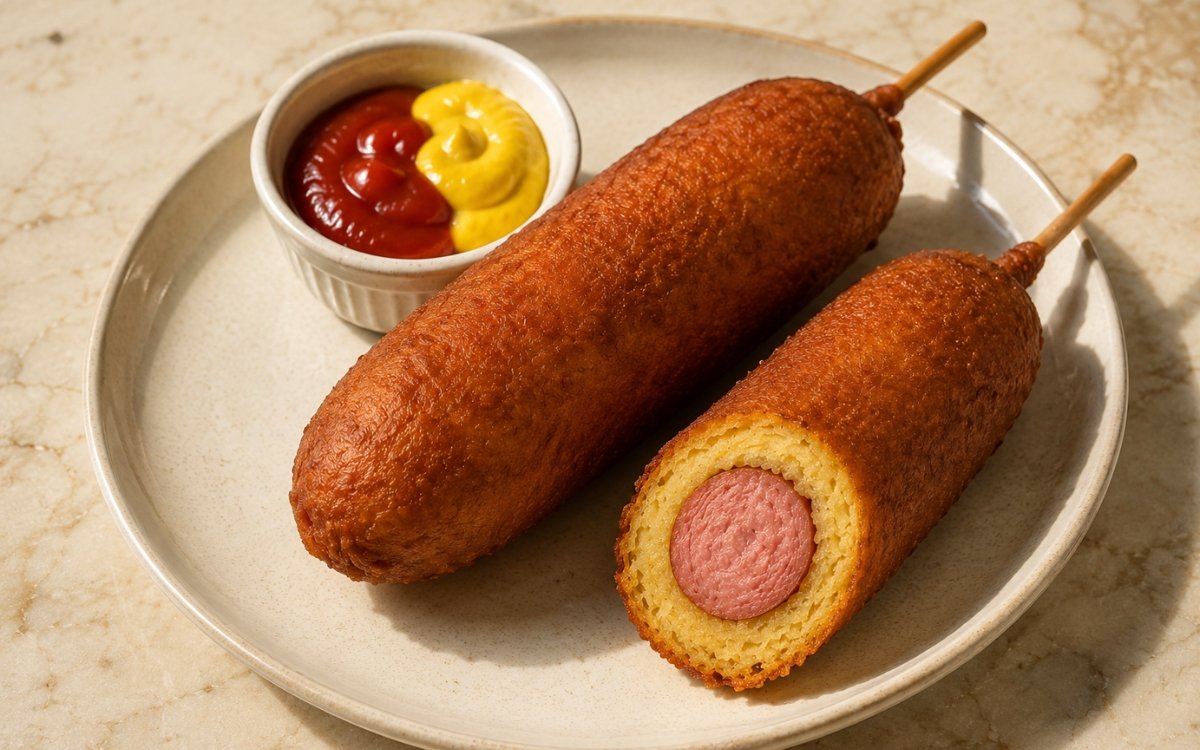
- Serve hot with ketchup and yellow mustard in small ramekins. Cut one corn dog in half if presenting, so the frankfurter and fluffy golden batter shell are clearly visible. Corn dogs lose their shatter-crisp exterior within a fairly short window of frying, so serving without much delay is what preserves the contrast between the crisp shell and the hot frankfurter inside.
Notes
The flour dusting before battering is one of the smaller steps in this recipe but has an outsized effect on the finished coating's evenness. A hot dog's casing is naturally smooth and slightly slick, and wet batter poured or dipped directly onto that surface tends to slide and pool unevenly rather than clinging in a consistent layer. The thin, dry flour coating gives the batter something textured to grip immediately on contact, which is the difference between an even, fully coated corn dog and one with bare or thin patches.
Keeping the batter genuinely thick — thick enough that it needs to be actively thinned with milk if it's too stiff to dip cleanly, rather than starting thin and hoping it thickens — matters more than it might seem for a recipe this simple. A batter on the thinner side will slide off the hot dog during the dip and produce a thin, weak shell once fried, losing the substantial, slightly craggy exterior that's part of a proper corn dog's appeal.
Using a tall, narrow vessel for dipping rather than a wide, shallow bowl is a small equipment choice that meaningfully affects how evenly the finished corn dogs turn out. A single vertical dip in a deep container coats the entire length of the hot dog in one smooth motion, while a shallow bowl would require multiple partial dips from different angles, increasing the chances of visible seams or uneven thickness in the final coating.
Frying in small, genuinely uncrowded batches addresses the same underlying concern that governs deep frying throughout this collection: maintaining oil temperature. Every corn dog added to the pot draws heat from the surrounding oil, and too many at once drops that temperature enough that the batter starts absorbing oil rather than crisping quickly — the result is heavier, greasier corn dogs regardless of how carefully the batter itself was made.