Ingredients
Method
Prepare the Fruit
- If using fresh strawberries, chill them well first. For the thickest texture, freeze the strawberries for at least 1–2 hours. Slice the bananas before blending; if very ripe and soft, they can also be chilled or briefly frozen for a thicker result. Cold or frozen fruit is what gives the smoothie body without needing too much ice, which would dilute the flavour. That real, genuine chill carried by the fruit itself is what builds thickness directly into the smoothie — ice added to compensate for warm fruit would melt and water down the finished flavour in a way frozen fruit never does.
Build the Blender in the Right Order
- Add the milk to the blender first, then the Greek yogurt, bananas, strawberries, vanilla, salt, and honey if using. Putting the liquid in first helps the blender pull the thicker ingredients down evenly and reduces overworking the mixture. That specific layering order gives the blades genuine liquid to work with immediately, pulling the denser yogurt and fruit down into that liquid rather than letting them sit stuck above the blades, resistant to blending evenly.
Blend Until Smooth and Thick
- Blend on medium-high speed until smooth, creamy, and evenly pale pink. Stop once or twice to scrape down the sides if needed. If the smoothie is too thick to move properly, add more milk 1 tablespoon at a time. If using fresh strawberries and the smoothie is not cold enough, add the ice cubes and blend again briefly. The finished smoothie should be thick but pourable, with a creamy body and fine strawberry specks, not watery or foamy. That deliberate, incremental approach to loosening with milk, a tablespoon at a time, protects the smoothie from turning thin too quickly — each small addition can be properly assessed before adding more.
Adjust and Serve Immediately
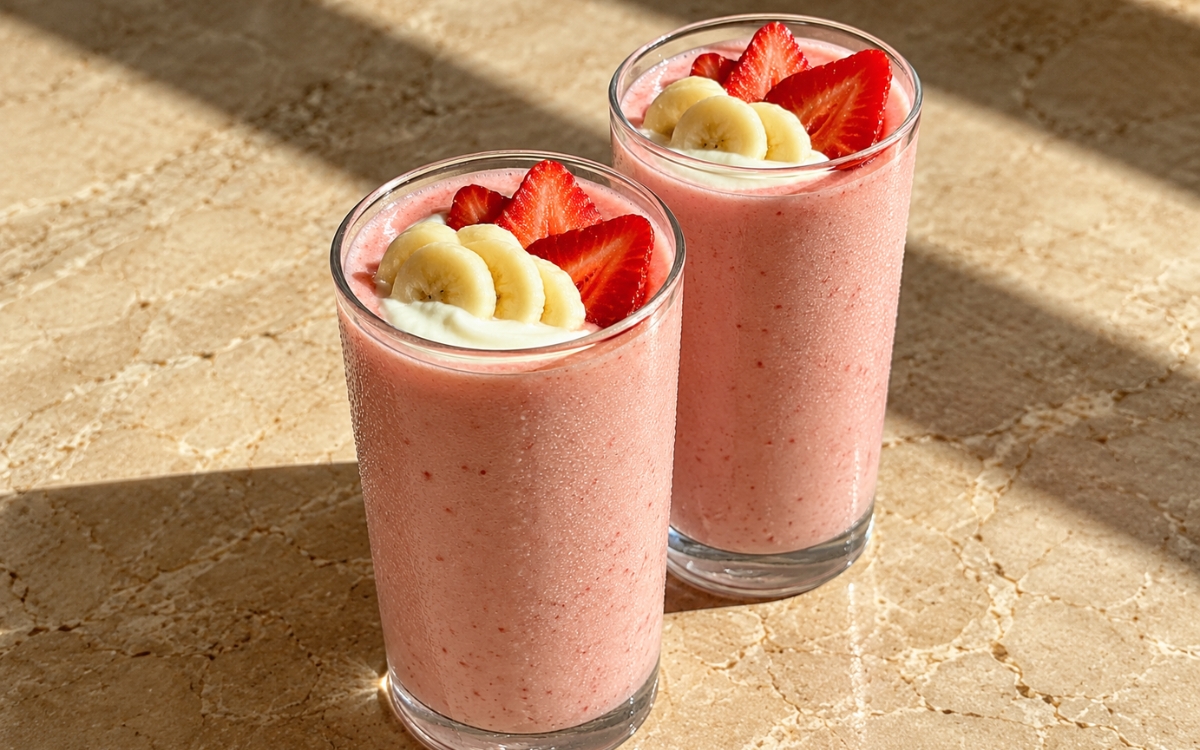
- Taste and adjust sweetness if needed. Pour into 4 glasses, about 250ml each. Top each with a small spoonful or swirl of Greek yogurt, then garnish with sliced strawberries and banana coins. Serve immediately. That immediate serving captures the smoothie at its genuinely coldest and thickest — both qualities begin fading the moment it sits, particularly given how quickly banana itself can start to darken and lose freshness.
Notes
Using genuinely cold or frozen fruit, rather than relying on ice to chill and thicken the smoothie, deserves real recognition as the technique most directly responsible for this drink's whole creamy body. The recipe's own explicit note that cold or frozen fruit "gives the smoothie body without needing too much ice, which would dilute the flavour" reflects a real, direct trade-off — ice chills but also waters down, while frozen fruit does both jobs, chilling and thickening, without ever diluting the finished flavour.
Building the blender in the specific order of liquid first, then thicker ingredients, deserves genuine attention as a real, functional technique rather than an arbitrary sequence. That layering gives the blades immediate liquid to work with, pulling the denser yogurt and fruit down evenly rather than leaving them stuck and resistant above the blades.
Avoiding overblending deserves genuine respect as the detail responsible for whether this smoothie stays properly cold and thick. The recipe's own explicit warning that blending too long "warms the smoothie and makes it looser and foamier" reflects a real, physical process — the blender's own mechanical friction generates real heat the longer it runs, working directly against the smoothie's intended cold, thick texture.
Serving the smoothie genuinely immediately, rather than letting it sit, deserves attention as a real, necessary timing choice specific to this particular combination of ingredients. The recipe's own explicit note that "banana smoothies lose freshness and can darken slightly if held too long" reflects a real, visible change that begins happening quickly once the smoothie is blended.