Ingredients
Method
Make the Sofrito
- Add the onion, green bell pepper, Cubanelle pepper, garlic, cilantro, and culantro, if using, to a blender or small food processor. Blend to a thick, slightly coarse paste, adding the water 1 tbsp at a time and only as much as it takes to keep the blades moving. You need 120ml of paste for the pot, and it should look thick and spoonable rather than loose or soupy. Extra water here throws off the rice-to-liquid ratio later, so resist loosening it. That thickness is what keeps the flavour concentrated and the finished rice from turning wet.
Season and Brown the Pork
- Toss the 200g pork cubes with the adobo seasoning, or with the salt and pepper, until every piece is evenly coated. Heat a heavy pot, caldero, or Dutch oven over medium heat, add the 2 tbsp oil, then add the pork in a single layer. Brown for 5–7 minutes, stirring only occasionally, until the outside no longer looks raw and a few edges take on colour. The pork does not need to cook through yet, because it finishes in the rice. Those browned bits stuck to the pot are what deepen the flavour of everything added after them.
Build the Flavour Base
- Stir the 120ml sofrito into the pork and cook for 2–3 minutes, stirring, until the raw garlic and onion smell softens. Add the 2 tbsp tomato sauce, the sazón, ½ tsp oregano, bay leaf, olives, and red bell pepper, and cook for another 2 minutes. Stir in the drained pigeon peas and cook for 1 minute more. The mixture should smell deeply savoury, and the oil should start to turn orange-red. Lower the heat slightly if the garlic starts catching, because scorched sofrito turns bitter. That patience is what gives the rice its colour and depth.
Coat and Toast the Rice
- Add the rinsed, well-drained rice to the pot and stir thoroughly for 1–2 minutes, scraping the bottom so every grain is coated with the sofrito mixture and fat. The grains should look slick and evenly tinted orange, with no pale patches left. Drain the rice properly after rinsing, because clinging water adds liquid you have not measured. That coating stage is what keeps the finished grains distinct and gives the rice its lightly glossy, separate texture.
Add the Stock and Balance the Seasoning
- Pour in the 600ml chicken stock, or the stock and reserved pigeon pea liquid, and stir well, scraping the bottom of the pot to release any browned bits. Taste the liquid and stir in ½–¾ tsp kosher salt as needed. It should taste a little stronger and slightly saltier than you want the finished rice to taste, because the grains absorb seasoning as they cook. If using regular long-grain rice, begin with slightly less liquid and check earlier. That seasoning check is the last chance to correct the flavour.
Reduce Uncovered
- Bring the pot to a lively simmer over medium heat and cook uncovered for 6–10 minutes, until most of the visible liquid has been absorbed and the level falls just below the rice surface. Small steam holes should appear across the top, and the surface should look mostly dry while the rice underneath stays moist. Do not cover while the rice is still loose and soupy. This is the key turning point, and that uncovered reduction is what sets the grains up to steam into separate, tender rice.
Steam on Low Heat
- Gently stir once from the bottom up, just enough to redistribute the moisture, then reduce the heat to low. Cover tightly with a lid, placing foil under it or wrapping the lid in a clean towel if it fits loosely. Cook for 20–25 minutes on very low heat without lifting the lid. Too much heat burns the bottom before the rice finishes, and repeated peeking releases the steam and cooks the rice unevenly. That sealed, gentle heat is what finishes the grains evenly.
Rest and Fluff
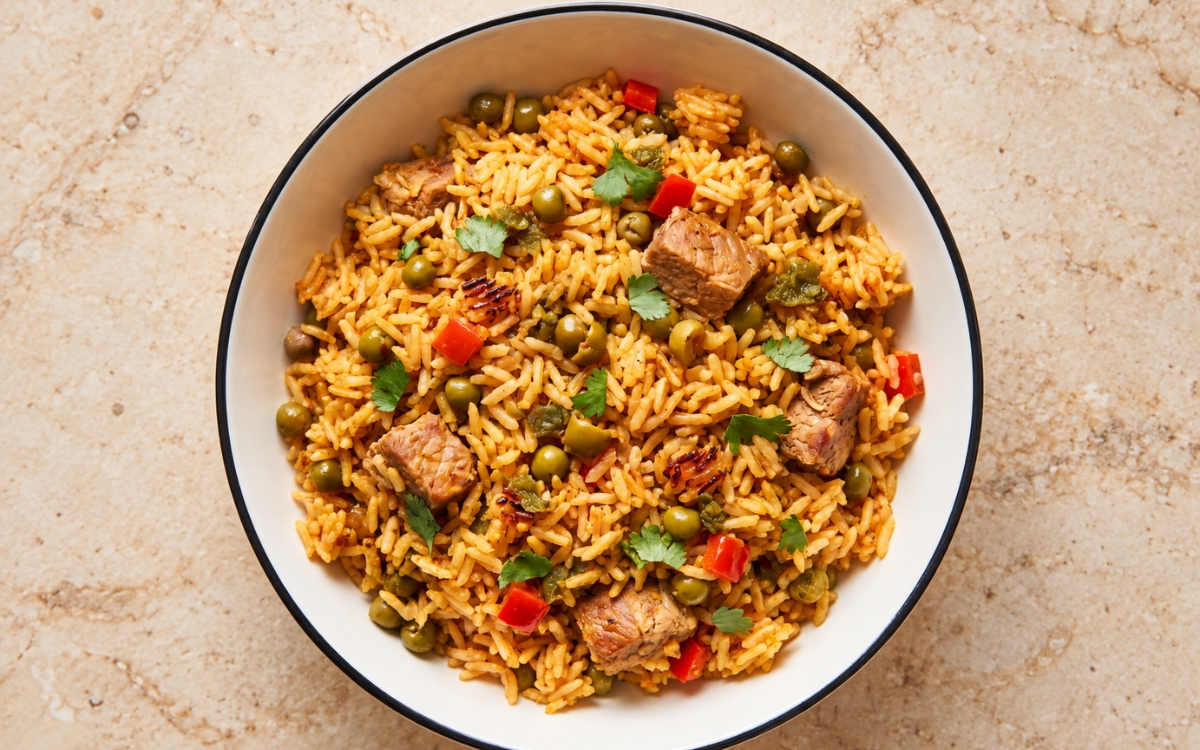
- Turn off the heat and let the rice rest, covered, for 10 minutes, then remove the bay leaf. Fluff gently with a fork or rice paddle, lifting from the sides and bottom, and scrape up a few of the darker caramelised bits from the base without mashing the grains. Scatter over the 1–2 tbsp chopped cilantro and serve straight from the pot. The rice should look golden-orange, glossy, and separate, with the pigeon peas spread evenly through it. That rest is what lets the grains finish setting and separate.
Notes
The uncovered reduction deserves genuine recognition as the technique most directly responsible for whether this rice finishes with separate grains or a soupy, sticky mass. The recipe’s own instruction “Do not cover too early while the rice is still loose and soupy” reflects how a lid over free liquid traps steam and boils the grains instead of letting them absorb the stock gradually.
Building the flavour base deserves the same attention this technique receives throughout this collection’s other sofrito- and spice-based rice dishes. Cooking the sofrito until the raw garlic smell softens and the oil turns orange-red releases fat-soluble colour and aroma that the rice then carries into every grain, and a rushed or scorched base cannot be repaired once the stock goes in.
The thick sofrito deserves genuine respect as the detail most directly responsible for keeping the rice-to-liquid ratio accurate. The recipe’s own instruction “Do not make it watery” matters because every spoonful of extra water in the paste is liquid the rice must absorb or evaporate, and the margin between tender rice and a mushy pot is small.
The 10-minute covered rest deserves attention as a genuine, checkable finishing cue rather than a loose approximation. The recipe’s own note that “Resting is essential” reflects how the grains finish setting and separating as residual steam redistributes, while lifting the lid early leaves wet, uneven rice with a noticeably softer bottom layer than top.