Ingredients
Method
Cook the Jasmine Rice
- Rinse the 300g of jasmine rice under cold running water until it runs mostly clear, then drain thoroughly. Combine it in a saucepan with the 390ml water and ½ tsp salt, bring to a boil, stir once, cover tightly, and reduce the heat to very low. Cook for 12 minutes, until the water is absorbed, then take the pan off the heat and leave it covered for another 10 minutes before fluffing gently with a fork. That covered rest is what lets moisture redistribute through the grains, giving the glazed chicken a fluffy base instead of wet, sticky patches.
Marinate the Chicken
- Cut the 800g of chicken thighs into even 3cm pieces so they cook at the same rate. Combine them with 1 tbsp light soy sauce, 1 tbsp Shaoxing wine, the egg, ¼ tsp white pepper, and ½ tsp salt, and mix until every piece is evenly coated and the marinade turns slightly tacky. Refrigerate for 15 minutes while you prepare the sauce and vegetables. The marinade should cling rather than pool in the bowl. That small amount of egg is what gives the dry coating something to grip, so it forms a craggy crust instead of sliding off.
Mix the Honey Sesame Sauce
- In a small bowl, whisk together the 90g honey, 50ml light soy sauce, 15ml dark soy sauce, 25ml rice vinegar, grated ginger, minced garlic, 100ml chicken stock, 2 tsp sesame oil, and 1 tsp toasted sesame seeds until thoroughly combined. In a separate bowl, stir the 10g cornstarch into the 25ml cold water to make the slurry, and set it aside without adding it yet. Light soy supplies the salt, dark soy the deeper colour, and rice vinegar keeps the honey from turning cloying. That separate slurry is what lets the sauce thicken at the right moment instead of too early.
Steam the Vegetables
- Bring a steamer to a full steam, add the broccoli florets, and steam for 3–4 minutes until bright green and tender-crisp. Add the carrot matchsticks for the final 1–2 minutes, or steam them separately, so they soften slightly while keeping their shape. Lift everything out immediately, spread it on a tray to release steam, and season very lightly with a pinch of salt. Blot away any surface water before assembling. That quick pull from the steam is what keeps the broccoli vivid and the bowl free of watery pools.
Coat the Chicken
- Whisk the 120g cornstarch, 80g flour, 1 tsp baking powder, and ¼ tsp white pepper together in a wide bowl. Add the marinated chicken in batches and toss until every piece is thoroughly coated, then press the mixture lightly onto each piece so small irregular ridges form. Shake off loose flour and rest the pieces on a tray for about 5 minutes while the oil heats; the surface should look rough and lightly hydrated, never like a wet batter. That short rest is what sets the coating before frying without letting it turn gummy.
Fry the Chicken
- Heat the neutral oil in a deep saucepan, wok, or fryer to 175°C, and keep it between 170–180°C throughout. Fry the chicken in small batches for 4–6 minutes, depending on piece size, until golden brown, crisp, and cooked through to at least 74°C in the centre, then drain on a wire rack and let the oil recover before the next batch. For a crispier takeout-style shell, raise the oil to 185°C and fry all the chicken a second time for 45–60 seconds, then drain again. That second fry is what removes the last surface moisture and gives the coating its resistance to the honey glaze.
Thicken the Glaze
- Heat a large wok or skillet over medium heat, pour in the honey sesame sauce, and bring it to a gentle simmer. Cook for about 2 minutes, stirring occasionally, until the garlic and ginger turn fragrant and the honey has fully dissolved. Stir the slurry again, add it gradually, and cook for 30–60 seconds until the glaze turns thick, smooth, shiny, and lightly sticky, coating the back of a spoon. If it is too thick, loosen it with 1–2 tbsp water or stock. That gentle simmer is what protects the honey from scorching into bitterness.
Glaze the Crispy Chicken
- Add the freshly fried chicken to the hot glaze and toss quickly over medium heat for 20–30 seconds, turning until every piece is evenly coated and the glaze clings to the craggy fried surface in a glossy golden-amber finish. Remove the pan from the heat immediately, leaving only a thin film of sauce behind rather than a pool. The pieces should still look visibly crisp beneath the glaze. That brief toss is what keeps the crust crunchy, since simmering the chicken in the sauce would soften it within moments.
Assemble and Serve
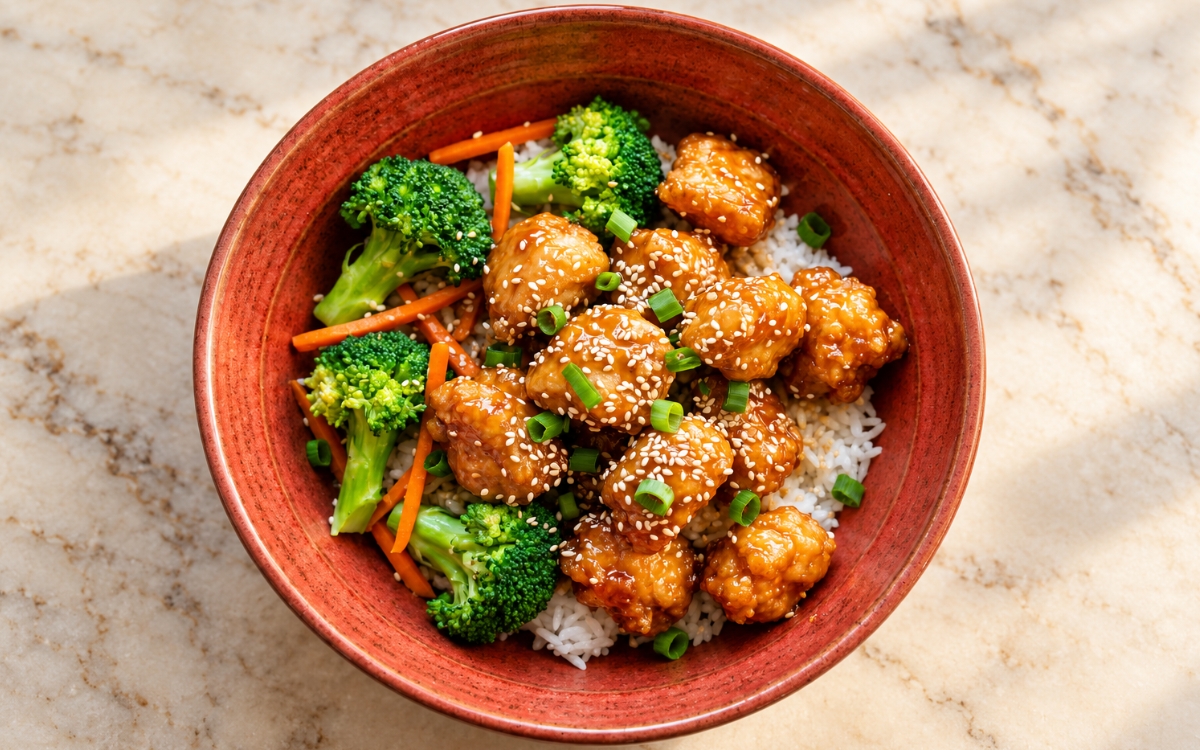
- Divide the rice among 4 serving bowls and arrange the steamed broccoli and carrot strips along one side of each. Mound about one quarter of the glazed chicken, roughly 200g of the original raw weight, over the rice, leaving some fluffy rice visible at the edges. Sprinkle generously with the 15g toasted sesame seeds, finish with the sliced scallions, and spoon over a modest amount of any remaining glaze from the pan. Serve immediately. That immediate service is what lets you taste the chicken while its crust is still crisp under the glaze.
Notes
The rough cornstarch-and-flour coating deserves genuine recognition as the technique most directly responsible for whether the chicken stays crisp once glazed. Craggy ridges create far more surface area and tiny air pockets than a smooth batter, and that uneven shell holds its crunch against sticky honey, while a flat coating turns dense and soft almost on contact.
Holding the oil near 175°C and frying in small batches deserves the same attention this technique receives throughout this collection’s other deep-fried dishes. Crowding the pot drops the temperature sharply, so the coating absorbs oil instead of setting quickly — the result is a pale, greasy crust that no amount of glaze can rescue.
Tossing the chicken through the glaze for only 20–30 seconds deserves genuine respect as the detail most directly responsible for the bowl’s texture. A fried coating starts absorbing moisture the instant it meets liquid, so every extra minute in the pan, and every spoonful of loose sauce, trades crunch for sogginess.
Simmering the sauce gently and tasting it before the chicken goes in deserves attention as a genuine, checkable balance point rather than a loose approximation. Honey scorches and turns bitter under hard boiling, and a quick taste for sweetness, saltiness, and acidity is what lets you correct the glaze while it is still easy to adjust.