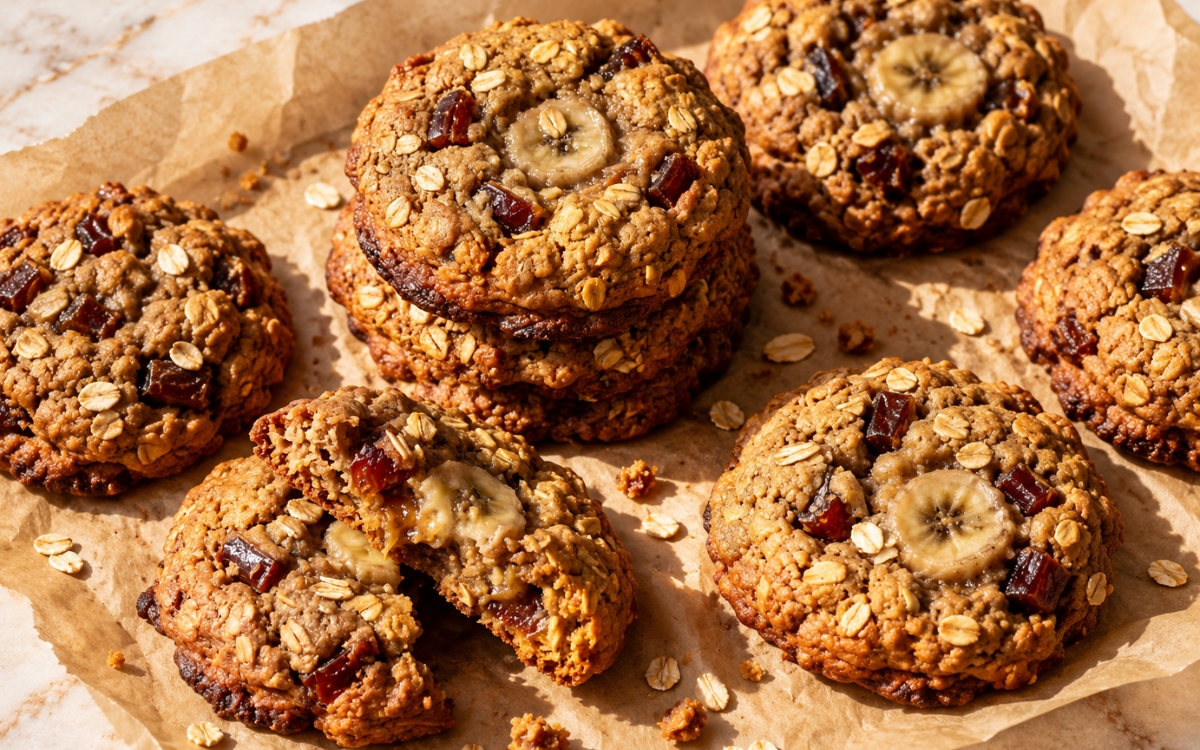
Ingredients
Method
Brown the Butter
- Melt the butter in a light-colored saucepan over medium heat, then keep cooking, stirring often and scraping the bottom, until the milk solids turn deep golden brown and the butter smells nutty, 4 to 7 minutes after melting. Pour the browned butter, including the browned bits, into a mixing bowl right away to stop the cooking, then let it cool until just warm rather than hot, so it stays liquid without being hot enough to scramble the egg later. Watch the pan closely once the butter starts browning, since it can go from browned to burnt in under a minute; if the solids turn very dark or smell sharp and acrid, start over with a fresh batch.
Mix the Dry Ingredients
- Whisk together the flour, oats, baking soda, baking powder, salt, cinnamon, and nutmeg in a medium bowl, so the leavening and spices are distributed evenly before the wet ingredients go in.
Mix the Wet Base
- Add the brown sugar and granulated sugar to the bowl with the warm browned butter and whisk until smooth and glossy. Add the egg and vanilla, whisking until fully combined and slightly thickened, then whisk in the mashed banana until smooth. The mixture should look cohesive and lightly glossy; if it looks greasy or separated, whisk another 20 to 30 seconds until it comes together.
Make the Dough
- Add the dry ingredients to the wet mixture and fold with a spatula just until no dry flour remains, then fold in the chopped dates and nuts, if using, mixing only until evenly distributed. The dough will be softer than a classic oatmeal cookie dough because of the banana, but it should still be thick and scoopable, not loose. If the banana was especially large or watery and the dough feels too loose, add 1 to 2 tablespoons of flour and mix briefly.
Chill the Dough
- Cover and chill the dough for 45 minutes. This gives the oats time to hydrate, lets the browned butter firm back up, helps the cookies hold a thicker shape, and keeps the date pieces suspended through the dough instead of sinking. If the dough chills longer than 2 hours, let it sit at room temperature for 10 to 15 minutes before scooping so it's easier to portion.
Portion and Bake
- Heat the oven to 175°C conventional or 160°C fan and line baking trays with parchment. Scoop the dough into 24 portions, about 40 to 45 g each, spacing them well apart on the tray, about 6 to 8 per tray depending on size, and lightly flatten only the tops if the scoops are very rounded. Bake for 12 to 15 minutes, until the edges are set and well browned, the tops look dry and softly crackled, and the centers are still a little soft but no longer wet. For thick, chewy cookies, pull them while the centers still look slightly underdone; they finish setting on the tray.
Cool
- Let the cookies cool on the baking tray for 10 minutes before moving them to a wire rack. The cookies are delicate straight from the oven, and the date pockets stay very hot, so this rest matters. Serve warm for the softest centers, or let them cool completely for a denser, chewier texture.
Notes
Brown butter does double duty here. It adds a nutty, toasted flavor that plain melted butter can't match, and it also cooks off some of the butter's water content, which keeps the cookies rich and chewy instead of cakey.
Soft, Medjool-style dates melt into the dough as the cookies bake, leaving caramel-like pockets throughout. If your dates are firm or dry, soak them in hot water for 10 minutes, drain well, and pat dry before chopping, so they soften the same way soft dates would.
The banana needs to be fully ripe, with visible brown speckles, for both sweetness and flavor. A banana that's underripe won't give the same depth, while one that's gone watery or fermented can throw off the texture of the dough.
Chopping the dates small rather than leaving them in large pieces spreads them evenly through the dough, so each cookie gets several small caramel-like pockets instead of one or two large sticky lumps.